Greece Inaugurates DAEDALUS, Its National Supercomputer, at Lavrion
Key Points
- Greece inaugurated its national supercomputer DAEDALUS on 19 October 2026 at the Lavrion Technological Cultural Park.
- On the June 2026 lists it ranked 31st in the TOP500, at 85.69 petaflops measured, and 23rd in the Green500.
- GRNET puts the total investment at EUR 58.9 million including VAT, about $66.1 million.
- User access is due to begin gradually in December 2026, and the machine is the computing core of the PHAROS AI Factory.
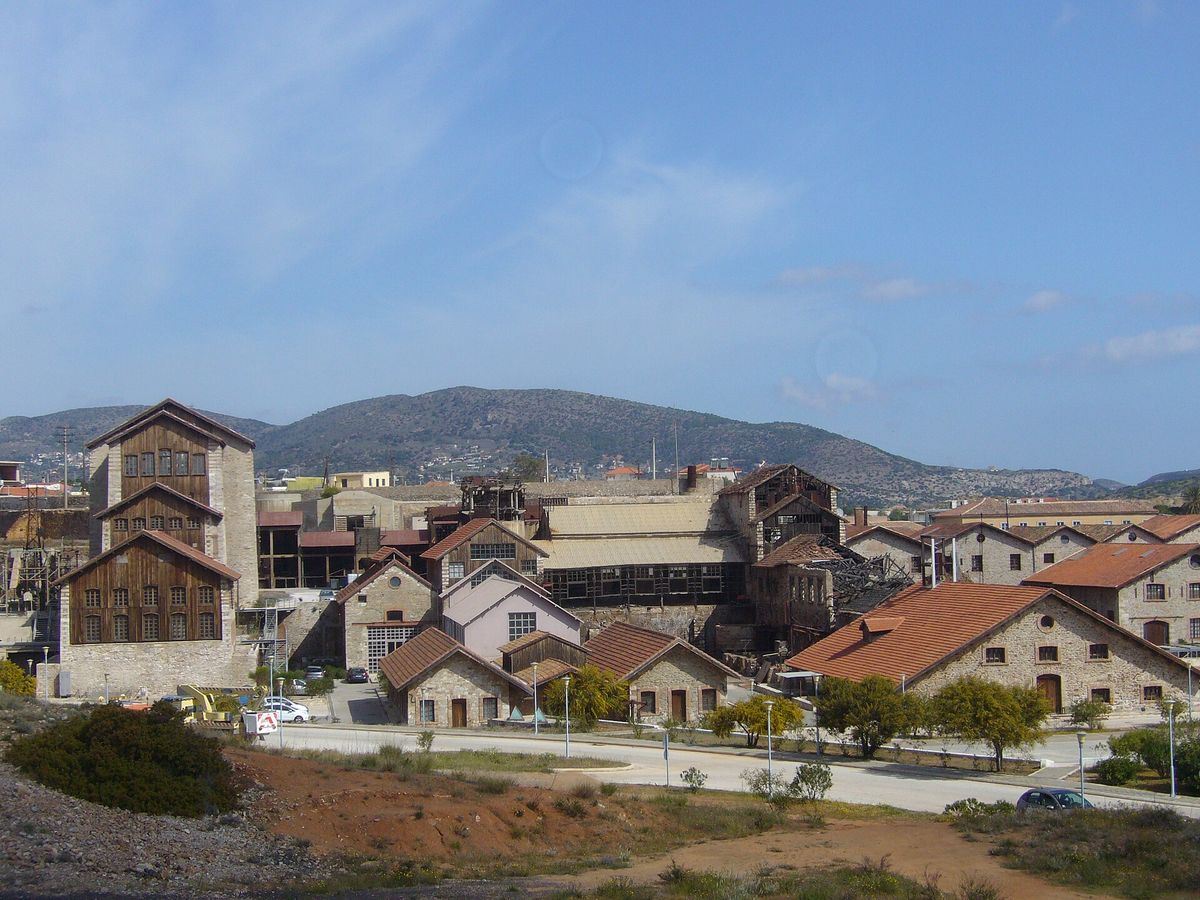

Greece switched on its national supercomputer, DAEDALUS, on Monday 19 October 2026. The ceremony took place at the Lavrion Technological Cultural Park of the National Technical University of Athens (NTUA)1, where Prime Minister Kyriakos Mitsotakis and Dimitris Papastergiou, the Minister of Digital Governance and Artificial Intelligence, symbolically turned the system on. The machine is run by GRNET (National Infrastructures for Research and Technology), and was inaugurated together with the EuroHPC Joint Undertaking3, the European body that helped pay for it.
What the machine is
DAEDALUS was built by Hewlett Packard Enterprise (HPE) around more than 2,000 NVIDIA GH200 Grace Hopper Superchips3, cooled directly with liquid. Its entry on the TOP500 site describes an HPE Cray EX254n system with 411,264 cores7, a Slingshot-11 interconnect and Red Hat Enterprise Linux.
In the benchmark run behind the rankings it reached 85.69 petaflops measured, against a theoretical peak of 115.08 petaflops5, while drawing 1,395 kilowatts. GRNET calls it the most powerful computing system ever ranked in Greece2. For scale, Oak Ridge National Laboratory, announcing its Summit machine in 2018, described 200,000 trillion calculations per second as 200 petaflops10, so one petaflop is a thousand trillion.
The EuroHPC Joint Undertaking lists artificial intelligence, medicine, climate and meteorological research, engineering, big data analytics, smart transport systems and cybersecurity3. Euronews notes that DAEDALUS is not designed to compete directly with the largest European installations15 on raw computing power, and that its value lies in giving Greece access to substantial computing resources of its own.
Where it ranks
The TOP500 list ranks machines by one test, Linpack, which measures how quickly a system can solve a set of linear equations using a dense random matrix8. The Green500 takes the same machines and orders them by energy efficiency, in gigaflops per watt9.
DAEDALUS made its debut on the June 2026 lists, published on 23 June 2026 at ISC 2026 in Hamburg2, placing 31st in the TOP500 and 23rd in the Green5002. Its efficiency figure was 61.427 gigaflops per watt9. GRNET says the result puts Greece among the 14 countries with the strongest presence1 in global supercomputing rankings.
The same June 2026 list counts five exascale class systems6, and one of them is European. JUPITER Booster, run by EuroHPC at the Jülich Supercomputing Centre in Germany, ranked fifth at 1,000 petaflops5 and is built on about 24,000 NVIDIA GH200 Grace Hopper Superchips4, the same family of chip used in DAEDALUS.
Who paid, and how much
GRNET puts the total investment at EUR 58.9 million including VAT1, about $66.1 million at the ECB euro reference rate of 1.1225 US dollars per euro on 19 October 202611. It came in two stages. HPE received EUR 41 million (about $46.0 million) for equipment, storage, software and training, and MainSys S.A. received EUR 17.9 million (about $20.1 million) for the electromechanical infrastructure and the data centre. The money came from Greece 2.0, the country's National Recovery and Resilience Plan, with NextGenerationEU and EuroHPC resources.
EuroHPC’s release gives a different number, a total acquisition cost of EUR 36 million3 (about $40.4 million at the same rate), with the Joint Undertaking paying 35 percent and Greece 2.0 the remaining 65 percent. GRNET’s larger total includes VAT and the data centre works. The DAEDALUS consortium also includes Cyprus, Montenegro and North Macedonia.
Part of a European network
The EuroHPC Joint Undertaking was created in 2018 and is located in Luxembourg12, bringing together the European Union, member states, associated countries and three private partners. As of 19 October 2026 it has procured 12 supercomputers across Europe3. Two others sit near the top of the TOP500. LUMI, operated by CSC in Finland, ranked 11th at 379.7 petaflops4 and runs entirely on carbon free hydroelectric power, and Leonardo, operated by CINECA in Italy, ranked 12th at 241.2 petaflops.
Anders Jensen, the EuroHPC Joint Undertaking's Executive Director, said that “DAEDALUS will provide European researchers, industry and innovators with access to advanced computing”3 resources, with a focus on healthcare, public services, energy and the environment.
The PHAROS AI Factory
DAEDALUS is also the computing core of PHAROS, Greece's AI Factory. EuroHPC describes AI Factories as dynamic ecosystems that will build around AI optimised supercomputers13, offering computing power and support services to European industry and scientists, with free, customised support for small businesses and startups. The EU has set up 19 of them, along with 13 AI Factory Antennas that extend their reach.
PHAROS was among the first seven AI Factories selected under the EuroHPC initiative14, announced in December 2024 with a budget of EUR 30 million (about $33.7 million at the 19 October rate) split evenly between EuroHPC and national funds. Its focus areas are health, culture and language, and sustainability, covering energy, environment and climate.
GRNET says user access will begin gradually in December 20261, once the system is fully configured, through calls from GRNET, EuroHPC and PHAROS. Euronews reports that broader business services are scheduled to begin in March 202715 and that startups and small firms are expected to use the computing power without charge within state aid limits, though the final access conditions and pricing have not been set.
At the ceremony, Mitsotakis argued that “for Greece, the real competition will be primarily in applications”16, acknowledging that Greece could not compete with major American technology companies on the most advanced AI models.
A power station, again
The data centre sits in the former Power Station building1 of the park, in about 1,500 square metres of industrial heritage space. It has 6.3 MVA of installed power, meets the Uptime Institute’s availability and reliability requirements, and is paired with a 2 MWp solar park on site for its own consumption.
The park itself was founded in 1992 in the facility of the old French Mining Company of Lavrion17 (Compagnie Française des Mines du Laurium). Most of its buildings date from 1875 to 1940, the site is a protected national monument as a whole, and its renovated halls now hold businesses, NTUA laboratories and cultural institutions. According to the park, the ancient Greeks started mining in the area before 3000 BC18.
A second Greek system is in the pipeline. Euronews reports a planned supercomputer at the University of Western Macedonia in Kozani15, where a EUR 21.57 million tender (including VAT, about $24.2 million at the 19 October rate) for its computing equipment, storage and software, one part of the project, has been approved for public consultation.
Trivia
- In Greek myth, what did Daedalus build for King Minos? The labyrinth that housed the Minotaur, according to World History Encyclopedia19, which also notes he made the wings his son Icarus flew too close to the Sun.
- When was the first TOP500 list published? In June 1993, the earliest list in the archive of the TOP500 project, launched that year8 to renew the Mannheim supercomputer statistics.
- Which system debuted at No. 1 on the June 2026 TOP500 list? LineShine, at the National Supercomputing Centre in Shenzhen, the first China based system to lead the list since Sunway TaihuLight in 20176.
- Which machine topped the June 2026 Green500? KAIROS, at CALMIP and the University of Toulouse in France, at 73.282 gigaflops per watt9.
- Whose homes are warmed by waste heat from the LUMI supercomputer? Households in the Finnish city of Kajaani, hundreds of them21, according to LUMI.
- How large did Themistocles grow the Athenian fleet with Laureion silver in 483 BCE? From 70 to 200 ships20, a fleet that went on to fight at Salamis.
- Which mining engineer decided in 1863 to rework the ancient slags of Lavrion? The Italian mining engineer J.B. Serpieri18, who went on to found the French Mining Company in 1875.
Sources
- GRNET, National Supercomputer DAEDALUS inaugurated, 19 October 2026. Accessed October 20, 2026.
- GRNET, DAEDALUS Among the World's Leading Supercomputers, Ranked 31st in the TOP500 and 23rd in the Green500. Accessed October 20, 2026.
- EuroHPC Joint Undertaking, EuroHPC JU and GRNET Inaugurate DAEDALUS, Ranked among the World's Top 50 Supercomputers, 19 October 2026. Accessed October 20, 2026.
- EuroHPC Joint Undertaking, Two New EuroHPC Systems Join TOP500, JUPITER Remains among World's Fastest Supercomputers, 23 June 2026. Accessed October 20, 2026.
- TOP500, TOP500 List, June 2026. Accessed October 20, 2026.
- TOP500, June 2026 list. Accessed October 20, 2026.
- TOP500, EuroHPC/GRNET site page. Accessed October 20, 2026.
- TOP500, The TOP500 Project. Accessed October 20, 2026.
- TOP500, Green500 List, June 2026. Accessed October 20, 2026.
- Oak Ridge National Laboratory, ORNL Launches Summit Supercomputer, 8 June 2018. Accessed October 20, 2026.
- European Central Bank, Euro foreign exchange reference rates, US dollar (USD). Accessed October 20, 2026.
- EuroHPC Joint Undertaking, Discover EuroHPC JU. Accessed October 20, 2026.
- EuroHPC Joint Undertaking, AI Factories. Accessed October 20, 2026.
- National Documentation Centre (EKT), The Greek Pharos is among the first seven Artificial Intelligence Factories established in Europe, 19 December 2024. Accessed October 20, 2026.
- Ioannis Karagiorgas, Daedalus: Greece unveils new supercomputer as it eyes role in Europe's AI race, Euronews, 19 October 2026. Accessed October 20, 2026.
- To Vima, Greece Unveils DAEDALUS Supercomputer to Boost Research and AI, 19 October 2026. Accessed October 20, 2026.
- Lavrion Technological and Cultural Park, NTUA, About. Accessed October 20, 2026.
- Lavrion Technological and Cultural Park, NTUA, Lavrion and Antiquity. Accessed October 20, 2026.
- Mark Cartwright, Daedalus, World History Encyclopedia, 12 May 2016. Accessed October 20, 2026.
- Mark Cartwright, Themistocles, World History Encyclopedia, 3 March 2016. Accessed October 20, 2026.
- LUMI consortium, LUMI supercomputer. Accessed October 20, 2026.