Hong Kong Raises 2026 Growth Forecast to 4.8% After 5.2% Third Quarter
Key Points
- Hong Kong's real GDP grew 5.2% year on year in the third quarter of 2026, up from 4.2% in the second quarter, and 5.1% over the first three quarters.
- Total exports of goods grew 30.3% in real terms, private consumption 2.9% and investment 7.5%.
- On 13 November 2026 the government raised its 2026 growth forecast to 4.8%, from a range of 3.5% to 4.5%, and cut its inflation forecasts to 1.9% underlying and 2.0% headline.
- The seasonally adjusted unemployment rate edged up to 3.9%.

Hong Kong's economy picked up speed in the third quarter of 2026, and the government now expects a stronger year than it did in the summer. On Friday, 13 November 2026, it released the Third Quarter Economic Report 2026 with revised gross domestic product (GDP) figures. Real GDP grew 5.2% year on year in the third quarter1, the same as the advance estimate, up from 4.2% in the second quarter. For the first three quarters combined, growth came to 5.1%, which the government described as the fastest pace in five years for the corresponding period. The Government Economist, Ms Irina Fan, presented the figures and the new forecasts.
Measured against the previous quarter and adjusted for seasonal patterns, real GDP rose 1.9% in the third quarter1, after a decline of 0.7% in the second quarter.
Exports of goods led the quarter
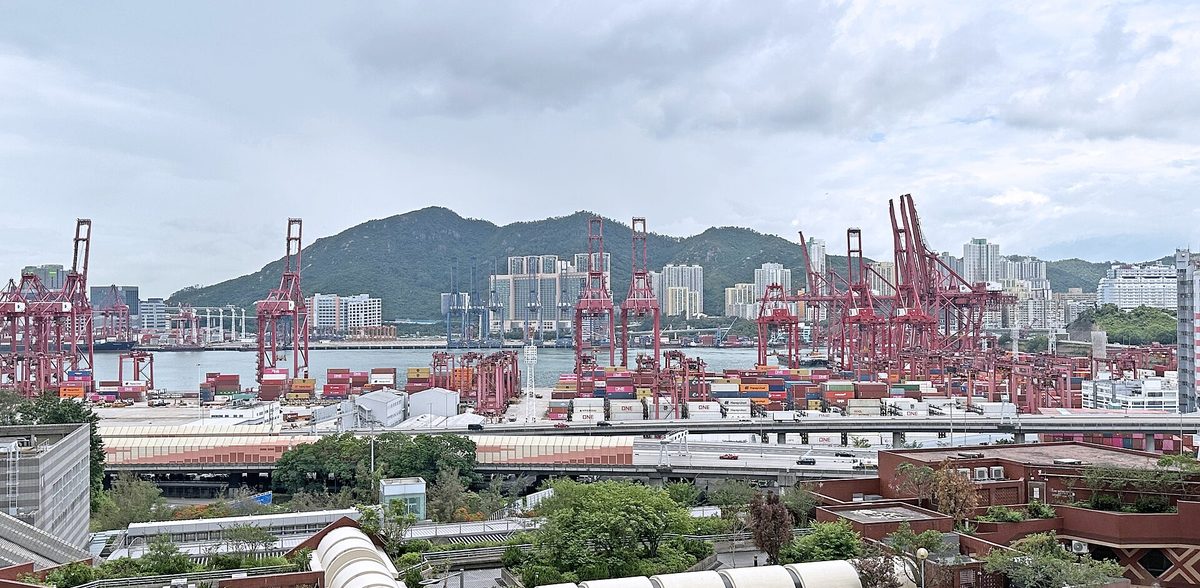
Total exports of goods grew 30.3% in real terms1 from a year earlier, up from 28.9% in the second quarter. The report tied the rise to robust trade flows amid strong global demand for artificial intelligence (AI) related electronic products, and said exports to the Mainland, many other Asian markets and the United States continued to grow markedly, while those to the European Union grew further. Imports of goods rose 29.9%. China Daily reported Fan as saying that AI-related electronic products "account for 75 percent of Hong Kong's exports"8.
Exports of services rose 4.3% in real terms1, after 3.2% in the second quarter, and every major service group grew. Transport services picked up on busy cross-boundary traffic, travel services grew with inbound tourism, and financial and business services grew mildly. Against the second quarter, seasonally adjusted, exports of services rose 2.2%.
Spending at home
Private consumption expenditure grew 2.9% in real terms1, the same rate as in the second quarter, marking its sixth consecutive quarter of expansion. Every major category of consumption spending in the domestic market rose from a year earlier, although seasonally adjusted spending was broadly unchanged from the second quarter. Government consumption expenditure grew 1.7%, after staying virtually unchanged in the second quarter.
Investment, measured as gross domestic fixed capital formation, rose 7.5% year on year1, up from 3.7%. Private sector investment grew 11.6%, its fourth consecutive quarter of double digit growth, helped by a notable rise in spending on machinery, equipment and intellectual property products. Across the whole economy, that spending rose 16.6%, while spending on building and construction fell 1.1%, and public sector investment recorded what the report called a visibly narrowed decline.
Jobs, pay and prices
The seasonally adjusted unemployment rate edged up to 3.9% in the third quarter1, as the labour force grew faster than employment with the seasonal entry of graduates and school leavers. The underemployment rate for July to September was 2.0%, up 0.1 of a percentage point3. Median monthly employment earnings, excluding foreign domestic helpers, rose 3.1% in nominal terms1 from a year earlier.
Underlying consumer prices, which net out the effects of the government's one-off relief measures, rose 2.0% from a year earlier1, up from 1.7% in the second quarter, mainly because fuel-related components picked up while international oil prices stayed high. Headline Composite Consumer Price Index inflation, which includes those relief measures, eased to 1.7% from 1.9%.
A higher forecast for 2026
Citing the outturn of the first three quarters and its expectation of further solid growth in the fourth, the government revised its 2026 real GDP growth forecast up to 4.8%, from a range of 3.5% to 4.5%1 in the August round of review. That August range had itself been raised on 14 August, from an earlier range of 2.5% to 3.5%7.
Inflation is running lower than expected, the report said, because higher international oil prices have passed through to fuel-related prices more slowly than anticipated, with the government's fuel subsidies also playing a part. The forecasts for underlying and headline inflation in 2026 were revised down to 1.9% and 2.0%1, from 2.5% and 2.6% in August.
"Incoming data for entering the fourth quarter also points to sustained growth momentum2," said Fan, according to the government news service. The report expects exports of services to benefit from continued growth in visitor arrivals and steady demand for cross-boundary financial and business services, and domestic demand to stay resilient on rising labour earnings, solid consumer sentiment and private investment. It also said uncertainties in the external environment persist1 and that the government will continue to closely monitor the situation.
Private forecasts cited in a China Daily report published on 13 November 2026 were lower. Tommy Wu, Standard Chartered's Greater China and North Asia senior economist, projected 4.3% growth for 20268, and Hang Seng Bank had raised its forecast to 4.4%. Hang Seng Bank chief economist Kelvin Lau said that "to broaden its nascent domestic recovery, Hong Kong needs to attract more visitors"8.
How big the economy is
The Census and Statistics Department puts Hong Kong's GDP at current market prices at HK$3,329.8 billion in 20254 (a revised figure), or HK$444,044 per person. In the third quarter of 2026 alone it was HK$934.3 billion. Under the Linked Exchange Rate System, in place since 17 October 1983, the Hong Kong Monetary Authority keeps the currency within a band of HK$7.75 to HK$7.85 to one US dollar5. Converted at the two ends of that band, 2025 GDP comes to about US$424 billion to US$430 billion, GDP per person to about US$56,600 to US$57,300, and the third quarter to about US$119 billion to US$121 billion. The World Bank, using its own conversion, lists Hong Kong's 2025 GDP at about US$427.3 billion6.
Real GDP fell 6.5% in 20204, grew 6.5% in 2021, fell 3.7% in 2022, then grew 3.2% in 2023, 2.6% in 2024 and 3.6% in 2025. Growth of 4.8% in 2026 would be the fastest since 2021.
How it compares with neighbours
Hong Kong's third quarter growth was ahead of the mainland's and just behind Singapore's. The National Bureau of Statistics of China reported on 21 October 2026 that the mainland's GDP grew 4.5% year on year in the third quarter9 and 4.6% in the first three quarters. Singapore's Ministry of Energy, Trade and Industry put that economy's third quarter growth at 5.4% in its advance estimate10 of 14 October 2026, down from 6.2% in the second quarter. Hong Kong's 1.9% gain on the previous quarter compared with 1.2% for the mainland9 and 1.1% for Singapore10.
Trivia
- What is the Hong Kong dollar's ISO 4217 numeric code? 34411, alongside the letter code HKD.
- Which three commercial banks issue Hong Kong's banknotes? HSBC, Bank of China (Hong Kong) and Standard Chartered11, under licence from the Hong Kong Monetary Authority.
- Who issues the HK$10 note and all of Hong Kong's coins? The Government of Hong Kong11.
- Between which years was Hong Kong on the silver standard? From 1863 to 193511.
- Besides 100 cents, into how many mils was the Hong Kong dollar historically divided? 1,00011.
- Who is Victoria Harbour named after, and what was it first called? Queen Victoria; it was originally referred to as Hong Kong Harbour12.
- In which year did the Cross-Harbour Tunnel under Victoria Harbour open? 197212.
- Along which channel do the Kwai Tsing Container Terminals sit, and when did the first container vessel call there? The Rambler Channel, between Kwai Chung and Tsing Yi Island; the first container vessel called on 5 September 197213.
Sources
- Hong Kong SAR Government, Economic performance in third quarter of 2026 and latest GDP and price forecasts for 2026, press release, 13 November 2026. Accessed November 15, 2026.
- Economy rises 5.2% in Q3, news.gov.hk (Information Services Department), 13 November 2026. Accessed November 15, 2026.
- Office of the Government Economist, Hong Kong Economic Situation: Latest Developments, hkeconomy.gov.hk. Accessed November 15, 2026.
- Census and Statistics Department, Table 310-31001, Gross Domestic Product (GDP), implicit price deflator of GDP and per capita GDP (data released 13 November 2026). Accessed November 15, 2026.
- Hong Kong Monetary Authority, Linked Exchange Rate System. Accessed November 15, 2026.
- World Bank, GDP (current US$), Hong Kong SAR, China, World Development Indicators. Accessed November 15, 2026.
- Govt raises full-year GDP growth forecast, RTHK, 14 August 2026. Accessed November 15, 2026.
- Oswald Chan, Hong Kong raises 2026 economic growth forecast to 4.8%, China Daily Hong Kong, 13 November 2026. Accessed November 15, 2026.
- National Bureau of Statistics of China, Preliminary Accounting Results of GDP for the Third Quarter of 2026, 21 October 2026. Accessed November 15, 2026.
- Ministry of Energy, Trade and Industry (Singapore), Singapore's GDP Grew by 5.4 Per Cent in the Third Quarter of 2026, press release, 14 October 2026. Accessed November 15, 2026.
- Hong Kong dollar, Wikipedia. Accessed November 15, 2026.
- Victoria Harbour, Wikipedia. Accessed November 15, 2026.
- Kwai Tsing Container Terminals, Wikipedia. Accessed November 15, 2026.