Series I Savings Bond Rate Is 5.51% for Issues From Nov. 1, 2026
Key Points
- TreasuryDirect lists 5.51% as the Series I Savings Bond rate, including a fixed rate of 1.40%, for bonds issued November 1, 2026 to April 30, 2027.
- The Treasury formula adds the fixed rate, two times the semiannual inflation rate (2.04% in its example) and the fixed rate times that inflation rate, which gives 0.0550856 before rounding.
- The rate for bonds issued May 1 to October 31, 2026 was 4.26%, with a fixed rate of 0.90%.
- Electronic Series I Savings Bonds cost at least $25, and one Social Security number or Employer Identification Number may buy up to $10,000 a calendar year.
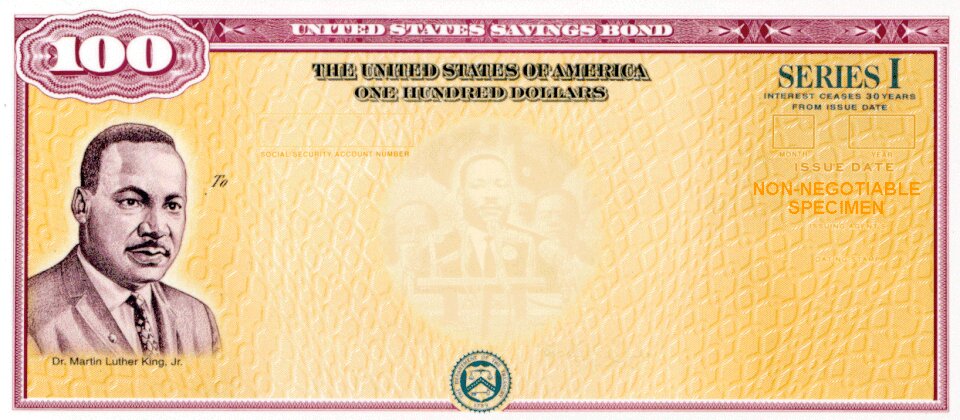

TreasuryDirect listed 5.51% as the interest rate on Series I Savings Bonds, including a fixed rate of 1.40%, as of November 1, 2026, for bonds issued November 1, 2026 to April 30, 20271. The rate that applied to bonds issued from May 1 to October 31, 2026 was 4.26%, with a fixed rate of 0.90%, so both pieces of the rate are higher for issues from Sunday, November 1. This page explains where each piece comes from, using the Treasury's own worked example.
How the 5.51% is built
The Treasury says the interest on a Series I Savings Bond is a combination of a fixed rate and an inflation rate, and it also calls the result the composite rate or earnings rate2. The fixed rate is known when the bond is bought and never changes, while the inflation rate is reset every six months, and the Treasury sets both on May 1 and November 12. The inflation rate is based on changes in the non-seasonally adjusted Consumer Price Index for all urban consumers (CPI-U), all items, including food and energy2.
For issues from November 2026 to April 2027 the worked example on the Treasury page uses a fixed rate of 1.40% and a semiannual inflation rate of 2.04%2. The composite rate formula is the fixed rate, plus two times the semiannual inflation rate, plus the fixed rate times the semiannual inflation rate2. That gives 0.0140 plus 0.0408 plus 0.0002856, or 0.0550856, which rounds to 0.0551 and is shown as 5.51%2.
Most of the total comes from the middle term. In the example the semiannual inflation rate enters twice, as 2 times 2.04%, or 4.08%, against the 1.40% fixed rate. The last term, 0.0002856, is the small cross term, which adds about three hundredths of a percentage point. These parts are simple arithmetic on the figures above.
Compared with the May 2026 rate
The same page lists the May 1, 2026 settings as a fixed rate of 0.90% and an inflation rate of 1.67%2. Putting those into the formula gives 0.0090 plus 0.0334 plus 0.0001503, or 0.0425503, which rounds to 4.26%. The new composite rate of 5.51% is 1.25 percentage points higher, and the fixed rate rose by 0.50 points while the inflation rate rose by 0.37 points. The three differences are the site's own subtraction of the Treasury's figures.
Fixed rates in the Treasury table were 1.20% on November 1, 2024, 1.10% on May 1, 2025, 0.90% on November 1, 2025 and 0.90% on May 1, 2026, before 1.40% on November 1, 20262. The same table shows a fixed rate of 0.00% on each setting from May 1, 2020 through May 1, 20222. It also lists 1.40% on November 1, 2006 and May 1, 2006, so the new fixed rate equals the rates in the table for those two 2006 settings2. Inflation rates in the table were 0.95% on November 1, 2024, 1.43% on May 1, 2025, 1.56% on November 1, 2025 and 1.67% on May 1, 2026, before 2.04% on November 1, 20262.
Why two bonds can earn different rates
The fixed rate applies for the life of every bond issued in the six months after it is set, while the inflation rate applies for six months to every Series I Savings Bond ever issued2. A bond bought in 2026 under a 0.90% fixed rate and one bought from November 1 under a 1.40% fixed rate therefore share the same inflation rate but not the same composite rate. The 5.51% headline is the rate for new issues, not for every Series I Savings Bond outstanding.
When a bond's rate changes
Although the Treasury announces new rates in May and November, the date a rate changes for a bond is every six months from its issue month, so a bond issued in May changes on November 1 and May 1, and one issued in December changes on June 1 and December 12. A Series I Savings Bond earns interest from the first day of the month it is bought2. Twice a year the interest earned in the previous six months is added to the principal, and the next six months apply the rate to the larger value, which is semiannual compounding2.
Purchase, cash-in and tax rules
Since January 1, 2025, Series I Savings Bonds are available only in electronic form, bought in a TreasuryDirect account1. The minimum is $25, any amount above that to the penny is allowed, and one Social Security number or one Employer Identification Number may buy up to $10,000 in electronic Series I Savings Bonds in a calendar year1.
A bond can be cashed after 12 months, but cashing it in less than five years costs the last three months of interest, and a bond earns interest for 30 years unless it is cashed earlier1. The Treasury gives an example: cash in after 18 months and the first 15 months of interest are paid1. Interest is paid when the bond is cashed or matures, and it is subject to federal income tax but not to state or local income tax, with the owner choosing whether to report each year's earnings or all of them at the end1.
This is general information about a published rate and how it is built, not advice on whether any savings bond suits a person's finances. The TreasuryDirect pages carry the full terms, and they were opened on Sunday, November 1, 2026. Both pieces reset on May 1, 2027, when this page's figures will be out of date.
Trivia
- What combined rate does TreasuryDirect list for Series I Savings Bonds issued November 1, 2026 to April 30, 2027? 5.51%1.
- What fixed rate is included in that 5.51%? 1.40%1.
- In the Treasury's worked example, what semiannual inflation rate is used? 2.04%2.
- What was the fixed rate for bonds issued May 1 to October 31, 2026? 0.90%2.
- How many months of interest are lost if a Series I Savings Bond is cashed in before five years? The last three months1.
Sources
- I bonds, TreasuryDirect, U.S. Department of the Treasury. Accessed November 1, 2026.
- I bonds interest rates, TreasuryDirect, U.S. Department of the Treasury. Accessed November 1, 2026.