Indonesia Economy Grows 5.47% in Q3 2026, Beating Forecasts
Key Points
- Statistics Indonesia (BPS) reported on 5 November 2026 that GDP grew 5.47% in the third quarter from a year earlier, up from 5.29% in the second quarter, with growth of 5.45% for January to September.
- Household consumption grew 5.04% and was the largest source of growth, while government consumption grew 8.95% and investment 6.06%.
- Net exports took 0.28 of a percentage point off growth, less than in the first two quarters according to The Jakarta Post, and every business field grew.
- As of 5 November 2026, Bank Indonesia expects 2026 growth of 4.9% to 5.7%.
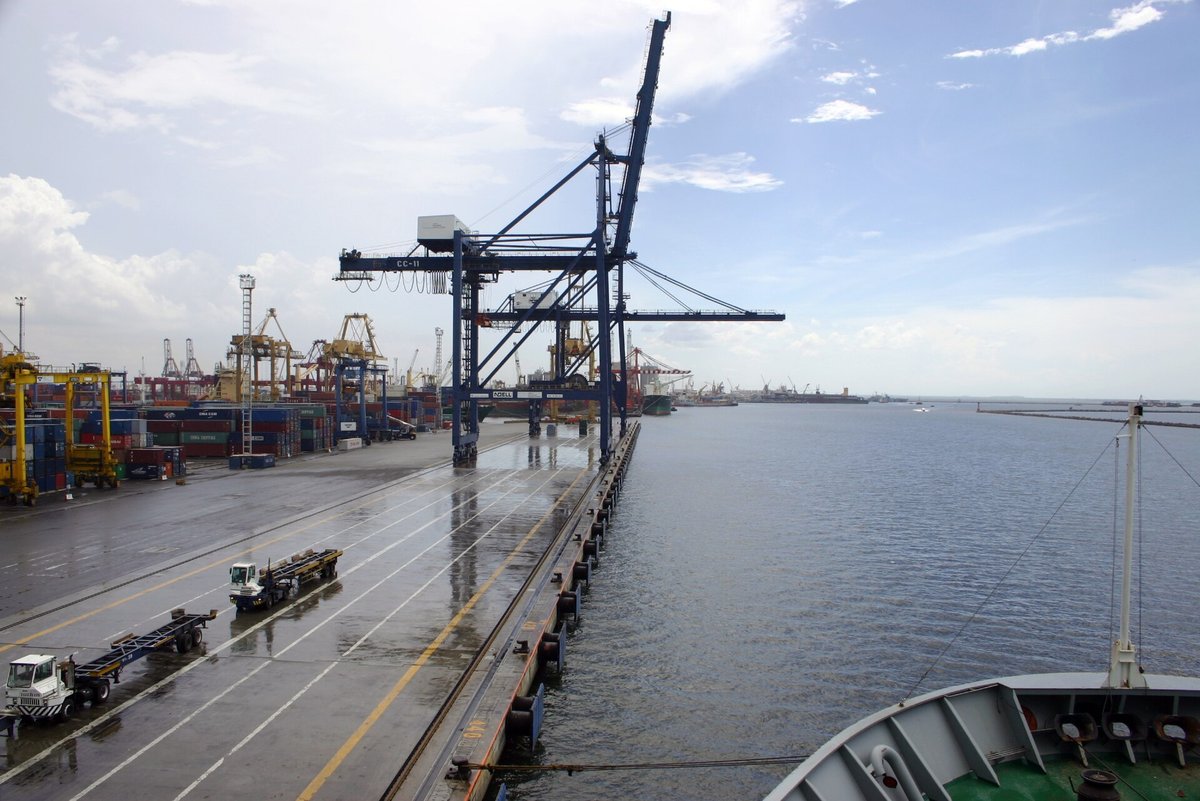

Indonesia's economy picked up speed in the middle of 2026. Statistics Indonesia (Badan Pusat Statistik, or BPS) reported on Thursday, 5 November 2026, that gross domestic product grew 5.47% in the third quarter from a year earlier1, up from 5.04% in the third quarter of 2025. It was also faster than the 5.29% recorded in the second quarter2, according to Bank Indonesia. Measured against the second quarter, output rose 1.59%. Growth for January to September came to 5.45%3 compared with the same months of 2025.
The result came in above most forecasts. A Reuters poll cited by The Edge Malaysia had expected 5.18%4, and Trading Economics put the market consensus at 5.2%5. Rudi Purwono, dean of the Faculty of Economics and Business at Airlangga University, had projected 5.3%7 based on indicators from July to September.
How big the quarter was
GDP at current prices was Rp6,741.0 trillion1 in the third quarter, about US$372.6 billion at Bank Indonesia's JISDOR rate of Rp18,094 on 5 November10. At constant prices, which strip out inflation, Databoks lists Rp3,633.2 trillion6 against Rp3,444.8 trillion a year earlier (about US$200.8 billion and US$190.4 billion), a rise of 5.47%.
Households led, government spending grew fastest
Household consumption, which makes up 51.97% of GDP1, grew 5.04% (5.06% in the second quarter5) and remained the largest source of growth. "Konsumsi rumah tangga masih menjadi sumber pertumbuhan terbesar, yaitu sebesar 2,62 persen1," said Moh. Edy Mahmud, the BPS deputy for national accounts and statistical analysis, which translates as "household consumption remains the largest source of growth, at 2.62 percent." Bank Indonesia linked the rise to higher mobility and to entertainment and sporting events2. Within household spending, restaurants and hotels grew 6.59%1 and transport and communication 5.83%.
Government consumption grew 8.95%1 (15.97% in the second quarter5), the fastest of any spending component, and added 0.62 of a percentage point. Bank Indonesia tied it to higher salaries and allowances for civil servants and to purchases of goods and services2, including the Free Nutritious Meals program (Makan Bergizi Gratis, or MBG).
Gross fixed capital formation, the national accounts measure of investment in buildings, machinery and vehicles, grew 6.06%1 (6.87% in the second quarter5) and added 1.91 percentage points. Together with household spending it accounts for 82.78% of GDP. Vehicles were the quickest part of investment, up 12.96%. Bank Indonesia said investment growth came mainly from motor vehicles2, along with public and private projects.
Trade weighed less on growth
Exports of goods and services grew 4.59%4, faster than in the second quarter, while imports slowed to 7.31%. Net exports took 0.28 of a percentage point3 off growth, less than in the first two quarters, The Jakarta Post reported. Edy Mahmud said Indonesia's main trading partners, including China, the United States, Malaysia, Singapore, Vietnam and South Korea3, were still growing. He also pointed to a rise in palm oil exports and more foreign tourists in July to September, and said wildfires and haze held back growth in some provinces4.
Every sector grew
BPS said all business fields grew1 in the quarter. Manufacturing made the largest contribution, 1.20 percentage points, followed by trade at 0.94, construction at 0.62 and information and communication at 0.49. Accommodation and food and beverage services grew fastest, at 11.22%, with financial services at 8.47% and other services at 8.32%.
Manufacturing itself grew 5.87%5, up from 4.52% in the second quarter, and transport and warehousing grew 8.03%. At the slow end of the table, Databoks lists mining and quarrying at 0.91%6, agriculture, forestry and fisheries at 0.46% and water supply and waste management at 0.28%.
Across the country, Bali and Nusa Tenggara grew fastest, at 6.08%1, followed by Java at 5.84% and Sulawesi at 5.68%. By BPS figures reported by InfoPublik, Java produced 56.05% of GDP and Sumatra 22.55%.
Forecasts for the full year
As of 5 November 2026, Bank Indonesia expects growth for 2026 of 4.9% to 5.7%2. The Edge Malaysia reported that the government expects 5.4% to 5.5%4, which it said would be the fastest annual growth since 2013. Bank Danamon raised its 2026 forecast to 5.35% from 5.2%8. Its economist Irman Faiz said the part of the quarter that beat expectations was external, with net exports improving9, while the contributions of household consumption, investment and government consumption declined. For comparison, the economy grew 5.11% in 20255, below that year's 5.2% goal.
How this compares
Indonesia grew faster than Malaysia and the Philippines in the third quarter but well behind Vietnam. Vietnam's National Statistics Office estimated growth of 9.95% in the third quarter13 and 9.01% for the first nine months, announced on 3 October 2026. Malaysia's Department of Statistics put growth at 5.3% in its advance estimate14 on 16 October 2026. The Philippine Statistics Authority reported 2.1% for the third quarter12 on 9 November 2026.
The World Bank puts Indonesia's GDP at about US$1.45 trillion in 202511, in current US dollars, up from about US$1.40 trillion in 2024.
Trivia
- Where and when was the statistical office that BPS grew out of first set up? In Bogor, in February 192015.
- Which law currently governs statistics in Indonesia? Law No. 16 of 1997 concerning Statistics15.
- In which year did BPS last carry out a population census, and how often does the law require one? In 202015; Law No. 16 of 1997 requires a population census at least once every 10 years16.
- What is the rupiah's ISO 4217 currency code, and its numeric code? IDR, and 36017.
- From which Sanskrit word does the name rupiah come, and what does it mean? From rupya, meaning wrought silver17.
- At what ratio was the rupiah redenominated in 1965? 1,000 old rupiah to one new rupiah17.
- When did construction begin on the harbour at Tanjung Priok, and under which governor general? In 1877, under Johan Wilhelm van Lansberge18, governor general of the Dutch East Indies from 1875 to 1881.
- Where did Tanjung Priok rank among the world's container ports in Lloyd's One Hundred Ports 2019? 22nd busiest18.
Sources
- Irsyad Fadhlurrahman Gani, Ekonomi Indonesia Triwulan III 2026 Tumbuh 5,47 Persen, InfoPublik, 5 November 2026. Accessed November 14, 2026.
- Bank Indonesia, Indonesia's Economy Grows 5.47% in Third Quarter of 2026, News Release No. 28/241/DKom, 5 November 2026. Accessed November 14, 2026.
- Deni Ghifari, RI posts strong GDP growth on better trade balance, The Jakarta Post, 5 November 2026. Accessed November 14, 2026.
- Indonesia 3Q GDP growth beats forecast on improved exports, steady consumption, The Edge Malaysia, 5 November 2026. Accessed November 14, 2026.
- Trading Economics, Indonesia Q3 GDP Growth Beats Forecasts, 5 November 2026. Accessed November 14, 2026.
- Adi Ahdiat, Indonesia's Economic Growth Strengthens in Q3 2026, Databoks (Katadata), 5 November 2026. Accessed November 14, 2026.
- Fajar Nugraha, Indonesian Economy Grows 5.47% in Third Quarter, Beating Forecasts, Metro TV News, 5 November 2026. Accessed November 14, 2026.
- Ekonom Bank Danamon Revisi ke Atas Proyeksi PE 2026 ke 5,35 Persen, BCA Sekuritas (IQPlus, Antara), 6 November 2026. Accessed November 14, 2026.
- Friska Yolandha, Ekonom Revisi Naik Proyeksi Ekonomi 2026, Republika, 5 November 2026. Accessed November 14, 2026.
- Bank Indonesia, Jakarta Interbank Spot Dollar Rate (JISDOR). Accessed November 14, 2026.
- World Bank, GDP (current US$), Indonesia, World Development Indicators. Accessed November 14, 2026.
- Justine Xyrah Garcia, PSA: GDP slows further to 2.1% in Q3 2026, BusinessMirror, 9 November 2026. Accessed November 14, 2026.
- Vietnam posts GDP growth of 9.95% in Q3, VietnamPlus, 3 October 2026. Accessed November 14, 2026.
- Department of Statistics Malaysia, Advance Gross Domestic Product (GDP) Estimates, Third Quarter 2026, 16 October 2026. Accessed November 14, 2026.
- Statistics Indonesia, Wikipedia. Accessed November 14, 2026.
- Undang-Undang Republik Indonesia Nomor 16 Tahun 1997 tentang Statistik (copy on the Berau Regency data portal). Accessed November 14, 2026.
- Indonesian rupiah, Wikipedia. Accessed November 14, 2026.
- Port of Tanjung Priok, Wikipedia. Accessed November 14, 2026.