Indonesia Inflation Eases to 3.23% in October as Chili Prices Climb
Key Points
- Statistics Indonesia (BPS) reported on 2 November 2026 that annual inflation was 3.23% in October 2026, after 3.28% in September, with prices up 0.22% on the month.
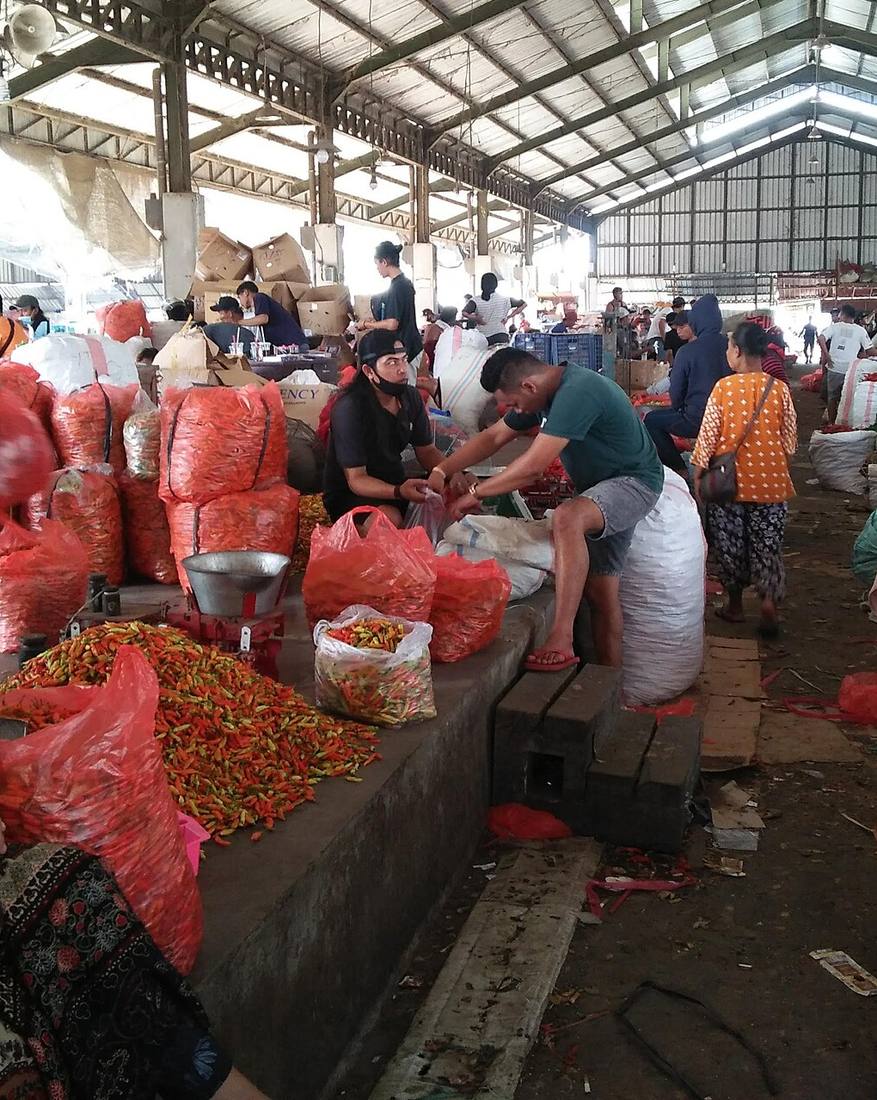
- Food, beverages and tobacco rose 4.82% on the year and added 1.40 percentage points, and volatile food prices were up 5.81%, which Bank Indonesia tied to red chili and bird’s eye chili.
- Core inflation eased to 2.56% from 2.84%, and the headline rate stayed inside Bank Indonesia’s target range of 1.5% to 3.5%.
- As of 2 November 2026 the BI-Rate is 5.75%, held on 21 October, when Bank Indonesia raised its deposit facility rate to 5.00%.

Consumer prices in Indonesia rose a little more slowly in October. Statistics Indonesia (BPS) reported on Monday, 2 November 2026 that annual inflation was 3.23% in October 20262, and Bank Indonesia set that against 3.28% in the previous month5. The consumer price index climbed from 109.04 in October 2025 to 112.56 in October 20262, according to Ateng Hartono, the BPS deputy for distribution and services statistics, at a press conference in Jakarta.
On the month, prices rose 0.22%3, with the index moving from 112.31 in September to 112.56, and inflation for the year to date reached 2.40%3. The annual figure came in slightly below a market consensus of 3.29%6, as compiled by Trading Economics.
Inside the target range
Bank Indonesia aims to keep inflation at 2.5% plus or minus 1 percentage point5, a range of 1.5% to 3.5%. At 3.23%, October sits 0.27 percentage points under the top of the range. In its statement on the figures, the central bank credited consistent monetary policy5 and its coordination with central and regional governments through inflation control teams, along with the National Food Security Program. It said it remains confident5 that inflation will stay inside the range in 2026 and 2027.
Food led the price groups
The food, beverages and tobacco group rose 4.82% on the year2 and added 1.40 percentage points to the headline rate, more than any other group. BPS named bird’s eye chili, fresh fish, rice, cooking oil, broiler chicken, machine-made kretek cigarettes and beef as its main contributors2.
On the month, food, beverages and tobacco rose 0.51% from September4 and contributed 0.15 points, the largest share of the month’s increase. Red chili alone contributed 0.13 points, bird’s eye chili 0.05 and tomatoes 0.04, which BPS described as the main drivers of October inflation4.
Bank Indonesia groups prices into three components, and it defines the volatile food component as inflation predominantly influenced by shocks in the foodstuff category9, such as harvests and natural disruptions. That component rose 5.81% on the year5, up from 5.03% in September, though its monthly pace slowed to 0.77% from 1.46%. The central bank attributed the rise to higher prices for red chili and bird’s eye chili caused by lower production in several producing centres5. It also listed anticipating the effects of extreme weather linked to El Niño5 on food supply and prices as a focus of its work with the government.
Transport and a fuel surcharge on flights
Transport prices rose 4.87% on the year2 and added 0.59 points. Gasoline, airfares, engine lubricants, motorcycles, vehicle servicing and cars led the group. The administered prices component, which Bank Indonesia describes as inflation mainly influenced by government price policy9 on items such as subsidised fuel, electricity rates and transport fares, came in at 3.24% on the year5, a touch below September’s 3.25%. Monthly it rose 0.09% after 0.00%, and the central bank tied that to airfares following a fuel surcharge of 40% on domestic economy class fares5. Airfares added 0.01 point4 to the October monthly figure.
Gold jewelry and core inflation
The personal care and other services group rose 4.52% on the year1 and added 0.32 points, largely because of gold jewelry. “Gold jewelry prices continued to record annual inflation1,” Ateng Hartono said. On the month the picture reversed. The same group fell 0.06%4, subtracting 0.01 point, mainly because gold jewelry prices dropped. A year earlier gold was pulling the other way, when gold jewelry contributed 0.21 point to monthly inflation11 in October 2025.
Core inflation, the component Bank Indonesia calls the persistent component within inflation movements9 and links to demand and supply, exchange rates, international commodity prices and inflation expectations, eased to 2.56% from 2.84%5. Even so, it made the largest contribution1 of the three components, 1.64 points, led by gold jewelry, cooking oil, rice with side dishes, mobile phones, laptops and engine lubricants. Trading Economics put the core rate at a six-month low6. Bank Indonesia pointed to continuing external pressures5 on core prices while saying inflation expectations remain anchored within the target.
Against October 2025
A year ago, BPS reported annual inflation of 2.86% for October 202510, monthly inflation of 0.28% and an index of 109.04, the base the latest annual rate is measured from. Inflation for the first ten months of 2025 was 2.10%11. So the annual rate in October 2026 is 0.37 percentage points higher than twelve months earlier and the year to date figure of 2.40% is 0.30 points higher, while the monthly pace of 0.22% is a little below October 2025’s 0.28%.
Across the provinces
Every province recorded annual inflation in October. North Sulawesi had the highest rate, 8.07%1, and Jakarta the lowest, 2.52%. On the month the spread was wider. BPS counted 33 provinces with inflation and 5 with deflation4, with South Papua highest at 1.12% and Gorontalo showing the deepest monthly deflation, 0.67%.
Where interest rates stand
As of 2 November 2026, Bank Indonesia’s rates are the ones set at its Board of Governors meeting on 20 and 21 October, when it held the BI-Rate at 5.75%7, kept the lending facility rate at 6.50% and raised the deposit facility rate to 5.00%. The deposit facility move was an increase of 25 basis points8. The bank said the decision was consistent with the strategy to stabilise the Rupiah exchange rate7 and with keeping inflation within its target range in 2026 and 2027.
Trivia
- In which year does the World Bank series record Indonesia’s highest annual consumer price inflation, and how high was it? In 1966, at about 1,136%13. The next highest year was 1965, at about 307%.
- What annual consumer price inflation does the same series show for Indonesia in 1998? About 58.5%13, easing to about 20.5% in 1999.
- How many regencies and municipalities does Indonesia’s CPI cover after BPS’s most recent base year update? 15012, up from 90 before the update.
- How many commodity packages does Indonesia’s CPI basket include after BPS’s most recent base year update? 84712, up from 835 before the update.
- Which survey did BPS use to update the CPI base year? The Survei Biaya Hidup (SBH) 202212, the cost of living survey, which replaced SBH 2018.
- Which regulation sets Indonesia’s inflation target for 2025 to 2027? A Minister of Finance Regulation, PMK No. 31 of 20249.
- When was Indonesia’s coordinated inflation target setting, monitoring and control team (TPI) set up, and when did it expand to the regions? It was set up in 2005 and expanded to the regional level in 20089.
Sources
- Arnoldus Kristianus, Indonesia’s Annual Inflation Eases to 3.23% in October, Jakarta Globe, 2 November 2026. Accessed November 2, 2026.
- Imamatul Silfia, Inflasi tahunan Oktober 2026 capai 3,23 persen, pangan jadi pendorong, ANTARA News, 2 November 2026. Accessed November 2, 2026.
- Imamatul Silfia, BPS: RI alami inflasi bulanan 0,22 persen pada Oktober 2026, ANTARA News, 2 November 2026. Accessed November 2, 2026.
- Imamatul Silfia, BPS: Harga cabai jadi pemicu inflasi Oktober 2026 capai 0,22 persen, ANTARA News, 2 November 2026. Accessed November 2, 2026.
- Bank Indonesia, Inflasi IHK Oktober 2026 Tetap Terjaga, Siaran Pers No. 28/238/DKom, 2 November 2026. Accessed November 2, 2026.
- Trading Economics, Indonesia Inflation Rate. Accessed November 2, 2026.
- Bank Indonesia, BI-Rate Held at 5.75%: Strengthening Stability, Supporting Economic Growth, News Release No. 28/233/DKom, 21 October 2026. Accessed November 2, 2026.
- Rizka Khaerunnisa and Kuntum Khaira, BI rate holds at 5.75 percent, deposit facility rate at 5 percent, ANTARA News, 21 October 2026. Accessed November 2, 2026.
- Bank Indonesia, Inflation. Accessed November 2, 2026.
- IQPlus, BPS: Inflasi Oktober 2025 capai 2,86 persen yoy, Sumatera Utara catat kenaikan tertinggi, BCA Sekuritas, 3 November 2025. Accessed November 2, 2026.
- R. Nurul Fitriana Putri, Inflasi Oktober 2025 capai 0,28 persen dipicu kenaikan harga emas perhiasan hingga cabai merah, Jawa Pos, 3 November 2025. Accessed November 2, 2026.
- Bidara Pink, Ada tambahan komoditas dan kota perhitungan inflasi IHK dari perubahan tahun dasar, Kontan, 12 December 2023. Accessed November 2, 2026.
- World Bank, Inflation, consumer prices (annual %), Indonesia, World Bank Open Data. Accessed November 2, 2026.