Scientists Map the Insula, Where the Brain Senses the Body
Key Points
- A study published in Nature on October 21, 2026, used electrodes already implanted in 87 people to map the insula, a brain region that handles signals from the body, including from inside it.
- The researchers describe four distinct regions, including one tied to pain and temperature by body part and one tied to sensations from the internal organs and anxiety states.
- The front of the insula, strongly connected to the prefrontal cortex, influences the other insular regions more than they influence it, which the authors describe as a pathway by which thinking can shape bodily feeling.
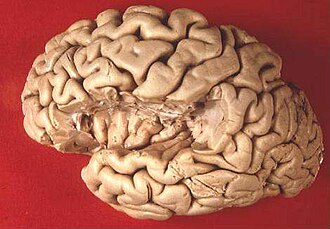

A study published in Nature on Wednesday, October 21, 2026, maps the insula, a part of the brain that handles signals from the body, including from inside it, region by region. Working with 87 people who had electrodes implanted in their brains1, the researchers describe four distinct regions, from one that registers pain in a particular arm or leg to one at the front that appears to shape how those signals are felt.
What the insula is
The insula, or insular cortex, is folded deep within the lateral sulcus3, the fissure that separates the temporal lobe from the frontal and parietal lobes, and it is hidden behind overlying folds of cortex called the opercula. That hiding place has made it notoriously difficult to study in detail2, and Parvizi told Nature that most research on the human insula has relied on brain imaging2.
The study's abstract describes the insula as having a central role in pain, interoception and feelings. Interoception is the set of senses that report on the internal state of the body4.
How the map was made
Placing electrodes deep in the brains of healthy volunteers would be unethical. The team, which includes Josef Parvizi of Stanford University, instead worked with 87 people who had electrodes implanted for medical reasons2. Over experiments spanning more than a decade, they sent electrical currents into different sites in the insula and recorded what participants felt. The paper also used recordings of brain activity during tasks and mapped how the insula's subregions influence one another, placing the results within an existing atlas of the insula's cell structure1.
Four regions
The paper divides the insula into four distinct regions1, listed here from back to front.
- A region at the upper back of the insula carries pain, temperature and other body sensations such as tingling, organized by body part. In Nature's news account, stimulating the rear of the insula produced pain, heat, tingling and numbness in specific areas of the body, such as an arm or a leg2.
- A region at the lower back draws on information from many parts of the body.
- A region in the middle front is tied to sensations from the internal organs and to anxiety states. Stimulation there brought on nausea, pressure and feelings of fullness in the chest2.
- A region at the very front was largely silent when stimulated directly, but became active when people noticed something important or switched what they were doing.
The front of the insula steers the rest
Another result concerns that front region. It is strongly connected to the prefrontal cortex, including the anterior cingulate cortex, and the authors report that it exerts strong and direct influence over the other insular regions while receiving weaker, indirect input from them1. They describe this as a pathway by which thinking can shape the experience of pain and other bodily sensations.
In Parvizi's words to Nature, the insula is “not just reading the body. It is partly influencing the story about how the body should be felt”2. Lucina Uddin, a cognitive neuroscientist at the University of California, Los Angeles, who is not among the paper's authors1, called it “quite a feat” and one of the most comprehensive studies of how the insula produces bodily sensations2.
What it does and does not show
The participants were patients with electrodes already in place for their medical care, not a random sample of the public, and the effects described come from direct electrical stimulation and recordings. The authors say the findings have “mechanistic implications” for how thinking modulates pain and the sense of the body's inner state1. That is an account of how the system is wired, not a treatment.
Trivia
- Where in the brain is the insula? Folded deep within the lateral sulcus3.
- Who first described the insula? Johann Christian Reil3.
- Which anatomy textbook gave the insula the name Island of Reil? Gray's Anatomy, by Henry Gray3.
- Who introduced the concept of interoception, and when? Charles S. Sherrington, in 19064.
- How many participants did the new insula map draw on? 871.
- How many distinct regions does the study describe? Four1.
Sources
- Functional architecture of the human insula, Nature, October 21, 2026 (Quabs, J., Pantis, S., Chen, G. et al.). Accessed October 22, 2026.
- Gemma Conroy, Huge mapping study reveals how your brain tracks what your body is feeling, Nature, October 21, 2026. Accessed October 22, 2026.
- Insular cortex, Wikipedia. Accessed October 22, 2026.
- Interoception, Wikipedia. Accessed October 22, 2026.