Expedition 1 at 26: The First Crew to Live on the Space Station
Key Points
- Shepherd, Gidzenko and Krikalev launched from the Baikonur Cosmodrome on October 31, 2000, and NASA dates continuous human presence on the station to their arrival on November 2, 2000.
- ESA reported the Soyuz docking to Zvezda at 09:21 GMT on November 2 and the crew entering the station at 10:23 GMT.
- Discovery brought the crew home to Kennedy Space Center on March 21, 2001, and NASA says they returned after 141 days.
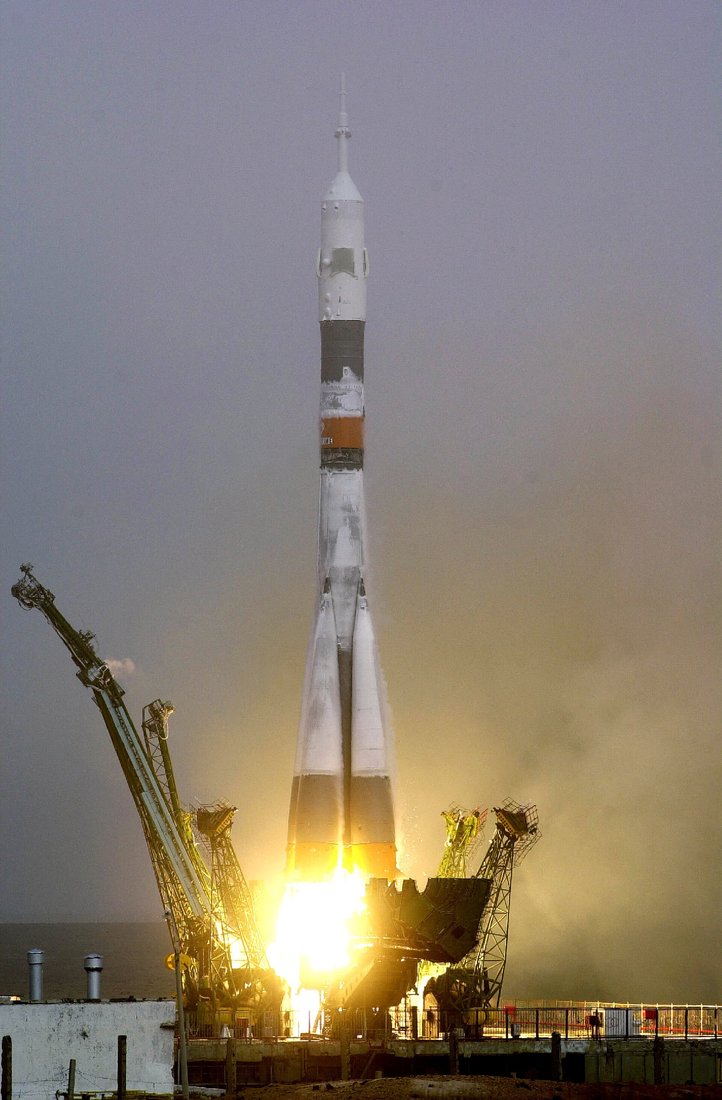

On October 31, 2000, a Soyuz rocket carrying the Soyuz TM31 spacecraft lifted off from the Baikonur Cosmodrome in Kazakhstan with NASA astronaut William M. Shepherd and cosmonauts Yuri P. Gidzenko and Sergei K. Krikalev aboard1. Saturday, October 31, 2026, is 26 years to the day since that launch. A NASA news release said that if this mission and the flights after it went well, October 30, 2000, would be the last day with no humans in space5. NASA now dates the start of the station's continuous human presence to the crew's arrival on November 2, 20006.
Three people, three jobs
NASA lists Shepherd as Expedition 1 commander, Gidzenko as flight engineer and Soyuz commander, and Krikalev as flight engineer1. The Expedition One press kit, updated October 25, 2000, gave their ages as 51, 38 and 424. It said Shepherd was making his fourth flight and would become the second American launched in a Soyuz capsule, after Norm Thagard of the Mir 18 crew in March 19954. Gidzenko had spent 179 days in space as commander of the Mir station, and Krikalev had 484 days in space from four earlier flights, along with seven spacewalks4.
NASA's release says Shepherd graduated from the U.S. Naval Academy in 1971 and became a Navy SEAL, that he had wanted to fly but did not meet the eyesight requirements for pilots, and that he was accepted as an astronaut in 19845. NASA says Shepherd and Krikalev were named to the crew at a January 30, 1996, press conference in Washington, D.C., with Gidzenko named later by Russia1. The launch was first expected in mid-1998, and delays in readying the station's parts pushed it back more than two years1.
Launch from Gagarin's Start
The crew reached Baikonur on October 26, and the rocket rolled out to Launch Pad 1, known as Gagarin's Start, three days later1. The press kit noted that Yuri Gagarin had launched from the same pad almost 40 years earlier4. NASA's anniversary account says the crew wore Sokol suits, that the countdown of about two hours went without incident, and that Shepherd was seen waving and pumping his fists during the climb to orbit1.
NASA's 2020 anniversary article puts ignition at 12:53 p.m. local time1, the press kit scheduled liftoff for about 2:53 a.m. EST (7:53 GMT)4, and Wikipedia lists 07:52 UTC9.
Moving in
Gidzenko flew the Soyuz to a docking at the aft port of the Zvezda module on November 2, 20002. The European Space Agency reported the docking at 09:21 GMT and the crew opening the hatch and entering the station at 10:23 GMT8. NASA says the crew first had trouble opening the Soyuz orbital compartment hatch, and that Krikalev then opened the hatch into Zvezda and floated in first, switching on the lights, with Gidzenko and Shepherd behind him2. The press kit, written before launch, had planned for Shepherd to open that hatch4.
A sign left behind by the STS-106 shuttle crew was still in Zvezda, reading “Sanitized for your safety and health by the crew of STS-106”2. ESA listed the crew's first jobs as switching on the food warmer, setting up sleeping quarters and running communications checks with flight controllers in Houston and in Korolev, Russia8. They turned on the hot water dispenser and the toilet soon after a first televised session, then the oxygen generation and carbon dioxide removal systems over the following days2.
Wikipedia says Shepherd asked at the end of the first day to use the call sign Alpha in place of “International Space Station”, a name that had been used for the station in the early 1990s, and that it was approved for the whole expedition9.
Four months of deliveries
The first Progress cargo ship arrived on November 18 with more than 5,000 pounds of cargo, water and propellant, and when its automated rendezvous system malfunctioned, Gidzenko docked it with a teleoperated system2. About two weeks later the crew of space shuttle Endeavour arrived to install the station's first truss segment, including its first solar arrays2. Atlantis docked on February 9, 2001, and delivered the Destiny laboratory9. The treadmill, needed for daily exercise, was the most troublesome piece of equipment on board, NASA says3.
Handing over the ship's log
Space shuttle Discovery launched on March 8, 2001, with the Expedition 2 crew, and NASA's mission page lists the handover one person at a time, with Gidzenko replaced on March 10, Krikalev on March 11 and Shepherd on March 147. Following naval tradition, Shepherd handed command of the station to Expedition 2 commander Yury Usachev along with the ship's log3.
Discovery landed at Kennedy Space Center in Florida at 2:31 a.m. EST on March 21, 20017. NASA says the Expedition 1 crew rode home in recumbent couches on the middeck rather than upright seats, because months in orbit may have left them deconditioned, and that they returned after 141 days3.
What came after
In an article published December 2, 2025, NASA marked 25 years of continuous human presence on the station, counted from November 2, 20006. The same article says at least 290 people from 26 countries had visited and that more than 270 spacewalks had been dedicated to the station over that quarter century6. When Expedition 1 launched, NASA's release described a 16-nation project expected to be completed in 2006, about the size of a three-bedroom house5.
Trivia
- Which New York town did NASA's October 2000 release say Bill Shepherd was from? Babylon, New York5.
- What was Shepherd's first space shuttle mission, and in what year did it fly? STS-27, in 19885.
- On which shuttle mission did Krikalev help join the Zarya and Unity modules, which made him the first person set to visit the station twice? STS-88, aboard Endeavour, in December 19984.
- Who gave the crew the traditional prelaunch blessing at Baikonur? Father Sergei, a Russian Orthodox priest1.
- Which song by The Clash woke the crew on the morning of March 14, 2001? “Should I Stay or Should I Go,” played at the request of Shepherd's wife9.
- Which module did Discovery carry to the station on the mission that brought Expedition 1 home? Leonardo, a Multipurpose Logistics Module built by the Italian Space Agency7.
- Which U.S. Vice President announced Shepherd and Krikalev as the first crew in January 1996? Al Gore, together with Russian Prime Minister Viktor Chernomyrdin1.
Sources
- John Uri, Space Station 20th: Expedition 1 Crew Launches to the International Space Station!, NASA, October 30, 2020. Accessed October 30, 2026.
- John Uri, Space Station 20th: Expedition 1 Arrives at the International Space Station!, NASA, November 2, 2020. Accessed October 30, 2026.
- John Uri, Space Station 20th: STS-102 Performs First International Space Station Crew Rotation, Returns Expedition 1 to Earth, NASA, March 24, 2021. Accessed October 30, 2026.
- Expedition One Press Kit: Crew Brings the Station to Life, NASA, updated October 25, 2000. Accessed October 30, 2026.
- NASA News Release 00-172, Shepherd Leads Crew Into New Era in Space History, October 30, 2000. Accessed October 30, 2026.
- Linda E. Grimm and Sumer Loggins, The International Space Station Marks 25 Years of Continuous Human Presence, NASA, December 2, 2025. Accessed October 30, 2026.
- STS-102, NASA mission page. Accessed October 30, 2026.
- Expedition 1 crew enters the International Space Station, European Space Agency, November 2, 2000. Accessed October 30, 2026.
- Expedition 1, Wikipedia. Accessed October 30, 2026.
- File:Soyuz TM-31 launch.jpg, Wikimedia Commons (NASA photo ISS01-S-006). Accessed October 30, 2026.