Jamaica Sets Its 1,000th Head-Started Rock Iguana Release for Nov 14
Key Points
- Jamaica's iguana recovery programme scheduled the release of its 1,000th head-started rock iguana for Saturday, November 14, 2026, in the Hellshire Hills of St Catherine.
- When the species was found again in 1990, the group in the Hellshire Hills numbered fewer than 50 animals, "mostly old adults."
- Hatchlings are raised at Hope Zoo in Kingston until they are big enough to defend themselves, then returned to the Hellshire Hills.
- NEPA chief executive Leonard Francis said the survival of the Jamaican rock iguana is not yet assured, pointing to invasive predators, critical habitats, competing demands for land and climate change.
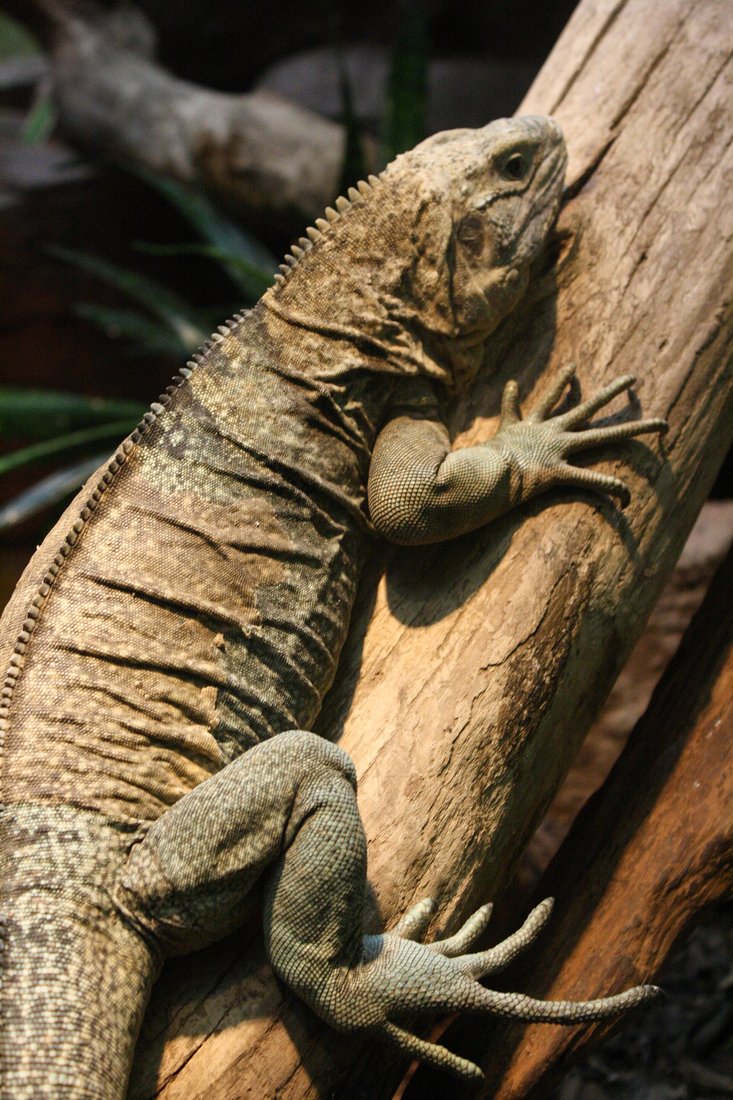

Jamaica's recovery programme for its rock iguana (Cyclura collei) scheduled the release of its 1,000th head-started animal for Saturday, November 14, 2026, in the Hellshire Hills of St Catherine, according to the Jamaica Information Service1. The National Environment and Planning Agency (NEPA) coordinates the programme with local and international partners.
The Jamaica Observer reported that 33 additional iguanas were scheduled to be released into the wild on Saturday2, which would bring the programme to the 1,000 mark. The Fort Worth Zoo, a partner in the programme, put the total at 944 iguanas released as of July 2, 20265.
A species written off, then found again
The Jamaica Information Service calls the Jamaican rock iguana the island's largest native animal, up to five feet long7, and its fact page says the iguana eats mostly fruit, vegetables and leaves. The same page says the animals once lived across much of the island, mostly along the coasts, before their numbers fell sharply after the mid 1800s under pressure from mongooses, cats, stray dogs and land clearing. Environment minister Matthew Samuda noted that the species had been thought to be extinct, and declared so in 1948, before its rediscovery in 19901, the Jamaica Information Service reports.
Survival was confirmed in 1970 from a single individual4, Discover Wildlife reports, citing the IUCN Red List, and the group found in the Hellshire Hills in 1990 numbered fewer than 50 animals, "mostly old adults." Early fieldwork found two communal nesting areas, and intensive monitoring in 1991 and 1992 confirmed only six adult females6 using them, according to an IUCN Species Survival Commission success story published in November 2025.
How head-starting works here
Young iguanas are the ones predators take most often, so the programme collects hatchlings from the wild and raises them at Hope Zoo in Kingston until they are big enough to defend themselves. Rearing them first gives them a better chance of survival4, Discover Wildlife explains. The Fort Worth Zoo makes the same point, saying that by the time they return to the wild their larger size gives them a better chance of avoiding predators and surviving to adulthood5.
The IUCN success story says the head-start facility can now house 150% more hatchlings6 and that time in captivity has been cut in half, which lets more animals move through to release. Samuda said at the meeting on November 9 that the head-start effort at Hope Zoo looks after about 300 juvenile iguanas3, according to the Gleaner; the Observer reported the figure as 250 to 300 juveniles2.
When conservation biologist Stesha Pasachnik joined the effort in 2016, about 300 iguanas had been reintroduced4, she told Discover Wildlife. The IUCN SSC Iguana Specialist Group's species page counts 175 iguanas released into the Hellshire Hills from 1996 through 20128.
Predators, charcoal and land
Head-starting only pays off if the released animals have somewhere safe to live. The main threat, according to the IUCN success story, is invasive alien species, primarily cats and mongoose6. Control work in the core iguana zone began by 1997 and covered about 0.5 square kilometres by 2013. In 2021 a buffer zone was added, doubling the protected area and reducing how often invasive predators reached the core.
Samuda said field teams monitor more than 280 live predator traps3 and have removed more than 1,500 predators from the core of the iguana habitat, the Gleaner reported. The Observer reported that the targets include Indian mongooses and feral cats2. Outside the area receiving predator trapping, the Iguana Specialist Group's species page says, mongooses have been observed depredating 100% of the iguana nests monitored by camera traps8.
The specialist group's species page, which draws on work through the early 2010s, describes roughly half of the 114 square kilometre Hellshire Hills as badly degraded by illegal tree cutting for charcoal, and lists proposed limestone mining, settlements and tourism as threats to the northern and eastern areas. The iguanas themselves are found only near a central core of under 10 square kilometres8.
The Observer describes the Hellshire Hills as home to the Caribbean's largest dry forest2, and reports NEPA ranger Jomo Pinkney explaining that iguanas help trees regenerate by spreading seeds after eating fruit. The IUCN success story credits improved predator control with an increase in the populations of native species6 such as the Jamaican hutia and boa.
Not yet secure
Speaking at the IUCN SSC Iguana Specialist Group's annual meeting in New Kingston, NEPA chief executive Leonard Francis said the survival of the Jamaican rock iguana is not yet assured3, pointing to invasive predators, critical habitats, competing demands for land and climate change. The meeting ran November 8 to 11 at the Jamaica Pegasus hotel, with its opening ceremony on Monday, November 91, and the Gleaner reported that this year's meeting would include the development of a conservation action plan for the next phase of the recovery programme.
The species is listed as Critically Endangered. The Iguana Specialist Group's page gives the Red List assessment as B1ab(iii)+2ab(iii), assessed in 20108, based on what was then a small population of about 200 adults, a single location and continuing habitat decline. The IUCN success story calls the species arguably the most endangered iguana in the world6 and Caribbean rock iguanas the most imperilled group of lizards in the world.
A second wild population would reduce the risk of keeping every animal in one place. Tandora Del Grant, an iguana conservation specialist involved in the project since 1995, according to the Observer, named the eventual reintroduction of the iguanas to Goat Island2 as the next major milestone. The Iguana Specialist Group's page names Great Goat Island as the most promising site, and says the goats there would have to be removed first8, ground vegetation allowed to recover, and mongooses and cats eliminated.
How it compares
The Grand Cayman blue iguana, another Caribbean rock iguana, fell to an estimated fewer than 25 individuals9 by 2001, according to Durrell Wildlife Conservation Trust. Its recovery programme, launched in 1990 according to Durrell, passed its own 1,000th release in July 2018, and the species was moved from Critically Endangered to Endangered in 2012. Durrell notes that its hatchlings spend their first two years in captivity and that active conservation is still needed.
Trivia
- In what year was the Jamaican iguana formally described, and by whom? In 1845, by Gray8, according to the IUCN SSC Iguana Specialist Group.
- How many eggs does a female Jamaican iguana lay in a clutch? Between 6 and 20 eggs8, depending on the female's size and age.
- How long do Jamaican iguana eggs incubate? About 85 to 87 days8, after laying from late May to June.
- Which Jamaican law makes it illegal to possess or harm a Jamaican iguana? The Wild Life Protection Act7, according to the Jamaica Information Service.
- In what year was the Indian mongoose introduced to Jamaica? In 18728, an introduction the Iguana Specialist Group links to the iguana's decline.
- What was the name of the Grand Cayman blue iguana released as number 1,000? Renegade9, released into Collier's Wilderness Reserve.
- Which naturalist, who visited Jamaica in 1688, recorded iguanas as common there in a book published in 1725? Sloane8, cited by the specialist group as Sloane (1725).
- Under which CITES appendix is the Jamaican iguana listed? Appendix I8.
Sources
- Ainsworth Morris, 1,000th Iguana Under Recovery Programme to Be Released in Hellshire Hills Saturday, Jamaica Information Service, 10 November 2026. Accessed November 14, 2026.
- Carlysia Ramdeen, NEPA to release 1,000th Jamaican iguana into the wild, Jamaica Observer, 9 November 2026. Accessed November 14, 2026.
- Sashana Small, Fight for survival continues as J'can iguana recovery reaches 1,000, The Gleaner, 10 November 2026. Accessed November 14, 2026.
- Melissa Hobson, Experts thought these animals might be extinct. Now, 1,000 have been released into the wild, Discover Wildlife, 9 November 2026. Accessed November 14, 2026.
- Fort Worth Zoo, Join us on the Countdown to 1,000 Jamaican Rock Iguanas, 2 July 2026. Accessed November 14, 2026.
- Stesha A. Pasachnik and others, Increased protection for the Critically Endangered Jamaican Rock Iguana, IUCN SSC Iguana Specialist Group Conservation Success Stories, IUCN, November 2025. Accessed November 14, 2026.
- The Jamaican Iguana, Get the Facts, Jamaica Information Service. Accessed November 14, 2026.
- Cyclura collei, Iguana Species, IUCN SSC Iguana Specialist Group. Accessed November 14, 2026.
- 1000th Blue Iguana Released into the Wild, Durrell Wildlife Conservation Trust. Accessed November 14, 2026.