Japan GDP Slips 0.1% Annualized in Q3 as Business Investment Rises
Key Points
- Japan’s real GDP changed by minus 0.0% from the previous quarter in July to September 2026, a decline of 0.1% at an annualized rate, in the Cabinet Office’s first preliminary estimate.
- The median forecast in a Reuters poll was for 0.3% annualized growth, and April to June now shows growth of 1.7% annualized.
- Business investment rose 1.6% while private consumption fell 0.3%, and net exports subtracted 0.6 percentage point from growth.
- The second preliminary estimate is scheduled for 8 December 2026, and the Bank of Japan’s next Monetary Policy Meeting for 17 and 18 December.
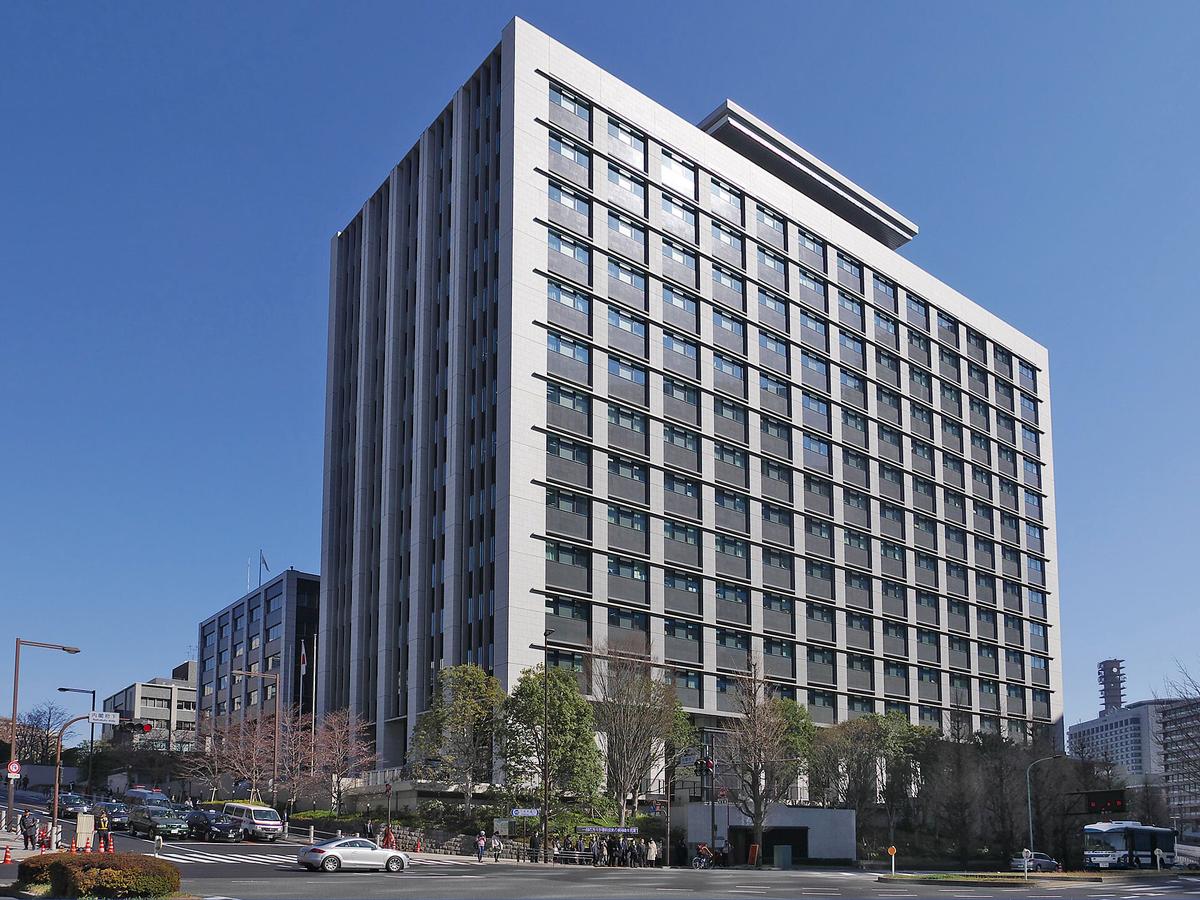

Japan’s economy barely moved over the summer. In its first preliminary estimate for July to September 2026, released on Monday, 16 November 2026, the Cabinet Office’s Economic and Social Research Institute (ESRI) put the change in real gross domestic product (GDP) at minus 0.0% from the previous quarter1, seasonally adjusted. At an annualized rate that is a decline of 0.1%1. The previous quarter now shows growth of 0.4%1, or 1.7% annualized8.
Economists had expected a small gain. The median forecast in a Reuters poll was for 0.3% annualized growth11, and Reuters described the result as the first contraction in four quarters. Kento Minami, a senior economist at Daiwa Securities, told Reuters that “there is no need to be overly pessimistic about the result”11, while noting that growth was negative this time.
Reading the headline numbers
Two growth rates come with every Japanese GDP release. The quarter on quarter rate compares July to September with April to June after seasonal swings are removed. The annualized rate is the annual growth the economy would see if that quarterly rate repeated for four quarters3, which is why a quarterly change too small to show at one decimal place can still round to minus 0.1% once annualized.
Real GDP is measured in chained 2020 yen1, which removes the effect of price changes, so it tracks the volume of goods and services produced. Nominal GDP, in current prices, rose 1.6% at an annualized rate5 in the quarter. ESRI puts nominal GDP at 692,679.5 billion yen4 on a seasonally adjusted basis expressed at an annual rate, or roughly 692.7 trillion yen. At the Federal Reserve’s rate of 158.23 yen per US dollar for 6 November 202614, that is about 4.38 trillion US dollars.
The gap between the two measures reflects prices. The GDP deflator, a broad gauge of prices across everything the economy produces, rose 0.4%9 from the previous quarter, seasonally adjusted, and was 2.4% higher6 than a year earlier. Compared with the same quarter of 2025, before seasonal adjustment, real GDP was 1.1% larger7.
What moved inside the economy
Household spending, the largest part of demand, slipped. Private consumption fell 0.3%1 from the previous quarter, taking 0.1 percentage point off growth. Reuters reported that the market estimate had been a 0.2% decline11. Private residential investment, which covers housing, fell 1.1%1.
Business investment was the main source of strength. Private non-residential investment, the official name for company spending on equipment, buildings and software, rose 1.6%1 and added 0.3 percentage point to growth, a little above the 1.5% increase11 Reuters gave as the market forecast. ESRI’s technical note shows how the first estimate was built. The supply-side estimate of the quarterly change was 7.1% and the demand-side estimate 13.1%3, both in nominal terms before seasonal adjustment, and the demand-side number was a tentative extrapolation.
Public demand was mixed. Government consumption was flat, at minus 0.0%1, and public investment fell 1.1%1. A change in public inventories added 0.5 percentage point1, most of the plus 0.6 percentage point1 that domestic demand as a whole contributed to growth. Private inventories made no contribution1.
Trade pulled the other way. Exports of goods and services fell 0.2%1 while imports rose 2.5%1. Imports are subtracted when GDP is measured by spending, so net exports, the contribution of exports minus that of imports, subtracted 0.6 percentage point1 from growth. Reuters put the market forecast at a drag of 0.4 percentage point11.
A spring quarter revised up
April to June was first reported on 17 August 2026 at 1.1% annualized10 and raised to 1.4% in the second preliminary estimate on 8 September. With this release it stands at 1.7% annualized8. Seasonally adjusted figures are recalculated with each release, so ESRI notes that all seasonally adjusted estimates back to January to March 19942 were revised this time.
The second preliminary estimate for July to September is scheduled for 8:50 a.m. Japan time on Tuesday, 8 December 20263. It will fold in the annual estimates of GDP for fiscal 2025 and demand-side data such as the Ministry of Finance’s Quarterly Financial Statements Statistics of Corporations by Industry3. ESRI lists that corporate survey among the main factors behind revisions to business investment between the two readings. ESRI also plans to revise its seasonal adjustment specifications in that release.
From April to June 2010 through April to June 2026, the mean absolute revision to quarterly real growth between the first and second preliminary estimates was 0.18 percentage point, or 0.73 percentage point at an annualized rate3. A revision of typical size would be large enough to move the annualized figure to either side of zero.
The first estimate for October to December 2026 is due on 15 February 20273.
The Bank of Japan’s calendar
As of 16 November 2026, the Bank of Japan’s guideline is to encourage the uncollateralized overnight call rate to remain at around 1.25 percent12, a guideline the Policy Board kept on 30 October by an 8 to 1 vote. Reuters noted that the bank raised rates in June and September11. The next Monetary Policy Meeting is scheduled for 17 and 18 December 202613, after the second GDP estimate is published.
Japan’s place in the world economy
The International Monetary Fund’s World Economic Outlook data put Japan’s 2026 GDP at about 4.34 trillion US dollars15, the fourth largest, behind the United States at about 32.64 trillion, China at about 21.55 trillion and Germany at about 5.47 trillion. Those are full-year figures, so they differ from a single quarter’s annualized level converted at one day’s rate.
Trivia
- Which economic agency was among the bodies the Cabinet Office replaced? The Economic Planning Agency16.
- What is the Japanese yen’s ISO 4217 numeric code? 39217, alongside the letter code JPY.
- Where does the yen rank among the most traded currencies? Third, after the US dollar and the euro17.
- On what date were Japan’s newest banknotes, the 10,000, 5,000 and 1,000 yen notes, introduced? 3 July 202417.
- What is a 1 yen coin made of, and what does it weigh? Pure aluminium, and exactly 1 gram18. Placed carefully on still water, it can float.
- In which year was the current 1 yen coin design first minted? 195518.
- Where was the 1985 Plaza Accord signed? At the Plaza Hotel in New York City, on 22 September 198519, by France, West Germany, Japan, the United Kingdom and the United States.
- When does the Japanese government’s financial year run? From 1 April to 31 March20.
Sources
- Economic and Social Research Institute, Cabinet Office, Quarterly Estimates of GDP for July to September 2026 (First Preliminary Estimates), summary tables, 16 November 2026. Accessed November 15, 2026.
- Economic and Social Research Institute, Cabinet Office, Jul.-Sep. 2026 (The 1st preliminary), release page, 16 November 2026. Accessed November 15, 2026.
- Economic and Social Research Institute, Cabinet Office, Technical Note and Announcement, Quarterly Estimates of GDP for July to September 2026 (First Preliminary Estimates), 16 November 2026. Accessed November 15, 2026.
- Economic and Social Research Institute, Cabinet Office, Nominal, Seasonally Adjusted Series, levels, CSV, 16 November 2026. Accessed November 15, 2026.
- Economic and Social Research Institute, Cabinet Office, Nominal, Seasonally Adjusted Series (Quarter to Quarter Percent Change, Annualized), CSV, 16 November 2026. Accessed November 15, 2026.
- Economic and Social Research Institute, Cabinet Office, Deflators, Original Series (Year over Year Percent Change), CSV, 16 November 2026. Accessed November 15, 2026.
- Economic and Social Research Institute, Cabinet Office, Real, Original Series (Year over Year Percent Change), CSV, 16 November 2026. Accessed November 15, 2026.
- Economic and Social Research Institute, Cabinet Office, Real, Seasonally Adjusted Series (Quarter to Quarter Percent Change, Annualized), CSV, 16 November 2026. Accessed November 15, 2026.
- Economic and Social Research Institute, Cabinet Office, Deflators, Seasonally Adjusted Series (Quarter to Quarter Percent Change), CSV, 16 November 2026. Accessed November 15, 2026.
- Economic and Social Research Institute, Cabinet Office, Quarterly Estimates of GDP for April to June 2026 (Second Preliminary Estimates), summary, 8 September 2026. Accessed November 15, 2026.
- Makiko Yamazaki and Satoshi Sugiyama, Japan’s economy unexpectedly shrinks as inflation squeezes households, Reuters, republished by WBOW, 16 November 2026 (Tokyo). Accessed November 15, 2026.
- Bank of Japan, Statement on Monetary Policy, 30 October 2026. Accessed November 15, 2026.
- Bank of Japan, Monetary Policy Meetings, schedule. Accessed November 15, 2026.
- Board of Governors of the Federal Reserve System, H.10 Foreign Exchange Rates (Weekly), 9 November 2026. Accessed November 15, 2026.
- International Monetary Fund, DataMapper, GDP, current prices (billions of US dollars), World Economic Outlook data. Accessed November 15, 2026.
- Cabinet Office (Japan), Wikipedia. Accessed November 15, 2026.
- Japanese yen, Wikipedia. Accessed November 15, 2026.
- 1 yen coin, Wikipedia. Accessed November 15, 2026.
- Plaza Accord, Wikipedia. Accessed November 15, 2026.
- Fiscal year, Wikipedia. Accessed November 15, 2026.