Japan Factory Output Rose 2.2 Percent in September 2026
Key Points
- Japan's seasonally adjusted industrial production index rose 2.2 percent in September 2026 from August, to 104.1, in METI's preliminary report released October 30, 2026.
- Motor vehicle production rose 5.5 percent and production machinery, which includes semiconductor manufacturing equipment, rose 3.4 percent from August.
- Manufacturers surveyed by METI expect output to rise 5.1 percent in October and 0.8 percent in November.
- The ministry kept its assessment that industrial production "fluctuates indecisively".

Japan's factories and mines produced more in September 2026 than in August. In its preliminary report, released at 8:50 a.m. Tokyo time on October 30, 2026, the Ministry of Economy, Trade and Industry put the seasonally adjusted production index at 104.1, up 2.2 percent from the previous month1. Against September 2025, the unadjusted index of 107.9 was up 1.9 percent1. It was the first monthly increase in three months3, Jiji Press reported, after a 2.4 percent fall in August4. The seasonally adjusted reading for August was 101.92, so the September figure of 104.1 is a gain of 2.2 points on an index where each point is one percent of the 2020 average.
The ministry kept its assessment3, Jiji Press reported. In its English summary it says industrial production "fluctuates indecisively"1, and it reports that production, shipments, inventories and the inventory ratio all increased1 in September.
What the index measures
METI sets the 2020 average at 1001, which means a reading of 104.1 puts seasonally adjusted output in September about 4 percent above the average month of 2020. The ministry publishes four series side by side: production, shipments, inventories and the inventory ratio1.
Each series comes in two versions. The seasonally adjusted index removes the regular calendar pattern, so it can be compared with the previous month. The original, unadjusted index is compared with the same month a year earlier. That is why the change from August reads 2.2 percent while the change from a year earlier reads 1.9 percent1.
Cars led the rebound
METI names the industries that added most to the rise as motor vehicles, production machinery, and general-purpose and business oriented machinery, in that order1. In the detailed Japanese release, motor vehicle production rose 5.5 percent from August, contributing 0.69 points of the 2.2 percent gain2, as its seasonally adjusted index went from 102.4 in August to 108.0 in September2, with standard passenger cars, drive, transmission and steering parts and light passenger cars listed as the main items. Jiji Press tied the rebound to car factories reopening after shutdowns that followed a major earthquake in Kumamoto Prefecture and typhoons3.
Production machinery, the category that holds chipmaking tools, rose 3.4 percent from August and 20.1 percent from a year earlier2, the biggest year-on-year rise of any industry that grew in September. METI lists semiconductor manufacturing equipment, chemical machinery and mechanical presses2 as the items behind it. The category's seasonally adjusted index stood at 147.3, the highest of any industry in the production table2. General-purpose and business oriented machinery added 4.8 percent, led by conveyors, cranes and pneumatic equipment2.
Electronic parts and devices, which includes chips, rose 3.4 percent from August, with memory chips (MOS memory ICs), circuit boards and fixed capacitors as the main items2, although its unadjusted output was 0.9 percent below September 20252.
Jiji Press reported that eight of the 15 surveyed sectors gained and seven declined3. METI lists the largest drags as iron, steel and non-ferrous metals, then ceramics, stone and clay products, then chemicals excluding inorganic and organic chemicals and medicine1. Steel and non-ferrous metals fell 1.6 percent2, which Jiji Press attributed to problems with copper electrolysis equipment3.
Shipments and stockpiles
Shipments grew more slowly than output. The shipments index rose 0.6 percent to 101.01, while inventories rose 2.5 percent to 99.91 and the inventory ratio rose 2.0 percent to 108.41. On the shipments side, METI names motor vehicles, general-purpose and business oriented machinery, and transport equipment excluding motor vehicles1 as the main contributors to the increase. By type of goods, production of durable consumer goods rose 5.3 percent from August2.
What manufacturers expect next
Alongside the index, METI runs the Survey of Production Forecast in Manufacturing, which it describes as a monthly survey of the planned production amounts for the current and following months1. In the October survey, manufacturers expect output to rise 5.1 percent in October and 0.8 percent in November1, both from the previous month on a seasonally adjusted basis. The September survey had put the October rise at 3.1 percent1.
Electronic parts and production machinery lead the October plans. METI names the main contributors as electronic parts and devices, production machinery, and electrical machinery and information and communication electronics equipment, in that order1. In the industry table, electronic parts and devices plan a 16.6 percent rise in October and production machinery a 15.5 percent rise2. For November, the main contributors are transport equipment, general-purpose and business oriented machinery, and iron, steel and non-ferrous metals1.
METI also prints a realization ratio2 beside each survey, which compares earlier plans with results; October's actual figure comes in the ministry's next preliminary report, listed on its release schedule1.
Trivia
- In what year was Japan's Ministry of Economy, Trade and Industry established? 2001, on January 6, in a reorganization of central government ministries5.
- Which ministry did METI replace? The Ministry of International Trade and Industry (MITI)5.
- When did MITI begin operating? May 25, 19495.
- In which Tokyo district is METI headquartered? Kasumigaseki, in Chiyoda Ward5.
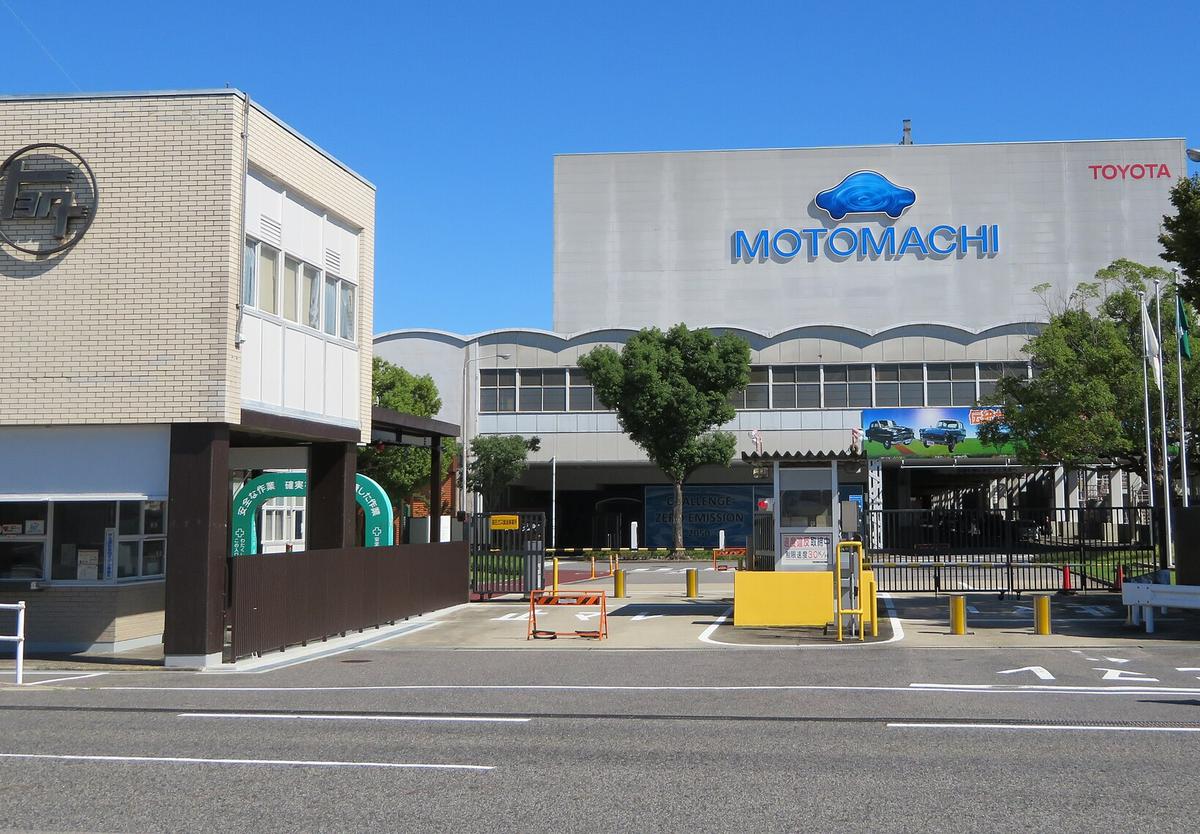
- When did Toyota's Motomachi plant in Toyota, Aichi, start operations? August 19596.
- Which model does the list of Toyota factories show among the Motomachi plant's products? The Mirai6.
- Which Toyota plant has the earliest opening date in the list of Toyota factories, November 1938? The Honsha plant6.
Sources
- Ministry of Economy, Trade and Industry, Indices of Industrial Production, Preliminary Report for September 2026, released October 30, 2026. Accessed October 31, 2026.
- Ministry of Economy, Trade and Industry, Indices of Industrial Production for September 2026 (Preliminary Report), Japanese edition, October 30, 2026. Accessed October 31, 2026.
- Jiji Press, Japan's industrial output rebounds as car factories restart, published by The Nation Thailand, October 30, 2026. Accessed October 31, 2026.
- Xinhua, Japan's industrial output rises 2.2 pct in September, October 30, 2026. Accessed October 31, 2026.
- Ministry of Economy, Trade and Industry, Wikipedia. Accessed October 31, 2026.
- List of Toyota factories, Wikipedia. Accessed October 31, 2026.