JAXA MMX: Japan Launched Toward a Piece of Phobos
Key Points
- JAXA's MMX spacecraft launched on H3 Launch Vehicle flight No. 10 at 04:41:03 Japan Standard Time on Tuesday, October 20, 2026, from the Tanegashima Space Center.
- ESA says at least 10 grams of Phobos material will be brought back to Earth, sealed in a return capsule about 60 cm across.
- DLR's schedule has orbit insertion around Mars in 2027, sample collection in 2029 and the return to Earth in 2031.
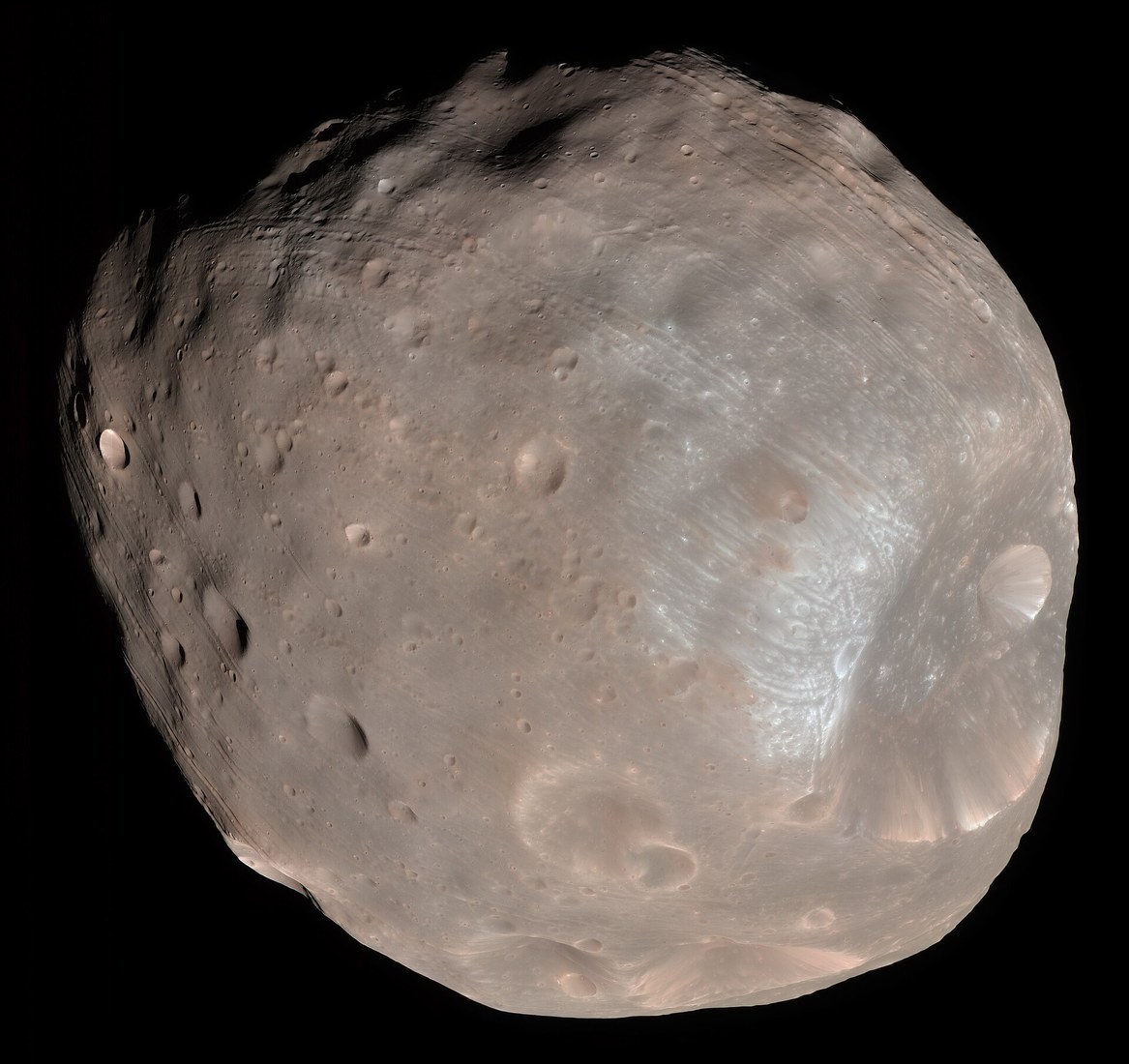

Mars has two small moons, and nobody has ever brought a piece of either one home. Japan wants to be first. JAXA's Martian Moons eXploration spacecraft, MMX for short, launched on H3 Launch Vehicle flight No. 10 at 04:41:03 Japan Standard Time on Tuesday, October 20, 202618, from the Tanegashima Space Center. In France that moment fell on Monday, October 19, at 9:41 p.m. Paris time, and on the US East Coast it works out to 3:41 p.m. EDT the same Monday. JAXA had set aside a backup launch period from October 21 to November 7, 20261, but the launch went ahead on the first date.
Update, November 6, 2026
JAXA's mission blog says the launch was the first in about six years to take place on time without any delays18. The blog also reports that the control room received the spacecraft's first radio signal after launch, described as test transmissions19. As of November 6, 2026, this page has not found a JAXA report on the spacecraft's later condition, so the timeline below is the plan as published before launch.
What MMX is meant to do
The plan is to fly to Mars, settle in near its inner moon Phobos, land, collect some surface material and fly it back. JAXA calls MMX "the world's first mission to return material from the Martian sphere"7, and the European Space Agency's factsheet adds that "MMX will be the first mission that returns to Earth after visiting Mars"3. The outer moon, Deimos, gets a look too, through flybys planned during the 2027 to 2030 stay4.
The spacecraft is big for something headed to such small targets. ESA puts it at around 4,200 kg including fuel3, split into three modules for propulsion, exploration and the trip home. The haul it is after is light. "At least 10 grams of Phobos material will be brought back to Earth,"3 ESA says, sealed in a return capsule about 60 cm across.
JAXA leads the mission in collaboration with NASA3, with France's CNES, Germany's DLR and ESA all contributing. ESA's own share is deep space communication equipment, including a transponder and power amplifier3, plus ground station support after launch. JAXA reported that the spacecraft had been delivered to the Tanegashima Space Center7 by April 1, 2026, where it was undergoing full system tests.
Why two tiny moons matter
Phobos and Deimos are lumpy little worlds. Phobos measures 17 by 14 by 11 miles (27 by 22 by 18 kilometers)9 and orbits Mars three times a day9. Deimos is smaller, 9 by 7 by 6.8 miles (15 by 12 by 11 kilometers)10, and takes about 30 hours10 to go around once.
Where they came from is the big open question, and the evidence points two ways. DLR explains that "surface spectra indicate an origin from captured asteroids"5, while the orbits "favour formation scenarios involving the ejecta from a major impact early in Martian history"5. NASA notes that both moons seem to be made of C-type rock, similar to blackish carbonaceous chondrite asteroids9.
A sample could settle it, because rock carries the chemistry of the place it formed. As a 2017 ISAS article put it, if the moons came from Mars, "their rock type should resemble that of Mars"12, and if they were captured, they "would have formed in a different part of the Solar System"12.
The instruments and the rover
ESA's factsheet lists the science payload on the main spacecraft, including MEGANE, a gamma ray and neutron spectrometer3; MIRS, a near-infrared spectrometer; the OROCHI camera; a LIDAR; and two Super Hi-Vision cameras, one 4K and one 8K. NASA supplied MEGANE, built at the Johns Hopkins Applied Physics Laboratory, which reads the elemental makeup of Phobos from the neutrons and gamma rays emitted from its surface8. CNES provides the MIRS near-infrared imaging spectrometer4. The sample itself will come from two tools, a corer sampler and a pneumatic sampler3.
Then there is Idefix, a small rover from the two European agencies. DLR is responsible for developing the rover's casing and its robotic locomotion system6, and CNES supplies camera systems and the rover's central service module. Idefix will be delivered to the surface of Phobos from an altitude of less than 100 metres5 and carries a six-channel radiometer (miniRAD) and a Raman spectrometer (RAX)5, along with navigation cameras and two WheelCams that watch how its wheels meet the ground. CNES plans a 100-day mission4 for the rover on a moon where gravity is some 1,800 times weaker than on Earth4.
The timeline
After launch, the spacecraft is planned to reach Mars around a year later3, and then "it will orbit around the martian moon Phobos for three years."3 DLR's schedule has orbit insertion around Mars in 2027, rover delivery and operations in 2027 to 2028, sample collection in 2029 and the return to Earth in 20315. ESA gives the homecoming as Japanese fiscal year 20313.
Japan has done this before
JAXA has brought samples home twice already. Its first Hayabusa spacecraft launched on May 9, 2003, aboard an M-V rocket13 and reached asteroid Itokawa on September 12, 2005. On June 13, 2010 (JST)14 the probe released its capsule, which came down at Woomera, Australia. That November, JAXA confirmed that most of the rocky grains inside were "definitely from Asteroid Itokawa"15, most of them smaller than 10 micrometers.
Hayabusa2 went further. It launched from Tanegashima on December 3, 201416, arrived at asteroid Ryugu on June 27, 2018, made two touchdowns in 2019 and delivered its capsule on December 6, 2020. Japan's science ministry reported more than 5.4 grams of soil samples from the asteroid17, far beyond the original target of 0.1 gram. MMX aims for about twice that.
A short history of Phobos and Deimos
Both moons were found in August 1877 by Asaph Hall. NASA dates Deimos to August 1110 and Phobos to August 179. He was working with the 26-inch Clark refractor at the U.S. Naval Observatory11, and the Linda Hall Library notes he was "urged on by his wife"11. The names come from "two sons of Mars who represented Fear and Terror"11. NASA translates Phobos as fear9 and Deimos as dread10.
Phobos will not be around forever. It is nearing Mars at a rate of six feet (1.8 meters) every hundred years9, and NASA expects it to crash into Mars in 50 million years or break up into a ring9.
Trivia
Who is the largest crater on Phobos named after?
Chloe Angeline Stickney Hall9, Asaph Hall's wife. The Linda Hall Library credits Carl Sagan with naming Stickney crater11.
What does the instrument name MEGANE mean in Japanese?
It is the Japanese word for "eyeglasses"8, and it also stands for Mars-moon Exploration with Gamma Ray and Neutrons.
How much would Idefix weigh on Phobos?
The rover weighs 25 kg on Earth but only the equivalent of 15 grams on Phobos3, according to ESA.
About how high above the Martian surface does Phobos orbit?
About 6,000 km12, according to ISAS.
Where are the Phobos samples set to come down in 2031?
In the Australian desert4, according to CNES.
Where is Hayabusa2 heading next?
After flying past asteroid Torifune in July 2026, it is bound for asteroid 1998 KY26, with arrival scheduled for 203116.
How big is the largest crater on Deimos?
NASA puts it at about 1.4 miles (2.3 km) across, one fifth the size of the largest crater on Phobos10.
How many rocky grains from Itokawa did JAXA first identify in the Hayabusa capsule?
About 1,500, from sample catcher compartment A15.
Sources
- JAXA, Launch of the MMX (Martian Moons eXploration) spacecraft onboard the H3 Launch Vehicle No. 10, MMX News, August 20, 2026. Accessed October 16, 2026.
- CNES, Launch of the MMX probe to the moons of Mars, event page, October 19, 2026. Accessed October 16, 2026.
- European Space Agency, MMX factsheet. Accessed October 16, 2026.
- CNES, MMX project page. Accessed October 16, 2026.
- DLR, Mission Martian Moons eXploration (MMX). Accessed October 16, 2026.
- DLR, Martian Moons eXploration (MMX), project page. Accessed October 16, 2026.
- ISAS/JAXA, Martian Moons eXploration (MMX) mission page. Accessed October 16, 2026.
- Johns Hopkins Applied Physics Laboratory, NASA Delivers Science Instrument to JAXA Martian Moons Mission, March 18, 2024. Accessed October 16, 2026.
- Phobos, NASA Science. Accessed October 16, 2026.
- Deimos, NASA Science. Accessed October 16, 2026.
- William B. Ashworth Jr., Scientist of the Day: Asaph Hall, Linda Hall Library, October 15, 2024. Accessed October 16, 2026.
- ISAS/JAXA, We're going to the Martian moons!, ISAS Cosmos, April 11, 2017. Accessed October 16, 2026.
- ISAS/JAXA, Asteroid Explorer HAYABUSA (MUSES-C) mission page. Accessed October 16, 2026.
- JAXA, Asteroid Explorer HAYABUSA (MUSES-C) Reentry, press release, June 14, 2010. Accessed October 16, 2026.
- JAXA, Identification of origin of particles brought back by Hayabusa, press release, November 16, 2010. Accessed October 16, 2026.
- ISAS/JAXA, Asteroid Explorer Hayabusa2 mission page. Accessed October 16, 2026.
- Ministry of Education, Culture, Sports, Science and Technology (MEXT), MEXT Minister visits JAXA Sagamihara Campus, December 18, 2020. Accessed October 16, 2026.
- JAXA, A path to the heavens opens: launch of the H3 Launch Vehicle flight No. 10, MMX News. Accessed November 6, 2026.
- JAXA, The first cry from space: initial transmission from the MMX spacecraft after launch, MMX News. Accessed November 6, 2026.