Kazakhstan Releases a Second Amur Tiger Into the Wild at Ile-Balkhash
Key Points
- Kazakhstan released a male Amur tiger named Amur into the Ile-Balkhash State Nature Reserve on October 31, 2026, after the female Umit was released there on July 31.
- Four Amur tigers, two adults and two cubs, were “captured in the wild in Russia’s Khabarovsk region” and brought to Kazakhstan in May 2026.
- Both released tigers wear satellite collars, and another 30 kulans were moved into the reserve in September 2026.
- Discover Wildlife reported in October 2024 that WWF and the Kazakh government hoped to reach a total population of 50 tigers by 2035.
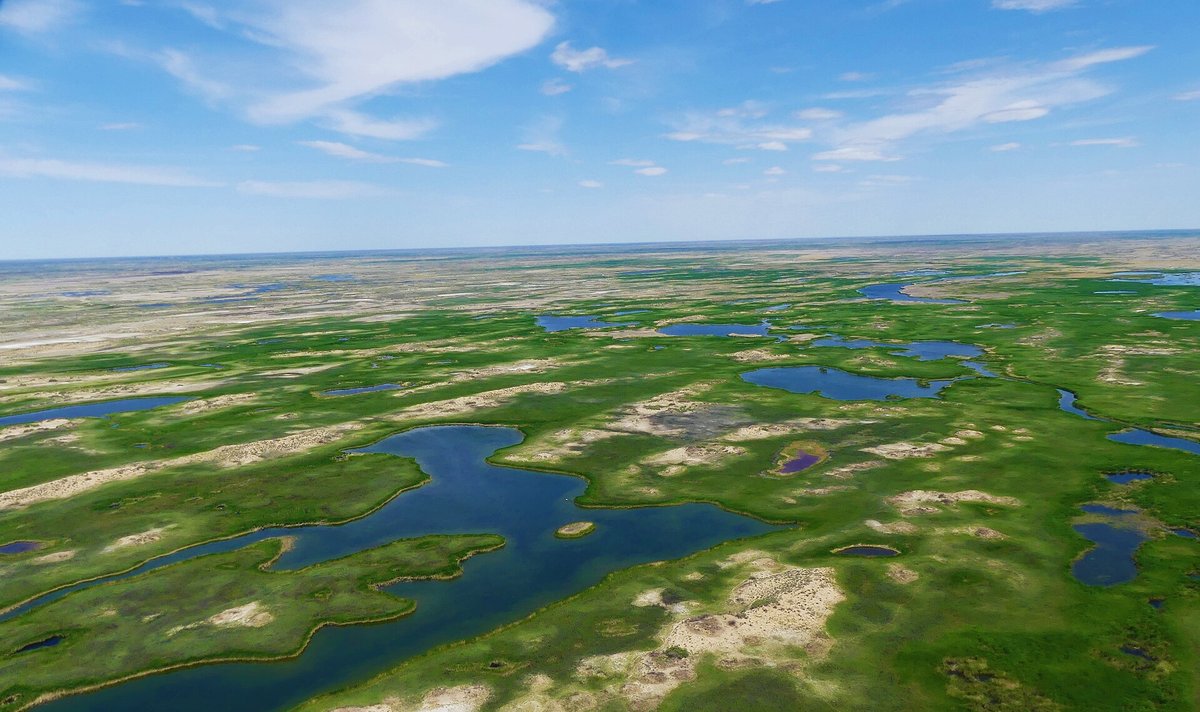

Kazakhstan has released a second tiger into the wild. A male Amur tiger named Amur was freed on October 31, 20261 in the Ile-Balkhash State Nature Reserve, the country’s Ministry of Ecology and Natural Resources announced, three months after a female named Umit was returned to the wild there on July 31. Tigers had been missing from the country for more than 70 years1.
Both animals wear satellite collars2 so specialists can follow their movements and how they adapt. As of November 2, 2026, specialists reported that Umit’s adaptation was progressing successfully and that she was hunting independently2.
The tiger Kazakhstan lost
The big cat that once lived here was the Caspian tiger, also called the Turan or Turanian tiger. It disappeared from Kazakhstan in the mid-20th century2 because of habitat loss, declining prey and poaching. The last one recorded in the country was killed in 19484.
Kazakhstan first announced its plan to bring tigers back in 20103, at the first International Tiger Conservation Forum in St. Petersburg. The Ile-Balkhash reserve was created in 20184. It covers the Ili River delta and the southern shore of Lake Balkhash4. The Ili originates in China and flows into Lake Balkhash5, and the land along it was part of the tiger’s historical range3.
Why Amur tigers
Scientists determined that the most closely related tigers were those now only found in Russia’s Amur region7. One genetic comparison found that the main mitochondrial DNA types of the Russian Far East and the extinct Caspian populations differed by only one nucleotide4. Kazakh officials say the Amur tiger belongs to the same continental subspecies3, which makes reintroduction scientifically possible.
Amur tigers live mainly in Russia’s Far East, where experts estimate about 750 remain in the wild3. They are larger and have thicker coats than tigers elsewhere in Asia, which helps them cope with winter lows of minus 10 to minus 20 degrees Celsius7 at the reserve.
How the tigers arrived
The first Amur tigers to reach the reserve came from Europe. Two captive tigers, Bogdana and Kuma, were transferred from the Netherlands in September 20244. In November 2025, Kazakhstan and Russia signed a joint roadmap3 for bringing in Amur tigers.
Four more arrived in May 2026: an adult male and female aged three to four years and two cubs aged six to seven months, all captured in the wild in Russia’s Khabarovsk region3. They were airlifted from Khabarovsk to Almaty and then moved by Mi-8 helicopter3 to the reserve. The animals were a gift from Russia’s president3, Vladimir Putin, during a state visit.
Umit was released first, fitted with a GPS/GSM satellite collar4, and reserve staff were tracking her around the clock in early August with satellite data and camera traps. Before his own release, Amur went through veterinary exams and behavioral assessments2 of his health, his hunting skills and his response to humans. He was kept in an acclimatization enclosure in the reserve under continuous supervision2 by specialists. The director general of the Amur Tiger Centre, Sergey Aramilev, attended the October release1.
The cubs
The two cubs are named Turan and Ussuri4, and they are to stay in enclosures until they are at least 18 months old. As of November 5, 2026, they were being raised in special adaptation enclosures, and Alibek Kuantyrov, Kazakhstan’s Minister of Ecology and Natural Resources, said the ministry plans to release them “next spring or summer.”6 The final decision will come once they reach an appropriate age and pass their assessments, according to The Times of Central Asia5.
Rebuilding the prey base
A tiger needs large prey. Rebuilding the prey base has been a main part of the work. Authorities released 205 Bukhara deer4 between 2018 and 2024 and brought in kulans, a wild ass, while roe deer and wild boar numbers have also grown. On May 31, 2026, 119 kulans3 had been released into the reserve, according to Euronews.
In September 2026, another 30 kulans1 were moved to the reserve from Altyn-Emel State National Nature Park.
Living alongside people
A dedicated anti-conflict team monitors the tigers and works with local residents2. Residents are to receive individual alerts if a tracked tiger comes within five kilometers4 of a home or settlement, and a public hotline has run since May 2025. The ministry has also outlined three safety zones5 around Umit’s habitat.
The long view
WWF has supported the effort, and Kazakhstan’s ecology ministry and WWF International signed a memorandum in 20242. The long-term aim is a sustainable tiger population in the Ili River delta and the southern Balkhash region2. In October 2024, Discover Wildlife reported7 that WWF and the Kazakh government hoped to reach a total population of 50 tigers by 2035. Daniyar Turgambayev, Chairman of the Committee of Forestry and Wildlife, described the program as a long-term effort spanning the next 40 to 50 years3.
Trivia
- Which lake gave the extinct Caspian tiger another of its names? Lake Balkhash. It was also called the Balkhash tiger8, as well as the Hyrcanian tiger and the Mazandaran tiger.
- Which region of western China was part of the Caspian tiger’s range? The Xinjiang region, where tigers vanished from the Tarim River basin in the 1920s8.
- Which naturalist used the scientific name Felis virgata for the Caspian tiger, and in what year? Johann Karl Wilhelm Illiger, in 18158.
- Lake Balkhash is unusual because its two parts differ. How? Its western part is fresh water and its eastern half is saline9, and the Saryesik peninsula divides the two.
- What share of Lake Balkhash’s inflow comes from the Ili River? Roughly three-quarters or more of the inflow, according to Wikipedia’s Lake Balkhash article9 (73 to 80 percent).
- In what year were the last Bukhara deer in the Syr Darya valley killed, before the species was brought back there? 196210.
- How many kulans did Altyn-Emel National Park, the park that later sent kulans to Ile-Balkhash, hold in October 2024? 3,96511, the figure The Astana Times gave when 24 of them were moved to the Altyn Dala reserve, as the Turkmenian kulan12 article also records.
Sources
- Kazakhstan releases second Amur tiger into the wild as reintroduction program advances, Qazinform, 2 November 2026. Accessed November 17, 2026.
- Ayana Birbayeva, Kazakhstan Releases Second Tiger Into Wild as Reintroduction Program Advances, The Astana Times, 2 November 2026. Accessed November 17, 2026.
- Tomiris Bilyal, Amur tigers released into the wild in Kazakhstan to help restore the extinct Turan species, Euronews, 31 May 2026. Accessed November 17, 2026.
- Stephen M. Bland, Kazakhstan Releases First Tiger into Wild in More Than 70 Years, The Times of Central Asia, 3 August 2026. Accessed November 17, 2026.
- Sergey Kwan, Kazakhstan Tiger Reintroduction: Second Amur Tiger Released into the Wild, The Times of Central Asia, 3 November 2026. Accessed November 17, 2026.
- Amur Tiger Released into Wild in Kazakhstan as Reintroduction Efforts Continue, 24.kz, 5 November 2026. Accessed November 17, 2026.
- James Fair, “It gives me goosebumps.” Rare Amur tigers return to Kazakhstan, Discover Wildlife, 2 October 2024. Accessed November 17, 2026.
- Caspian tiger, Wikipedia. Accessed November 17, 2026.
- Lake Balkhash, Wikipedia. Accessed November 17, 2026.
- Bukhara Deer Reintroduced To Syr Darya River Valley, RFE/RL, 2 August 2009. Accessed November 17, 2026.
- Kulans Transported to Central Kazakhstan to Restore Population, The Astana Times, 19 October 2024. Accessed November 17, 2026.
- Turkmenian kulan, Wikipedia. Accessed November 17, 2026.