Kenya Launches a US$160 Million Ten Year Plan to Fund Conservation
Key Points
- On October 21, 2026, the Government of Kenya and The Nature Conservancy unveiled Thamani Asili, a US$160 million conservation initiative, with donor money raised through TNC and its alliance partner Enduring Earth.
- About US$80 million is to come from philanthropy, and the Government of Kenya is expected to match it with an equal US$80 million over 10 years.
- The partners aim for about 17.3 million hectares conserved over the decade, with about 1.6 million people benefiting directly and about 7,800 direct jobs.
- Thamani Asili is the third project finance for permanence deal in Africa and the tenth supported by Enduring Earth.
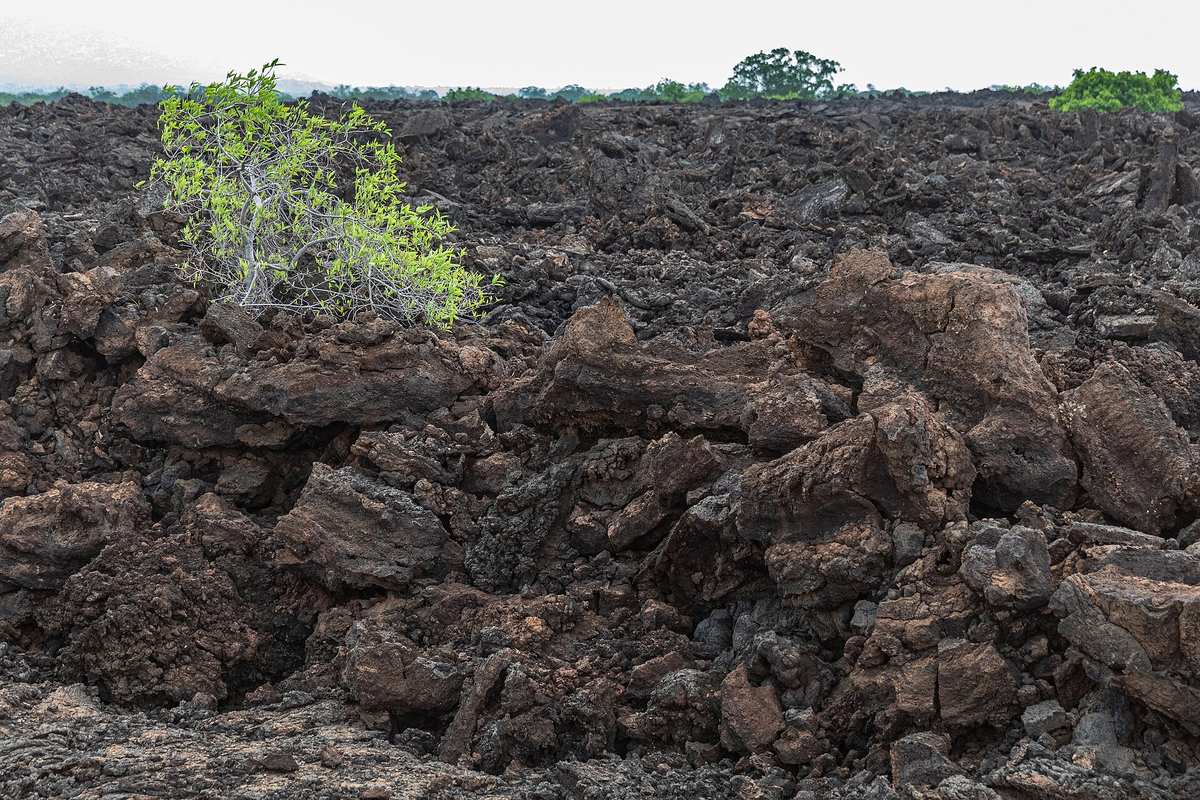

Kenya has a new ten year plan to pay for conservation across much of the country. On October 21, 2026, the Government of Kenya and The Nature Conservancy (TNC) unveiled Thamani Asili1, a US$160 million initiative built on a model called project finance for permanence. The donor money is being raised through TNC and its alliance partner, Enduring Earth2, CGTN reported, citing Xinhua. Tourism and Wildlife Cabinet Secretary Rebecca Miano launched the programme at Tsavo West National Park in Taita Taveta County2, and Dawan Africa reported that she spoke on behalf of President William Ruto3. The name is Kiswahili for "value of nature," according to Reuters5.
Who pays, and how
The cost is split down the middle. TNC says about US$80 million is to be mobilized from philanthropy1, and the Government of Kenya is expected to match it with an equal US$80 million over 10 years. "Under the program agreement, the government has committed $80 million," Miano said at the launch, as quoted by CGTN2. Reuters reported that the donor half comes from dozens of donors5, including billionaire heirs of the Walton and Cargill families. The donor list in the TNC release includes the Rob Walton Foundation and Margaret A. Cargill Philanthropies1.
In shillings, Dawan Africa put the total at about Ksh 20.8 billion3, and Pulse arrived at the same figure at an exchange rate of Sh130 to the dollar4. The Central Bank of Kenya's indicative rate, posted on October 23, 2026, was Ksh 129.89 to the US dollar9, which turns Ksh 20.8 billion into about US$160.1 million, in line with the partners' figure.
The money will flow through the Thamani Asili Fund for Kenya, a newly created independent conservation trust fund1 that manages and disburses donor funding and tracks progress.
What the plan aims to do
Over the decade, the partners are aiming for about 17.3 million hectares conserved1. TNC describes three parts: establishing about 2.7 million hectares of new conserved areas, improving the management of about 11 million hectares of existing conservation areas, and creating the conditions for communities to better manage another 6 million hectares. The work covers 31 counties2, CGTN reported, and starts in four priority areas that TNC names as Tsavo to Coastal, Greater Ewaso, Greater Rift to Western, and Southern Kenya1. Dawan Africa reported that the programme will strengthen more than 130 community conservancies3.
The release expects about 1.6 million people to benefit directly1, and about 3.9 million more could gain from better land governance and nature-linked economic opportunities. It projects about 7,800 direct jobs and 15,000 indirect ones. Planned activities include ecological tourism, sustainable grazing, carbon programs1 and other nature-based businesses, along with land-use planning and steps to reduce conflict between people and wildlife, such as better protection for livestock. The partners also project about 7.5 million tons of avoided carbon emissions by 20351.
"Thamani Asili strengthens community rights, voices and decision-making over land and resources," said Ruth Masha, Country Director for Kenya at TNC, as reported by Business Today Kenya6.
What project finance for permanence means
A 2021 guide published by the World Bank and WWF describes a PFP as an approach that "secures important policy changes and all funding necessary"8 to meet a programme's conservation goals over a defined, long period. The guide traces the idea to conservationists, former bankers and consultants who borrowed methods from mainstream finance.
In TNC's description of the model, rights holders and stakeholders formally adopt a full conservation plan and funding commitments together, and "all necessary funds must be committed and all closing conditions must be met before a PFP deal is done."7 Reuters described the model as one that binds funding to key government policy changes5. Until every one of those commitments is secured, TNC says7, "no dollar is distributed."
Earlier deals of this kind
TNC says the approach was first tested by First Nations in Canada7, supported by TNC, to secure protection and long-term management of parts of the Great Bear Rainforest in 2006, and the Canadian government calls the Great Bear Rainforest the world's first PFP initiative13. Forever Costa Rica followed in 2010, and TNC lists Eternal Mongolia, in 2024, at US$198 million. Peru's Natural Legacy began its design phase at the World Parks Congress in Sydney in 20148 and closed in May 2019, according to the World Bank and WWF guide; Andina reported that month that Peru would spend US$140 million12 to protect 38 Amazon reserves.
TNC calls Thamani Asili the third PFP in Africa and the tenth1 supported by Enduring Earth. The first two were in Namibia and Gabon. Namibia for Life, valued at about US$63 million, was signed in Windhoek on May 20, 202610 and described as Africa's first PFP, a label the Cheetah Conservation Fund also uses11. TNC dates Gabon Infini, which it says brings up to US$200 million over 10 years, to August 20267. Enduring Earth, founded by TNC, The Pew Charitable Trusts, World Wildlife Fund and ZOMA LAB, says it has worked to durably conserve more than 282 million hectares1 in Brazil, Canada, Colombia, Gabon, Kenya, Mexico, Mongolia and Namibia.
Why Tsavo
Tsavo West is part of Tsavo National Park, which was established in 1948 and later divided into East and West14, and covers about 9,000 square kilometres15 in Taita Taveta County. Reuters reported that the Tsavo region holds Kenya's largest national parks, about 40% of its elephants and 20% of its critically endangered black rhinos5. Another of the four regions lies along the Tanzania border and takes in the Maasai Mara National Reserve, which connects to the Serengeti.
The programme supports Kenya's goal of conserving 30% of its lands, inland waters, and near-shore ecosystems1. TNC estimates Kenya is at about 20 to 23%5, Reuters reported. Ryan Bidwell, who heads TNC's PFP programme, told Reuters, "There is a substantial gap that would be largely closed." Reuters also cited a UN Environment Programme report quoting past government estimates that about 42% of Kenya's GDP and 70% of its employment depend on nature.
Trivia
- About how many people did the two man-eating lions of Tsavo likely eat in 1898? About 35 people, roughly 11 by one lion and 24 by the other, according to a University of California, Santa Cruz analysis16; Patterson later claimed the lions had killed 135 people.
- In what year did Patterson sell the Tsavo lions' hides to the Field Museum in Chicago? In 192417. The lions went on display the next year, and in 2025, on the centenary of that display, WBEZ reported they remain one of the museum's most important displays18.
- Which hills feed Mzima Springs in Tsavo West with underground water? The Chyulu Hills19, which catch heavy rain and send it underground to distant springs.
- Which Kenyan mountain is the second highest peak in Africa? Mount Kenya20, at 5,199 m.
- Which was the first national park set up in Kenya? Nairobi National Park21, started in 1946 about seven kilometres from the city centre.
- Where did Sudan, the last male northern white rhino, die in March 2018? At Ol Pejeta Conservancy in Kenya22, at the age of 45.
- By what nickname is Lake Turkana known because of the colour of its water? The Jade Sea23.
Sources
- The Nature Conservancy, press release: The Government of Kenya and The Nature Conservancy Unveil US$160m Thamani Asili Community Conservation Initiative, October 21, 2026. Accessed October 23, 2026.
- CGTN (Xinhua), Kenya launches $160 million initiative to fund wildlife conservation, 22 October 2026. Accessed October 23, 2026.
- Pascal Ndegwa, KWS and Partners Launch Thamani Asili: USD 160 Million Project Finance for Permanence Programme, Dawan Africa, 21 October 2026. Accessed October 23, 2026.
- Kibaki Muthamia, Kenya's Sh20.8 billion Conservation Deal: How the Thamani Asili Programme Will Work, Pulse Kenya, 21 October 2026. Accessed October 23, 2026.
- Marc Jones, Kenya seals $160m conservation finance deal, Reuters via TimesLIVE, 21 October 2026. Accessed October 23, 2026.
- Victor Adar, Kenya, The Nature Conservancy Ink $160M Thamani Asili Deal, Business Today Kenya, 23 October 2026. Accessed October 23, 2026.
- The Nature Conservancy, Enduring Earth, updated 3 September 2026. Accessed October 23, 2026.
- Humberto Cabrera N., Carolin Planitzer, Tanya Yudelman and Jon Tua, Securing Sustainable Financing for Conservation Areas: A Guide to Project Finance for Permanence, World Bank and WWF, November 2021. Accessed October 23, 2026.
- Central Bank of Kenya, Daily KES Exchange Rates, posted 23 October 2026. Accessed October 23, 2026.
- Tourism Update, Namibia secures US$63m for conservation, 21 May 2026. Accessed October 23, 2026.
- Cheetah Conservation Fund Namibia, Namibia secures N$1 billion conservation financing milestone, 26 May 2026. Accessed October 23, 2026.
- Andina, Peru to spend $140 million to protect big chunk of Amazon, 30 May 2019. Accessed October 23, 2026.
- Government of Canada, Great Bear Rainforest: a blueprint for success, modified 5 March 2024. Accessed October 23, 2026.
- Britannica Editors, Tsavo National Park, Encyclopaedia Britannica. Accessed October 23, 2026.
- Tsavo West National Park, Wikipedia. Accessed October 23, 2026.
- University of California, Santa Cruz, Legendary man-eating lions of Tsavo likely ate about 35 people, not 135, say scientists, 2 November 2009. Accessed October 23, 2026.
- Field Museum, Man-eating Lions Ate Fewer People Than Believed, 25 February 2011. Accessed October 23, 2026.
- Rafaela Jinich, Field's Tsavo lions mark century as kings of museum exhibits, WBEZ (Chicago Sun-Times), 9 February 2025. Accessed October 23, 2026.
- Big Life Foundation, Hidden Water of the Chyulu Hills, 22 March 2022. Accessed October 23, 2026.
- UNESCO World Heritage Centre, Mount Kenya National Park/Natural Forest. Accessed October 23, 2026.
- Stanley Waitagei, Nairobi National Park: Home of wildlife in city, Nation, 5 May 2016, updated 2 July 2020. Accessed October 23, 2026.
- John R. Platt, RIP Sudan, the Last Male Northern White Rhino, Scientific American, 20 March 2018. Accessed October 23, 2026.
- Britannica Editors, Lake Turkana, Encyclopaedia Britannica. Accessed October 23, 2026.