Left Brain, Right Brain: What 1011 Brain Scans Found in 2013
Key Points
- A 2013 PLOS ONE paper by Jared Nielsen and colleagues analyzed resting-state scans from 1011 people aged 7 to 29 and reported that its data were not consistent with a whole-brain phenotype of greater left-brained or right-brained network strength.
- The paper identified nine left-lateralized and 11 right-lateralized hubs, including language regions on the left and attention control regions on the right, so some regions do lean to one side.
- The authors describe lateralization as a local rather than a global property of brain networks, with connections correlated across subjects only when they share a node.
- The idea has roots in Roger Sperry's work on patients whose hemispheres had been surgically disconnected, which won half of the 1981 Nobel Prize in Physiology or Medicine, and a 2014 essay says later popular claims owe more to myth than to the evidence.
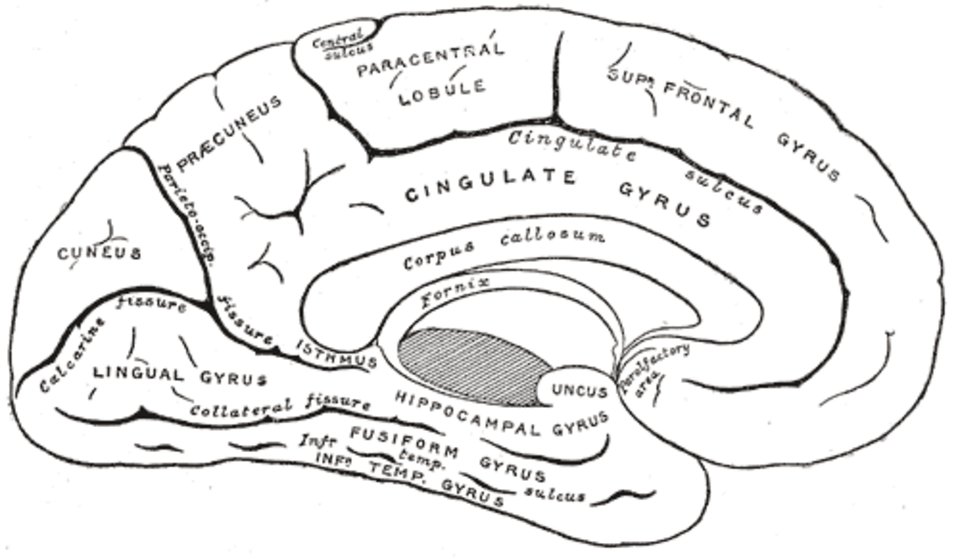

A 2013 paper in PLOS ONE by Jared Nielsen and colleagues analyzed resting-state brain scans from 1011 people aged 7 to 29 and found that their data were not consistent with a whole-brain phenotype of greater left-brained or greater right-brained network strength across individuals1. The popular idea that each person is either a logical left-brain type or a creative right-brain type has a real scientific root, though, and the sources below show where the root ends and the slogan begins.
Where the idea started
The 1981 Nobel Prize in Physiology or Medicine went half to Roger W. Sperry for his discoveries concerning the functional specialization of the cerebral hemispheres2. The Nobel Assembly's press release describes patients who had undergone commissurotomy, a neurosurgical technique that severs the connections between the two hemispheres, which had been carried out in a number of patients with severe, intractable epilepsy2. Sperry studied these patients in the early 1960s and, according to the press release, showed that each hemisphere had its own world of perceptual experience, emotions, thoughts and memory, out of reach of the other2.
The press release says the isolated left hemisphere is concerned with abstract thinking, symbolic relationships and logical analysis of details, and that it can speak, write and make mathematical calculations2. It adds that the right hemisphere is clearly superior to the left for concrete thinking, spatial consciousness and comprehension of complex relationships, and in comprehension of music2. The same text also recalls that Ivan Pavlov, almost 50 years earlier, had concluded that mankind can be divided into thinkers and artists, and it wonders whether the left hemisphere might be the dominant one in thinkers and the right in artists2. That speculation, offered in a press release about patients whose hemispheres had been surgically disconnected, is a handy preview of how the idea would travel.
How the idea grew past the evidence
In a 2014 essay in PLOS Biology, Michael Corballis of the University of Auckland writes that the split-brain work led to speculation, most of it exaggerated or ill-founded, about the complementary functions of the two sides of the brain3. He gives Betty Edwards' Drawing on the Right Side of the Brain, first published in 1979, as one popular example of the view that the right hemisphere is responsible for creativity, and says that brain imaging shows creative thought activates a widespread network, favoring neither hemisphere3. Corballis adds that polarities of left and right brain are broadly invoked in art, business, education, literary theory and culture, but owe more to the power of myth than to the scientific evidence3.
The same essay notes that left-right asymmetries of brain and behavior are known to be widespread among both vertebrates and invertebrates, so asymmetry itself is not a uniquely human trait3. The asymmetry is real. What the sources dispute is the step from "some functions lean to one side" to "each person is dominated by one side".
What the 2013 scan analysis did
Nielsen and colleagues used publicly available resting-state scans for 1011 individuals between the ages of 7 and 29, aggregated from 28 sites in the 1000 Functional Connectomes Project plus typically developing subjects from the ADHD 200 project, which added 8 sites1. For each person, they measured functional lateralization for each pair of 7266 regions covering the gray matter at 5-millimeter resolution, as a difference in correlation before and after inverting the images across the midsagittal plane1. They used the difference in gray matter density between matching left and right coordinates as a regressor to reduce the effect of structural asymmetries1.
The question they asked was specific. If some people were left-brained, then a person with strongly left-lateralized connections in one place should tend to have strongly left-lateralized connections everywhere. The paper states its aim as evaluating whether strongly lateralized connections covaried within the same individuals1.
What they found
They identified nine left-lateralized and 11 right-lateralized hubs. The left-lateralized hubs included regions of the default mode network and language regions such as Broca Area and Wernicke Area, while the right-lateralized hubs included regions of the attention control network, such as the lateral intraparietal sulcus, anterior insula, area MT and frontal eye fields1. So the map of leaning regions was real, and it matched familiar territory. The paper reports that connections involving only left or only right hubs were positively correlated across subjects, but only for connections that share a node1.
The authors conclude that lateralization of brain connections appears to be a local rather than a global property of brain networks, and that their data are not consistent with a whole-brain phenotype of greater left-brained or greater right-brained network strength across individuals1. In the discussion they write that an individual brain is not left-brained or right-brained as a global property, but that asymmetric lateralization is a property of individual nodes or local subnetworks1.
The abstract also reports small increases in lateralization with age and no differences between genders1. Among the limitations, the authors list the lack of behavioral data in the subject sample, and they say that source data on handedness were lacking1. That matters for how far the paper can reach. It examined connectivity patterns, not whether people described as analytical or artistic differ in their scans.
What holds up and what does not
Taken together, the three sources separate two claims. The first is that the hemispheres differ in what they do, and that is supported. In most right-handed individuals, the 2013 paper says, attention to language stimuli elicits activity lateralized to the left hemisphere, while attention to visuospatial processing elicits activity lateralized to the right1. The second is that people fall into left-brain and right-brain types, and the sources opened here do not support it. The 2013 paper notes that in popular reports left-brained and right-brained have become terms associated with both personality traits and cognitive strategies, with a logical, methodical approach attached to left-brained and a more creative, intuitive one to right-brained1.
One caution applies. The 2013 analysis is a single paper, albeit a large one, and it is about resting-state connectivity. It does not test every way someone might claim to be a "left-brain person". The accurate statement is narrower than the headline, and it is the one the authors make themselves, that their data are not consistent with a whole-brain left or right phenotype.
Trivia
- Which scientist received half of the 1981 Nobel Prize in Physiology or Medicine for discoveries about the functional specialization of the cerebral hemispheres? Roger W. Sperry2.
- How many individuals aged 7 to 29 were in the 2013 PLOS ONE scan analysis? 10111.
- How many regions covering the gray matter did the 2013 analysis pair up to measure lateralization? 72661.
- In his 2014 PLOS Biology essay, which 1979 book did Michael Corballis cite as an example of the view that the right hemisphere is responsible for creativity? Betty Edwards' Drawing on the Right Side of the Brain3.
- Does the 2013 paper describe lateralization of brain connections as a local or a global property of brain networks? Local, in its words a local rather than a global property1.
Sources
- Jared A. Nielsen, Brandon A. Zielinski, Michael A. Ferguson, Janet E. Lainhart and Jeffrey S. Anderson, An Evaluation of the Left-Brain vs. Right-Brain Hypothesis with Resting State Functional Connectivity Magnetic Resonance Imaging, PLOS ONE, 8(8): e71275, August 14, 2013. Accessed November 8, 2026.
- The Nobel Assembly at Karolinska Institutet, The Nobel Prize in Physiology or Medicine 1981, press release, NobelPrize.org. Accessed November 8, 2026.
- Michael C. Corballis, Left Brain, Right Brain: Facts and Fantasies, PLOS Biology, 12(1): e1001767, January 21, 2014. Accessed November 8, 2026.