Six Calves in 2026 Lifted Cambodia Mekong Dolphins to 118
Key Points
- Six Irrawaddy dolphin calves have been recorded in Cambodia's stretch of the Mekong in 2026, "five in Kratie and one in Stung Treng."
- The estimated population rose from 112 at the end of 2025 to 118 after the sixth calf was spotted at the Kampi pool on April 27, and two deaths this year put the ministry's estimate at 116 in late July.
- The population "collapsed from an estimated 200 individuals in the late 1990s," and the river population is listed as Critically Endangered.
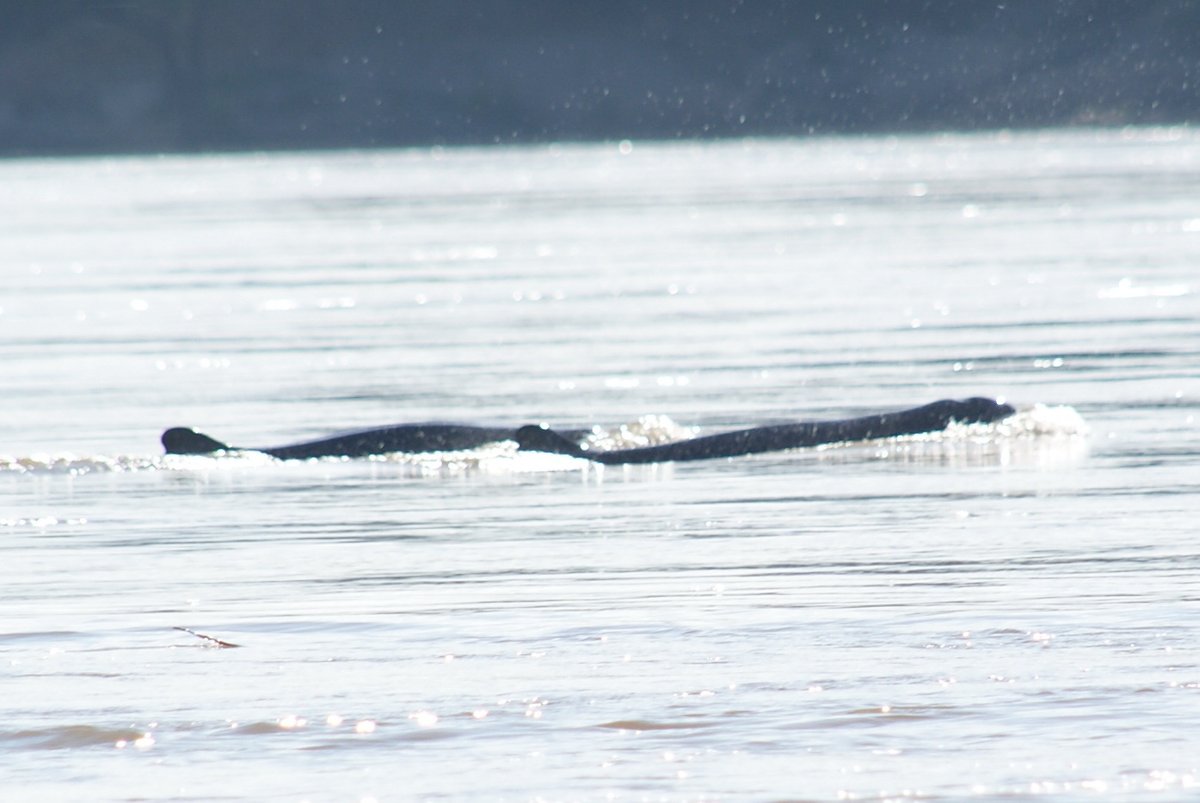

Cambodia's stretch of the Mekong River has recorded six Irrawaddy dolphin calves in 2026, "five in Kratie and one in Stung Treng"2, according to Mongabay. The sixth, spotted in late April, lifted the government's estimate to 118 dolphins8, the Phnom Penh Post reported. Two deaths this year, among them a male found on July 24 in Kandal province after becoming entangled in fishing gear, brought the ministry's estimate to 116 in late July10, Cambodianess reported, although Mongabay's September report and its October 20 update1 still gave 118. The river population is listed as Critically Endangered.
How the count grew
The totals are estimates announced by Cambodia's Ministry of Agriculture, Forestry and Fisheries, and the calves were confirmed by researchers from the Fisheries Administration and WWF. The ministry's yearly figures, published by the Phnom Penh Post8 in April, put the population at 112 at the end of 2025, a year with eight births and no recorded deaths.
The first calf of 2026 was born on February 14 and photographed three days later at the Kampi deep pool by a joint Fisheries Administration and WWF team, Khmer Times reported3, and the ministry put the total at 113. A second calf followed. On March 10, provincial officials put the population at an estimated 1144, Kampuchea Thmey Daily reported, and Kratie's governor, Va Thon, said two calves had been born at the start of the year.
The ministry then announced a third calf, born on March 18 and spotted at the Kampi pool in Kratie, and with a calf seen in Stung Treng province on March 21 the count reached 1167, the Phnom Penh Post reported. That Stung Treng calf, seen at the Koh Santuok pool, was the fourth of the year and the first recorded in the province in 2026, according to Cambodia's national news agency, Agence Kampuchea Presse6. Cambodianess later summed up the spring as a first birth in February "followed by four more in March"9.
The sixth calf was spotted at the Kampi pool on April 27, estimated by the research team at about three days old and swimming with a pod of six adults, the Phnom Penh Post reported8. Researchers from the Fisheries Administration, the Kratie Fisheries Cantonment and WWF verified the sighting, and the total rose to 118. As of late April, the paper added, no dolphin deaths had been recorded over the previous 16 months. That run ended in July, when the male found near the Svay Chrum ferry crossing upstream of Arey Ksat died after becoming entangled in fishing lines and a net11, an autopsy found, according to the Phnom Penh Post.
A dolphin that lives in a river
Irrawaddy dolphins are coastal dolphins that are "patchily distributed"12 in nearshore waters of South and Southeast Asia, according to the IUCN SSC Cetacean Specialist Group, which also lists three separate river populations, in the Mekong, the Mahakam in Indonesia and the Ayeyarwady in Myanmar. All three are Critically Endangered, while the species as a whole is listed as Endangered.
Adults reach about 2.3 metres and weigh 90 to 200 kg14, with a high, rounded forehead, no beak, a small rounded dorsal fin and grey to dark slate blue skin, paler underneath.
In Cambodia the dolphins once ranged much farther than they do now. A 2020 trinational workshop report13 prepared by WWF describes a historical range from the Mekong delta in Vietnam to the Tonle Sap lake and upstream to just past the Laos border at Khone Falls. Researchers now put the range at about 180 km of river in northeast Cambodia, from Kratie to the Laos border, including a very small section in Laos below the falls, and nine deep pools within it form the main habitat. The ministry, in a release carried by Xinhua, describes the dolphins along "a 120-kilometer main channel of the Mekong River in northeast Kratie and Stung Treng provinces"5. Kampi, one of the deep pools, is about 60 metres deep2.
The long decline
The population "collapsed from an estimated 200 individuals in the late 1990s"2, Mongabay reported. The workshop report traces the drop through survey estimates, from an estimated 200 in 1997 to 93 in 200713, and gives 89 as the most recent estimate in 2020, with a 95 percent confidence interval of 78 to 102. During the Khmer Rouge era, hundreds of dolphins were reportedly killed for their oil9, Cambodianess reported.
The worst recent year in the ministry's figures was 2022, when 11 deaths and six births left the population at 96, according to the yearly figures in the Phnom Penh Post8. Totals of 99, 104 and 112 followed over the next three years. In February 2022, the last dolphin in the Anlong Chheu Teal pool on the Cambodia and Laos border was reported dead after becoming entangled in illegal fishing gear2.
The workshop report noted that 73 percent of the dolphins were thought to be more than 20 years old13 in 2020, against an estimated lifespan of 27 to 30 years, and called the high, unexplained mortality of calves "an ongoing cause of serious concern", which is why each new birth counts for so much.
What protects them, and what still threatens them
Cambodia set up protected core habitat zones along a 180 km stretch of the river in 20122, and by 2025 the habitat had been designated as state land, Mongabay reported. Electrofishing is banned throughout Cambodia, and gillnets are banned inside the core zones. The same year the zones were set up, the Fisheries Administration, WWF, a government dolphin commission and international experts developed the Kratie Declaration on the Conservation of the Mekong River Irrawaddy Dolphin13, the basis of a joint conservation strategy.
In 2020, 72 river guards worked from 16 posts13 along the Mekong to enforce those rules, and from 2015 to 2019 they removed an average of more than 102,000 metres of gillnet a year. Guards earn $5 to $7.50 a day1, Mongabay reported.
A river patroller quoted by Mongabay called gillnets "the main threat"2, and a boat driver who takes tourists to see the dolphins at Kampi named gillnets and electrofishing as the main threats. Mongabay also counts more than 160 operational dams on the Mekong and its tributaries, which alter the river's flow and the fish the dolphins depend on.
How the Mekong compares
The other two river populations are of similar size. The workshop report gives 81 identified individuals for the Mahakam (2019) and an estimated 79 for the Ayeyarwady (2020)13, the latter split among three river sections.
Since the 1980s, river dolphin populations have fallen by "nearly three-fourths (73%)"15, Mongabay reported in January 2024, after the Global Declaration for River Dolphins was signed in Bogotá on October 24, 2023. Cambodia is one of the 14 range countries named in that report. The same report cites WWF's figure of a 23 percent increase over five years for the Yangtze finless porpoise, another freshwater cetacean in Asia.
The dolphins are "regarded as sacred animals in both Laos and Cambodia"2, Mongabay reported. The ministry has asked fishers and the public to report dolphin sightings, especially of calves, to fisheries officials8.
Trivia
- Which brackish lagoon in Odisha, India, holds one of the only concentrated lagoon populations of Irrawaddy dolphins? Chilika Lake14.
- Which close relative of the Irrawaddy dolphin was not described as a separate species until 2005? The Australian snubfin dolphin14.
- How do Irrawaddy dolphins in the upper Ayeyarwady River help fishers? They drive fish towards fishers using cast nets14.
- How do researchers identify individual dolphins in the Mekong? By the unique characteristics of each dorsal fin13, recorded during visual surveys.
- For roughly how long is the Mahakam River population thought to have been isolated from other Irrawaddy dolphins? About 500,000 years13, according to the 2020 workshop report.
- How many management and research recommendations did the 2012 Kratie Declaration set out? Twenty five13, reviewed and expanded in 2017.
- Which river dolphin did a six week survey of the Yangtze in late 2006 fail to find? The baiji16, which the survey team concluded was likely extinct, the first global extinction of a large vertebrate in over 50 years.
Sources
- Naina Rao, Six new calves offer hope amid ongoing threats to Cambodia's Irrawaddy dolphins, Mongabay, 20 October 2026. Accessed November 1, 2026.
- Eung Sea, Mekong's Irrawaddy dolphins find cautious hope amid a river in crisis, Mongabay, 17 September 2026. Accessed November 1, 2026.
- First Irrawaddy dolphin calf of 2026 discovered in Mekong River, Khmer Times, February 2026 (FISHBIO repost, 18 February 2026). Accessed November 1, 2026.
- Mekong Dolphin Population in Cambodia Rises to 114, Officials Say, Kampuchea Thmey Daily (FISHBIO repost, 10 March 2026). Accessed November 1, 2026.
- Xinhua, Cambodia records 1st newborn rare Mekong dolphin in 2026, The Peninsula, 17 February 2026. Accessed November 1, 2026.
- Newborn Irrawaddy Dolphin Spotted in Stung Treng, Bringing Total Population to 116, Agence Kampuchea Presse, 22 March 2026. Accessed November 1, 2026.
- Cambodia welcomes two dolphin calves: Kingdom now home to 116, The Phnom Penh Post via Asia News Network, 23 March 2026. Accessed November 1, 2026.
- Chhorn Norn, Latest dolphin calf sighting in Cambodia's Kratie brings population to 118, The Phnom Penh Post via Asia News Network, 29 April 2026. Accessed November 1, 2026.
- Teng Yalirozy, New Life, New Momentum: Sixth Dolphin Birth Fuels Cambodia's Conservation Push, Cambodianess, 28 April 2026. Accessed November 1, 2026.
- Heang Tong, Dolphin Found Dead After Suspected Second Entanglement, Cambodianess, 28 July 2026. Accessed November 1, 2026.
- Mekong Irrawaddy dolphin drowns after becoming entangled in fishing gear, The Phnom Penh Post via The Star, 26 July 2026. Accessed November 1, 2026.
- IUCN SSC Cetacean Specialist Group, Mekong River Irrawaddy dolphins. Accessed November 1, 2026.
- U. Khan and D. Willems (editors), Report of the Trinational workshop on the Irrawaddy Dolphin, 1st to 4th December 2020, WWF, 2021 (copy hosted by the US Marine Mammal Commission). Accessed November 1, 2026.
- Irrawaddy dolphin, Wikipedia. Accessed November 1, 2026.
- Nine countries sign global pact to protect endangered river dolphins, Mongabay, 15 January 2024. Accessed November 1, 2026.
- S.T. Turvey et al., First human-caused extinction of a cetacean species?, Biology Letters 3(5): 537 to 540, 7 August 2007 (PubMed Central copy). Accessed November 1, 2026.