Microsoft Announced Windows on Nov. 10, 1983, Then Took Two Years
Key Points
- The Computer History Museum dates the announcement of Microsoft Windows to November 10, 1983, and Microsoft's own history says Bill Gates announced it in New York.
- Microsoft said Windows would be available by April 1984, but the retail version began shipping on November 20, 1985, and a PC Magazine advertisement put the price at $99.
- The first version did not let its windows overlap one another, and The Register puts sales at about 500,000 copies in the first couple of years.
- The Computer History Museum says Windows was not widely used by most PC users until Windows 3.0 in 1990.

The Computer History Museum dates the announcement of Microsoft Windows to November 10, 19831, which makes Tuesday, November 10, 2026, its 43rd anniversary. Microsoft's own German newsroom history says Bill Gates officially announced the product in New York that day6. Jimmy Maher's history of the project, which draws on InfoWorld and Byte coverage from the time, places the event at New York City's Helmsley Palace Hotel2, and the Centre for Computing History names the same hotel3.
A crowded field in 1983
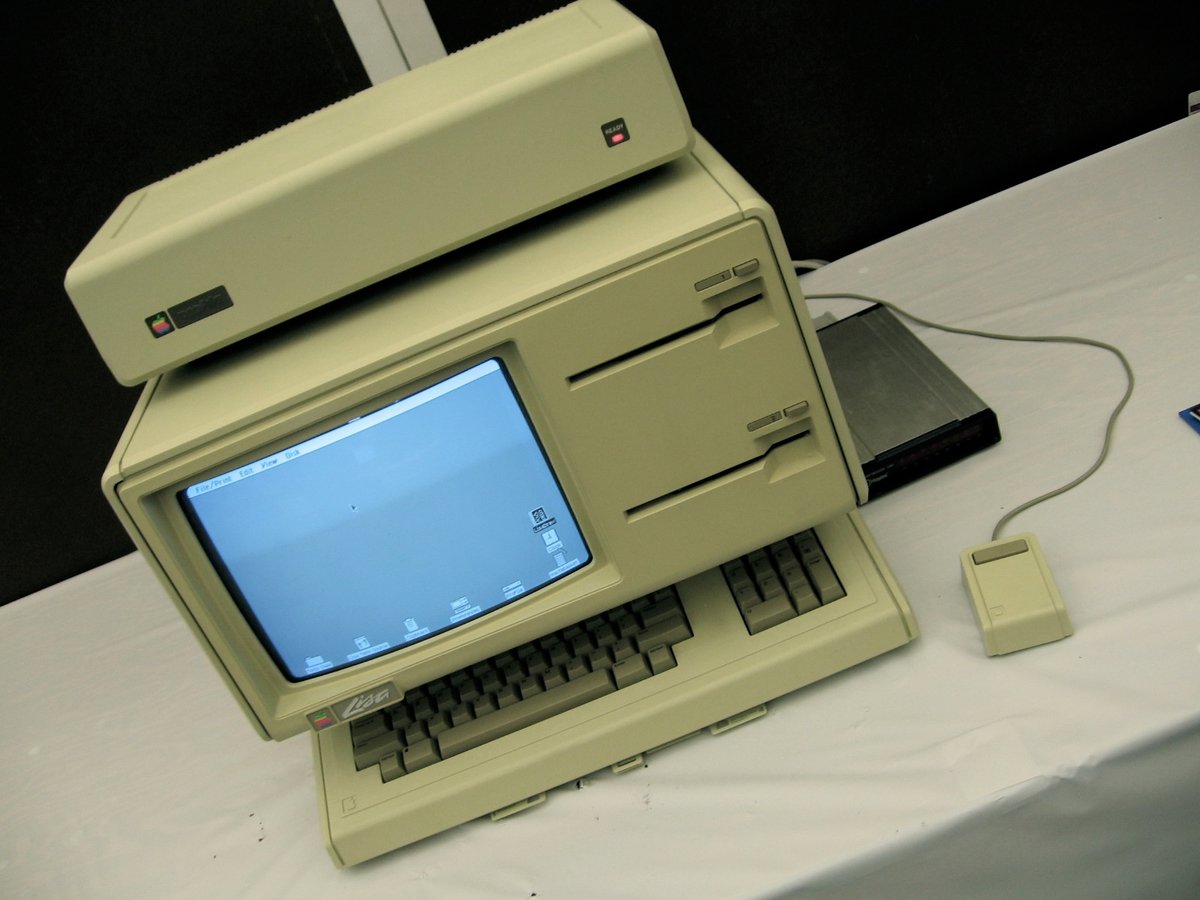
The Computer History Museum traces the windows, icons, menus and mouse pointer interface to Xerox PARC in the 1970s, on a machine called the Alto with a bitmapped graphics display12. In 1979 a delegation from Apple, led by Steve Jobs, visited PARC12, and Apple introduced the Lisa on January 19, 1983, at a cost of $9,99512.
The museum describes Windows as Microsoft's answer to graphical environments such as the Lisa's1. The Xerox link ran through Microsoft too, since Scott MacGregor, who led the technical architecture of Windows, had designed the windowing system for Xerox's Star office workstation2.
What was promised
Maher writes that Windows began inside Microsoft as Interface Manager2 before the Windows name won out. Microsoft said Windows would be available by April 1984 and would run on a computer with no hard drive and as little as 192 K of memory2. The company also said no fewer than 23 of its MS-DOS licensees, among them Compaq, Hewlett-Packard, Radio Shack and Zenith, had signed up to ship it2. IBM was the notable absence from that list2. Gates predicted Windows would be on 90 percent of MS-DOS machines by the end of 19842.
The only actual Windows application at the time was a paint program, along with a few applets like a calendar, a calculator and a basic text editor2.
A February 1984 Creative Computing preview printed the full list of 23 manufacturers, which also included Digital, Texas Instruments, Wang Laboratories and Honeywell4. It described Windows as an extension to MS-DOS that would let programs "run without modification on any 16-bit microcomputer"4, and said it would let a user view unrelated application programs simultaneously and transfer data from one to another4.
Tiles, not stacks
The windows in Windows could not overlap one another at all, and resizing one made the others shrink and move to fit2. Microsoft spun this as an “automatic window layout” feature2, and Steve Ballmer offered his own framing. “It's the metaphor of the neat desktop,” he said2.
The Register notes that the released version insisted on tiling, with no overlapping allowed apart from dialog boxes8. InfoWorld points out that the Macintosh already offered overlapping windows9, and the Computer History Museum credits overlapping windows to Smalltalk, the development environment built at Xerox12.
What shipped, two years late
Microsoft's history says the retail version began shipping after a long delay on November 20, 19856, and Scientific American describes the launch as coming after two years of delays11. By then Apple had shipped the Macintosh, with its graphical interface, more than a year earlier9.
A Microsoft blog post marking the 25th anniversary lists drop down menus, scroll bars, icons and dialog boxes, plus the ability to switch among several programs without quitting and restarting each one5. It says the package came with MS-DOS file management, Paint, Windows Writer, Notepad, Calculator, and a calendar, card file and clock5. The Computer History Museum adds mouse support and cooperative multitasking to the list of headline features1.
A 1985 PC Magazine advertisement told readers, “Of course, all this is going to cost you: $99.”10 The Register lists the requirements as a PC running DOS 2.0, two double sided floppy disk drives and 256K of memory7, up from the 192 K Microsoft had quoted in New York2.
How long it took to matter
Scientific American calls Windows 1.0 a flop11, and The Register puts its sales at about 500,000 copies in the first couple of years7. Even Microsoft's own history says the software had not really been taken up yet6.
The Computer History Museum says Windows was not widely used by most PC users until Windows 3.0 in 199012, and Scientific American says that by the time the third incarnation came out in 1990, Microsoft had a clear winner11. Counting from that New York hotel in 1983, that is roughly six and a half years from announcement to a hit, and roughly four and a half from the first box on a store shelf.
Trivia
- Who argued for calling the product Windows instead of Interface Manager? Rowland Hanson, a marketing manager with a background in consumer brands2.
- At which Las Vegas trade show did Microsoft show Windows in the weeks after the New York announcement? At Comdex2.
- Which game came with Windows 1.0? Reversi, in color5.
- About how many people did Microsoft employ when Windows 1.0 came out? About 9106.
- Which two makers of personal computers did the Windows 1.0 retail box name? IBM and Compaq9.
- What did one reviewer compare running Windows on a PC with 512K of memory to? Pouring molasses in the Arctic11.
- What did the Apple Macintosh cost when it shipped in January 1984? $2,49512.
- In what year did support for Windows 1.0 end? 2001, along with versions 2.0 and 3.08.
Sources
- What Happened on November 10th, This Day in History, Computer History Museum. Accessed November 10, 2026.
- Jimmy Maher, Doing Windows, Part 2: From Interface Manager to Windows, The Digital Antiquarian, June 29, 2018. Accessed November 10, 2026.
- Microsoft announces Windows, Centre for Computing History. Accessed November 10, 2026.
- Product preview: Microsoft Windows; 23 computer manufacturers to support new operating software system, Creative Computing, February 1984, page 74. Accessed November 10, 2026.
- Microsoft Windows turn 25, Microsoft Learn blog archive, November 22, 2010. Accessed November 10, 2026.
- Irene Nadler, Die Geschichte von Windows, Microsoft News Deutschland, July 21, 2020. Accessed November 10, 2026.
- Shaun Nichols, Remember Windows 1.0? It's been 30 years (and you're officially old), The Register, November 20, 2015. Accessed November 10, 2026.
- Richard Speed, Bloated middle age beckons: Windows 1.0 turns 35, The Register, November 21, 2020. Accessed November 10, 2026.
- Jon Brodkin, 25 years later: A look back at the very first Windows, InfoWorld, November 25, 2010. Accessed November 10, 2026.
- Introducing Power Windows, Microsoft Windows advertisement, PC Magazine, 1985, reproduced by GUIdebook. Accessed November 10, 2026.
- Windows 1.0: The flop that created an empire, Scientific American, November 20, 2013. Accessed November 10, 2026.
- Hansen Hsu, The Lisa: Apple's Most Influential Failure, Computer History Museum, January 19, 2023. Accessed November 10, 2026.