Pho Hien and Non Nuoc Inscriptions Join UNESCO Asia-Pacific Register
Key Points
- At MOWCAP's 11th General Meeting in Jakarta, in early November 2026, the committee approved Vietnam's Pho Hien stone steles and the Non Nuoc Mountain cliff inscriptions for its regional register.
- The Pho Hien collection has 41 steles with inscriptions in Chinese and Nom, and Non Nuoc Mountain carries 43 cliffside stone steles known as ma nhai.
- The meeting approved 21 of the 24 nominations it considered.
- By the Vietnam News Agency's count, Vietnam has 13 documentary heritage items under the programme, four on the international register and nine on the Asia-Pacific regional register, as of 5 November 2026.
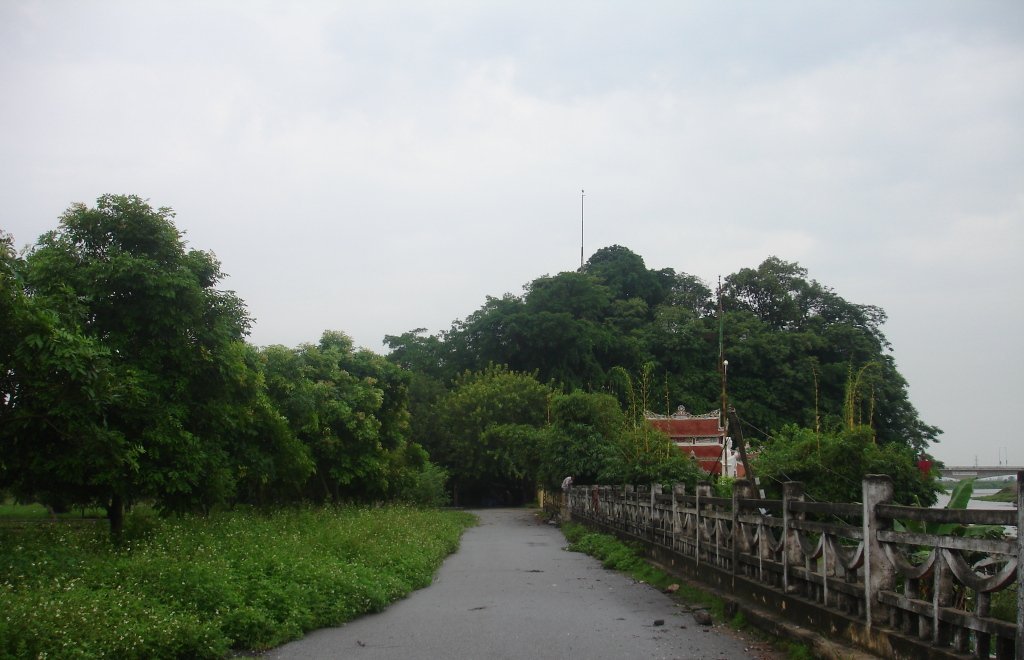

Two collections of inscriptions carved in stone in northern Vietnam are now on UNESCO's Memory of the World register for Asia and the Pacific. They were added at the 11th General Meeting of the Asia-Pacific Regional Committee for UNESCO's Memory of the World Programme (MOWCAP), held in Jakarta, Indonesia2 in early November 2026. The Vietnam News Agency reported that the committee unanimously approved2 the Pho Hien stone steles of Hung Yen province and the cliff-based inscriptions on Non Nuoc Mountain in Ninh Binh province for its regional register. The meeting approved 21 of the 24 nominations1 it considered. With the two new entries, by the Vietnam News Agency's count, Vietnam has 13 documentary heritage items under the programme, four on the international register and nine on the Asia-Pacific regional register2, as of 5 November 2026.
What the regional register is
UNESCO says it launched the Memory of the World Programme "to guard against the collective amnesia"6, calling for "the preservation of the valuable archive holdings and library collections all over the world"6. MOWCAP describes the programme as including "the inscription of significant documentary heritage on national, regional and international registers"5, and UNESCO says "regional and national MoW committees are autonomous entities made up of documentary heritage professionals on the ground."6
The International Register is the global list. UNESCO counts 570 inscriptions on it since 19957, and an International Advisory Committee of 14 members appointed by the Director-General of UNESCO6 advises on the programme. The main test for that list is world significance10. The Asia-Pacific Regional Register has a narrower scope. MOWCAP describes it as a listing of "documentary heritage of influence" in the Asia/Pacific region4, with inscriptions "approved for inclusion by MOWCAP"4. Calls for regional nominations go out every two years, normally in even-numbered years, "to alternate with the International Register"4.
Both registers are separate from World Heritage, UNESCO's list of places. World Heritage rests on a treaty, the Convention concerning the Protection of the World Cultural and Natural Heritage, adopted in 1972 and joined by 196 countries8, and it protects places judged to have "outstanding universal value"8, from historic cities to mountains and rainforests. The Non Nuoc listing covers the texts on the rock face, while the mountain itself is protected under Vietnamese law as a special national relic site, a status granted in 201912.
The Pho Hien stone steles
The Pho Hien collection is made up of 41 steles with inscriptions in Chinese and Nom, dating from the 17th century to the early 20th century2, kept at historical sites within the Pho Hien special national relic complex2. Pho Hien was once an important international trading port in Vietnam and within regional trade networks2, and the steles are original sources documenting2 how it formed and grew, with evidence of its commercial activity, social life and cultural exchanges2.
The port drew merchants from China, Japan and the Netherlands11. One stele records that at its height Pho Hien had "more than 20 wards and markets"11, and others record the contributions of the Chinese community11 to the town. The nomination went to MOWCAP under the title "Inscriptions on the stelae of Phố Hiến"3.
The steles also record women's contributions to community charity1. Prof. Aijarkyn Kojobekova, a member of the MOWCAP Register Subcommittee, told the Vietnam News Agency that gender equality and women's role are key criteria in evaluating nominations1.
The cliff inscriptions on Non Nuoc Mountain
Non Nuoc Mountain, in Hoa Lu ward of Ninh Binh province12, carries 43 cliffside stone steles, known as ma nhai2, inscriptions carved directly onto natural rock2. They date from the 14th to the 20th centuries2. Of the 43, 37 are Han-Nom texts and six are in romanised Vietnamese12, and 12 further documents are preserved as rubbings12. The carvings span the Tran, Early Le, Mac, Le Trung Hung and Nguyen periods12.
The texts include poems, literary works, historical accounts and royal writings by monarchs, scholars, prominent figures and poets2. The best known is the Duc Thuy Son Linh Te Thap Ky (Record of Linh Te Pagoda on Duc Thuy Mountain), written by Truong Han Sieu and carved in 13432. Truong Han Sieu, a high-ranking official of the Tran dynasty13, also gave the mountain the name Duc Thuy Son13. The nomination was titled "Ma Nhai (inscriptions) on Non Nuoc Mountain, Ninh Binh Province"3.
What other countries added
MOWCAP's list of the 24 nominations found admissible for this cycle included entries from China, India, Indonesia, Kazakhstan, the Republic of Korea, Mongolia, the Philippines, Thailand, Timor-Leste, Turkmenistan and Vietnam3, plus two joint nominations, one from Indonesia, Malaysia and Singapore on batik archives3 and one from Indonesia and Timor-Leste on temulawak, a medicinal plant3. Manorama Yearbook's summary of the session describes the 21 new entries as covering disaster resilience, ancient scripts, culinary traditions, gender equality and early governance systems10.
South Korea had two items inscribed9. The Danwon High School 4.16 Archive documents the everyday lives of Danwon High School students who died in the 2014 Sewol ferry sinking9, along with public mourning and the recovery efforts of bereaved families and survivors. The second is a pair of culinary records, Suunjapbang and Eumsik dimibang9. India added three manuscripts10, among them a 16th-century palm-leaf manuscript of Kautilya's Arthasastra10 and a 400-year-old birch-bark manuscript of the Mahabharata in Sarada script10.
What comes next
Dr. Vu Thi Minh Huong, Vice Chair of the regional committee, said Hung Yen and Ninh Binh must continue studies and roll out conservation and restoration plans1 in line with Vietnam's cultural heritage law and UNESCO guidance, with priority on protecting, preserving and promoting heritage values1, including through digitisation. For Pho Hien, experts had already recommended relocating some outdoor steles and building protective shelters11 while the nomination was pending.
Deputy Foreign Minister Ngo Le Van, who chairs the Vietnam National Commission for UNESCO, said the ministry and commission would keep working with ministries and localities to preserve and promote the collections and to mobilise resources2. Dr. Nguyen Viet Cuong of the Department of Cultural Heritage said the Law on Cultural Heritage and its decrees give localities a legal basis and concrete process1 for preparing nominations.
Trivia
- In what year did UNESCO launch the Memory of the World Programme? 19926.
- In what year was MOWCAP, the Asia-Pacific committee, set up? 19985.
- Which earlier Vietnamese entry on the regional register is also a set of ma nhai, in Da Nang? Ma Nhai (Inscriptions) on the Marble Mountains, Danang City, listed in 20224.
- Which was Vietnam's first entry on MOWCAP's regional register? The Stone Stele Records of Royal Examinations of the Le and Mac Dynasties, 1442 to 1779, listed in 20104, the earliest year among the Vietnamese entries on MOWCAP's register page.
- Which two rivers meet at Non Nuoc Mountain? The Van and the Day13.
- Which Pho Hien stele at Chuong Pagoda dates to 1711? The Kim Chung Tu Thach Bi Ky, which carries over 2,000 characters11.
- How many items make up South Korea's Danwon High School 4.16 Archive? 235,2209.
- Which 12th-century Sanskrit chronicle of Kashmir did India add this cycle? Kalhana's Rajatarangini10.
Sources
- VietnamPlus (VNA), Two new UNESCO heritage listings bring preservation challenges to Vietnam, 6 November 2026. Accessed November 9, 2026.
- VietnamPlus (VNA), Two Vietnamese documentary heritage collections added to UNESCO regional register, 5 November 2026. Accessed November 9, 2026.
- MOWCAP, Announcement of 2026 MOWCAP Regional Register Nominations, 17 October 2025. Accessed November 9, 2026.
- MOWCAP, Regional Register. Accessed November 9, 2026.
- MOWCAP, Memory of the World Committee for Asia and the Pacific (home page). Accessed November 9, 2026.
- UNESCO, Memory of the World: About the programme. Accessed November 9, 2026.
- UNESCO, Memory of the World. Accessed November 9, 2026.
- UNESCO, World Heritage. Accessed November 9, 2026.
- Herald Corporation, Sewol ferry tragedy records, traditional Korean cookbooks join UNESCO Asia-Pacific memory register, 5 November 2026. Accessed November 9, 2026.
- Manorama Yearbook, 21 new inscriptions added to UNESCO's Memory of the World register, 6 November 2026. Accessed November 9, 2026.
- Nhan Dan, Pho Hien relic site aspires to world heritage status, 26 December 2025. Accessed November 9, 2026.
- VietnamPlus (VNA), Ninh Binh seeks global recognition for cliff-based Han-Nom inscriptions, 19 July 2025. Accessed November 9, 2026.
- VietNamNet, A 700-year-old poetry mountain in Ninh Binh stands the test of time, 28 March 2026. Accessed November 9, 2026.