The Mozart Effect, From a 1993 Nature Note to a 2023 Meta-Analysis
Key Points
- A one-page 1993 report in Nature by Frances Rauscher, Gordon Shaw and Catherine Ky described better spatial reasoning after listening to Mozart's sonata K448, with the boost lasting no more than 10 to 15 minutes.
- Kenneth Steele and colleagues did not confirm, in a 1999 experiment with 206 college students, that a verbal distractor restores the effect, and a 2000 paper argued that differences in arousal and mood were not controlled in some experiments.
- A 2023 preregistered meta-analysis of the medical-outcome version of the idea (mostly epilepsy), covering 8 included reports and 207 participants, found non-significant, trivial-to-small effects and little reason to suspect a specific Mozart effect.
- The original report claimed a temporary difference on one kind of spatial task, not a rise in general intelligence.
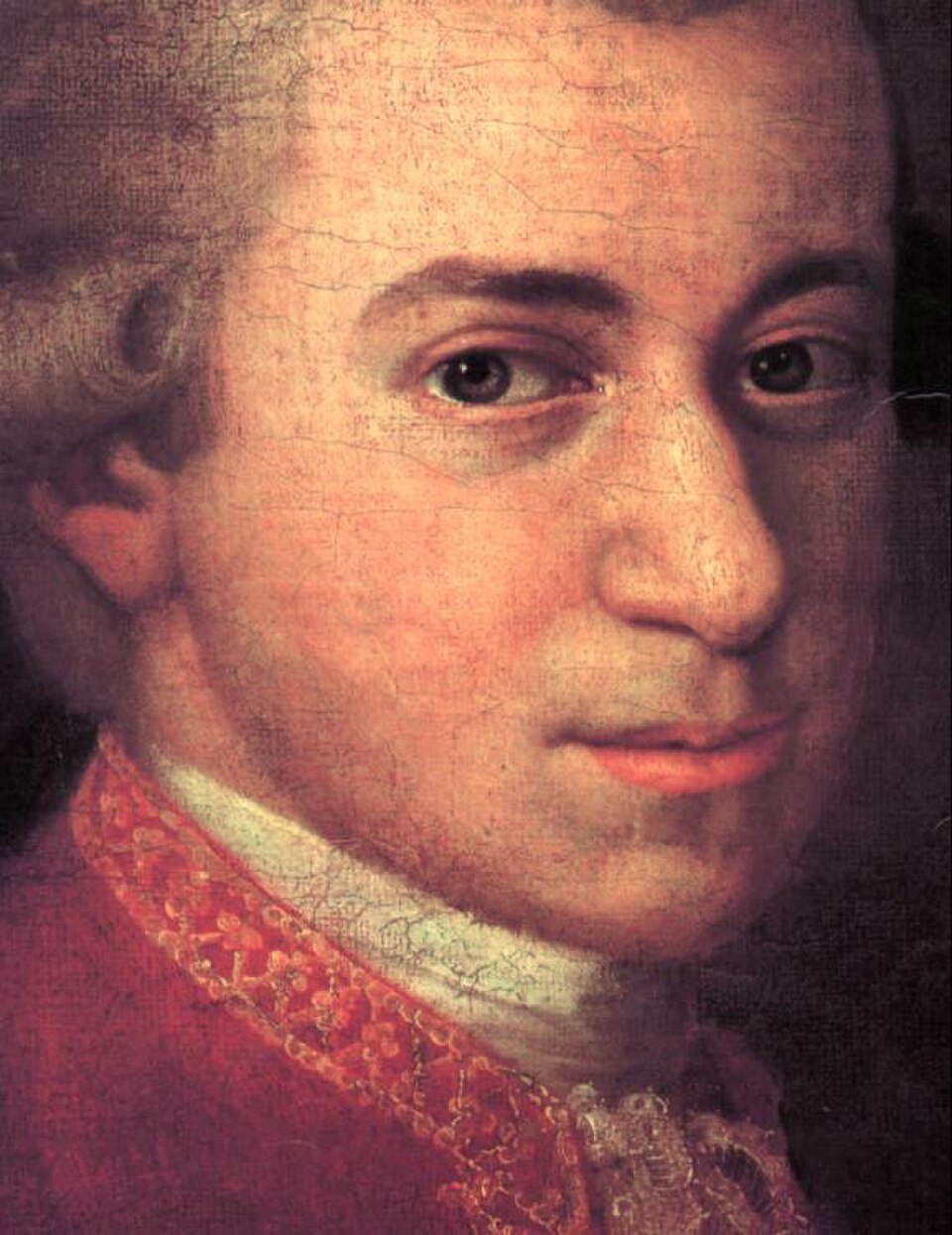

Frances Rauscher, Gordon Shaw and Catherine Ky, all at the University of California, Irvine, published a one-page Scientific Correspondence titled Music and spatial task performance in the October 14, 1993 issue of Nature1. It reported that normal subjects scored better on spatial reasoning after listening to Mozart's sonata for two pianos, K448, than after relaxation instructions or silence2. Three decades later, a 2023 meta-analysis by Sandra Oberleiter and Jakob Pietschnig in Scientific Reports, covering the later claim that Mozart's music helps with epilepsy, finds little reason to suspect a specific Mozart effect3.
What the 1993 report said
In a 2001 review in the Journal of the Royal Society of Medicine, J. S. Jenkins summarized the original result this way. After about 10 minutes of K448, normal subjects showed better spatial reasoning than after relaxation instructions designed to lower blood pressure, or after silence2. The mean spatial IQ scores were 8 and 9 points higher after the music than in the other two conditions, and the boost did not last beyond 10 to 15 minutes2. The tests were derived from the Stanford-Binet scale, such as paper cutting and folding procedures2.
Jenkins also notes that Rauscher has stressed the effect is limited to spatial-temporal reasoning, with no enhancement of general intelligence2. Wikipedia's summary of the original report adds that it involved 36 college students6.
From one narrow result to a product line
Oberleiter and Pietschnig write that the claim reached the public as a long-lasting intelligence boost, especially for children, and that a small industry grew up around selling selections of classical music said to improve cognitive performance3. The same Wikipedia article reports that on January 13, 1998, the governor of Georgia announced a proposed state budget that would include $105,000 a year to give every child born in the state a tape or CD of classical music6. The step from a temporary difference on a paper folding task to a claim about smarter babies was a step the original report did not take, according to the sources above.
Failures to confirm
According to Jenkins, some investigators could not reproduce the finding, while others confirmed a small increase in spatial-temporal performance2. Rauscher thinks some of the negative results may have been due to inappropriate test procedures2. In 1999, Kenneth Steele and colleagues tested one such explanation. Rauscher and Shaw had suggested in 1998 that a spatial reasoning pretest can interfere with the effect, and had cited an unpublished experiment in which a verbal distractor between the pretest and the music brought the effect back4.
The Steele team exposed 206 college students to one of three sequences, pretest then verbal distractor then Mozart, pretest then Mozart then distractor, or pretest then distractor alone. An immediate posttest on paper folding and cutting items found no significant difference among the three groups4. The authors wrote that their negative results were consistent with failures in other laboratories to produce a Mozart effect4.
Arousal and mood as a rival explanation
In a 2000 paper, Steele pointed out that some Mozart effect experiments did not control for differences in arousal or mood between conditions. Work by Rideout and colleagues had compared a Mozart sonata with a relaxation instruction tape, and the sonata may have raised arousal while the relaxation instructions lowered it, which could in turn have affected spatial reasoning scores5. The paper cites evidence for that suggestion and argues that arousal differences should be analyzed in this research5. Jenkins describes a related criticism, that any effect is due to enjoyment arousal occasioned by this particular music2.
The 2023 meta-analysis on epilepsy
The Mozart effect later moved from spatial tasks to medicine. Oberleiter and Pietschnig describe results from the late 1990s suggesting that K448 reduced epileptiform activity, with at least two reported replications since3. They write that theirs is the first formal meta-analysis of this question, preregistered before the data were accessed, and that it screened the titles and abstracts of 1573 potentially relevant articles and obtained the full texts of 643. It ended up with k = 8 studies and N = 207 participants, because further published studies had to be left out for insufficient reporting and because authors did not respond to data requests3.
In three separate analyses the authors found non-significant, trivial-to-small summary effects, with g between 0.09 and 0.43, of listening to K448 or other music on epilepsy or other medical conditions. They judged those effects likely to be inflated, and the non-trivial ones to be driven by isolated leverage points3. The primary studies were small, with sample sizes from 11 to 70, and the authors calculate that a two-group repeated-measures design would need a total of 200 participants to detect a non-trivial effect3. The authors also note that all but one of the studies excluded for missing data had reported a positive specific Mozart effect, and that most of the data were not available even on request3.
Their conclusion is that there is only little reason to suspect a specific Mozart effect, and that listening to music, let alone a specific sonata, does not appear to have a beneficial effect on epilepsy. They name unfounded authority, underpowered studies and non-transparent reporting as the main drivers of the myth3. This is a statement about the evidence the paper could assemble, not medical guidance.
What holds and what does not
Oberleiter and Pietschnig describe the original spatial result as received with considerable skepticism and, citing a 2010 meta-analysis by Pietschnig, Voracek and Formann, as ultimately a consequence of low study power and bias-related measurement artifacts3. The 1999 failure to confirm and the 2000 arousal argument point the same way4. What the 1993 report itself claimed was narrower than the slogan, a temporary difference in a specific kind of spatial task after about 10 minutes of one sonata2.
Trivia
- Which Mozart work was used in the 1993 experiment? The sonata for two pianos in D major, K4482.
- In which journal did the 1993 report appear? Nature, volume 365, page 6111.
- How many college students took part in the 1999 experiment that failed to confirm the pretest and distractor explanation? 2064.
- According to Jenkins, how long did the original enhancing effect last? No longer than 10 to 15 minutes2.
- Which US state proposed in January 1998 to give every newborn a classical music tape or CD? Georgia6.
Sources
- Frances H. Rauscher, Gordon L. Shaw and Catherine N. Ky, Music and spatial task performance, Nature, 365, 611, October 14, 1993 (publisher page). Accessed November 7, 2026.
- J. S. Jenkins, The Mozart effect, Journal of the Royal Society of Medicine, 94(4), 170-172, 2001. Accessed November 7, 2026.
- Sandra Oberleiter and Jakob Pietschnig, Unfounded authority, underpowered studies, and non-transparent reporting perpetuate the Mozart effect myth: a multiverse meta-analysis, Scientific Reports, 13, 3175, 2023. Accessed November 7, 2026.
- Kenneth M. Steele, Joshua D. Brown and Jaimily A. Stoecker, Failure to confirm the Rauscher and Shaw description of recovery of the Mozart effect, Perceptual and Motor Skills, 88(3), 843-848, 1999 (abstract record). Accessed November 7, 2026.
- Kenneth M. Steele, Arousal and mood factors in the Mozart effect, Perceptual and Motor Skills, 91(1), 188-190, 2000 (abstract record). Accessed November 7, 2026.
- Mozart effect, Wikipedia. Accessed November 7, 2026.