Nature's First Issue, 4 November 1869, and Who Wrote It
Key Points
- The first issue of Nature is dated 4 November 1869, and the 157th anniversary falls on Wednesday, 4 November 2026.
- The astronomer Norman Lockyer founded the journal, and the Linda Hall Library says he edited it for over 50 years.
- The first issue carried an essay on Goethe's aphorisms and a note on Triassic Dinosauria, both credited to T. H. Huxley, and an article by Lockyer on a total solar eclipse.
- Nature's own 150th anniversary editorial says it began as a magazine for a general audience and, within a few years, refocused on professional researchers.
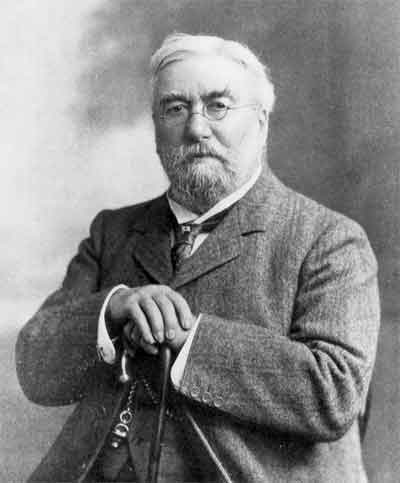

On 4 November 1869, a new weekly called Nature appeared in Britain. Volume 1, Issue 1 of the journal carries that date1, and the 157th anniversary falls on Wednesday, 4 November 2026. The first issue was a mix of essays, letters, book notices and news, and it was meant for a general reader as much as for a scientist.
A name from Wordsworth, an editor from astronomy
The founder was the astronomer Norman Lockyer. Wikipedia's account of the journal says he decided to create a new scientific journal titled Nature9 after the end of an earlier title he had edited, and that the name came from a line by William Wordsworth9: "To the solid ground of nature trusts the Mind that builds for aye". Nature's own history page, though, says it is not clear who proposed the title10, and that Macmillan made the final decision10. The same article says Nature was first owned and published by Alexander Macmillan9. The Linda Hall Library adds that Lockyer edited Nature for over 50 years8 and turned it into one of the foremost scientific journals in the world.
Nature was not the first of its kind. Wikipedia names Recreative Science, founded in 18599, as one earlier British magazine that mixed natural history with observation and technical subjects. The journal's own editorial for its 150th anniversary says the same thing in a sentence: Nature wasn't the first and isn't the oldest scientific journal2.
What was inside the first issue
The issue's table of contents on nature.com lists articles, a Books Received list and a run of letters and notes1, followed by headings such as Astronomy, Chemistry, Physics, Physiology, Societies and Academies, and Diary. Three of its pieces are worth opening one by one.
The first item is an essay titled "Nature: Aphorisms by Goethe", credited to T. H. Huxley1. Its abstract on nature.com begins "Nature! We are surrounded and embraced by her: powerless to separate ourselves from her, and powerless to penetrate beyond her."3 That is a fitting choice for the opening article of a journal with that name.
Lockyer wrote for the issue himself. The Nature page for "The Recent Total Eclipse of the Sun" is credited to J. Norman Lockyer1, and it opens with a joke about American cousins who hesitate to visit a little island lest they fall over the edge5, followed by a remark that Americans had just observed their third eclipse of the century. The Linda Hall Library, describing the same first issue, says one of the first articles was by Lockyer himself, on a total solar eclipse8, and that it included a wood engraving of a dark-line solar spectrum with the bright prominence lines added above it. In that picture, the library points out, is the bright line that we now know represents helium8, which at the time Lockyer treated as just another sodium line8.
The same issue has a note, also credited to T. H. Huxley1, titled "Triassic Dinosauria". Its abstract says that a recent examination of the numerous remains of Thecodontosauria in the Bristol Museum4 let the author demonstrate that these Triassic reptiles belong to the order Dinosauria and are closely allied to Megalosaurus4. It is a reminder that the issue carried a claim about fossils, not only essays.
Controversy and a canal
The shorter pieces show the tone of the era. A news piece titled "Protoplasm at the Antipodes" reports that the Protoplasm excitement seems to have died away in a great measure6 in Britain, while the Melbourne papers described a flare of argument after the arrival there of the February number of the Fortnightly Review6. The piece jokes that at home Huxley has been refuted many more times than there are copies of his article6, and that in Melbourne he was refuted over again afresh6.
Another letter is about the Suez Canal. The writer, listed as T. Login1, calls it the all-engrossing topic of the day7 and says the writer had been engaged on the largest irrigation works in India7. The canal itself opened in the same year, as the journal's 150th anniversary editorial notes when it lists what else happened in 1869: the Suez Canal in Egypt was opened2.
What else 1869 held for science
That editorial lists some of the science of the year. Friedrich Miescher isolated what he called nuclein (now known as nucleic acids), from the nuclei of white blood cells2. In the same sentence it adds that Paul Langerhans first described the pancreatic islets, Dmitri Mendeleev first presented the periodic table2, and Alfred Russel Wallace published The Malay Archipelago, in which he described what is now called the Wallace line. It also notes non-science milestones: Wyoming passed the world's first law that enshrined women's right to vote2.
How the journal changed
The editorial says plainly that the first plan did not last. When Nature launched, it was intended to be more like the Scientific American or New Scientist of today2, with Lockyer wanting "men of science" to write about their work for a general audience. But within just a few years of its launch Nature refocused on serving the professional research community2, when early-career researchers realised they could use its rapid weekly publication cycle to advance their discourse and eventually publish original findings.
The editorial also describes how odd that early world was. In 1869, scientific journals served mainly to record presentations made at meetings of learned societies2, and the usual way scientists talked to each other was through personal letters, with monographs for formal work such as Darwin's On the Origin of Species of 1859. The same piece says it was not until the Second World War that scientific journals became the main forum for disseminating primary research findings2. It also has a line that fits the date: the name of the journal has remained the same, but much of what lies between the covers has changed2.
Trivia
- Who was Nature's first editor? The astronomer Norman Lockyer8, who, according to Nature's own history page10, wrote editorials from 1869 to 1919, when Richard Gregory officially took over the editorship.
- Which poet's line does Wikipedia say the journal's name was taken from? William Wordsworth9, according to Wikipedia's article on the journal.
- Who is credited with the first issue's opening essay on Goethe's aphorisms? T. H. Huxley1, who also has the issue's note on Triassic Dinosauria.
- Which earlier British magazine, founded in 1859, is named as a predecessor of Nature? Recreative Science9.
- Which reptiles from the Bristol Museum does the Triassic note say belong to Dinosauria? Thecodontosauria4, which it says are closely allied to Megalosaurus.
Sources
- Volume 1 Issue 1, 4 November 1869, Nature (table of contents). Accessed November 3, 2026.
- Nature at 150, Nature, vol. 565, p. 5, 3 January 2019. Accessed November 3, 2026.
- T. H. Huxley, “Nature: Aphorisms by Goethe”, Nature 1, 9, 4 November 1869 (abstract). Accessed November 3, 2026.
- T. H. Huxley, “Triassic Dinosauria”, Nature 1, 23, 4 November 1869 (abstract). Accessed November 3, 2026.
- J. Norman Lockyer, “The Recent Total Eclipse of the Sun”, Nature 1, 14, 4 November 1869 (abstract). Accessed November 3, 2026.
- “Protoplasm at the Antipodes”, Nature 1, 13, 4 November 1869 (abstract). Accessed November 3, 2026.
- T. Login, “The Suez Canal”, Nature 1, 24, 4 November 1869 (abstract). Accessed November 3, 2026.
- William B. Ashworth Jr., “Norman Lockyer”, Scientist of the Day, Linda Hall Library. Accessed November 3, 2026.
- “Nature (journal)”, Wikipedia. Accessed November 3, 2026.
- History of Nature, Nature. Accessed November 3, 2026.