New Zealand and India Free Trade Agreement Takes Effect October 20
Key Points
- The New Zealand and India free trade agreement enters into force on 20 October 2026, after both countries completed ratification processes on 21 September 2026.
- On day one, 57% of New Zealand exports to India become fully tariff free, a share that rises to 82% as the cuts phase in, and tariffs on Indian goods entering New Zealand are removed.
- New Zealand will provide the equivalent of 1,667 three-year temporary employment entry visas a year, capped at 5,000 at any one time.
- New Zealand commits to promote investment into India with the aim of increasing private sector investment by US$20 billion over 15 years.
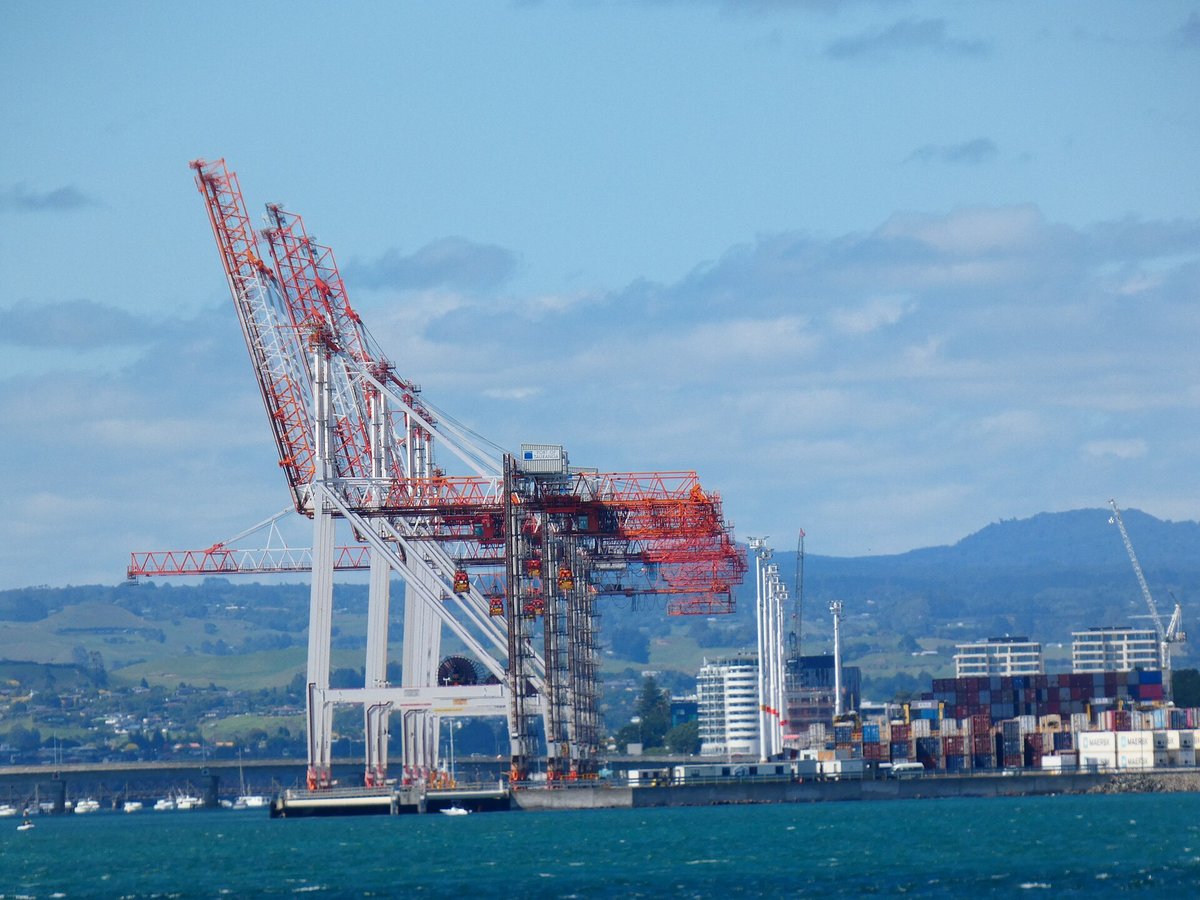

A trade agreement between New Zealand and India takes effect on Tuesday, 20 October 2026. New Zealand's Ministry of Foreign Affairs and Trade (MFAT) lists that date as the day the New Zealand-India Free Trade Agreement will enter into force1, after both countries completed ratification processes on 21 September 20261. The deal cuts tariffs in both directions, opens some services markets, sets aside a fixed number of work visas and includes a New Zealand pledge to promote private investment in India.
Trade between the two countries is modest for now. MFAT puts two-way trade at NZ$3.9 billion in the year ended June 20262, about US$2.19 billion at the Federal Reserve rate of US$0.5611 per New Zealand dollar on 9 October 202617. India was New Zealand's 9th-largest goods and services export market2 over that year, taking 1.8% of New Zealand's exports.
What New Zealand exporters get
MFAT says about 95% of New Zealand's current exports to India gain preferential access over time. On day one, 57% of exports become fully tariff free3, a share that rises to 82% as the cuts phase in, with sharp reductions on a further 13%. A second round of cuts arrives on 1 January 202711, Australian Associated Press reported. MFAT estimates tariff savings of NZ$43 million on day one, growing to NZ$62 million4 a year at current trade levels, roughly US$24 million to US$35 million at the same 9 October rate.
The cuts are steep because India's starting tariffs are high. MFAT's summary of the deal describes rates that are often between 30% and 60%, and up to 150% for wine5.
- Sheep meat, which faced a 33% tariff5, goes tariff free immediately, along with wool and coal.
- More than 95% of forestry exports enter tariff free from day one, and nearly all the rest within seven years3. Forestry was worth NZ$193 million2 in exports to India in the year to June 2026, about US$108 million.
- Kiwifruit (normally taxed at 33%) and apples (50%) get new quota access5, with volumes MFAT says are greater than current exports. Kiwifruit inside the quota is tariff free, and outside it the tariff is halved. Apples earned NZ$100 million (about US$56 million) and kiwifruit NZ$28 million2 (about US$16 million) over the same year.
- The 150% wine tariff falls by 66% to 83% over 10 years5, to a final duty of 25% or 50%.
- Certified manuka honey priced at US$30 a kilogram or more sees its 66% tariff fall to 16.5% over five years5.
- Tariffs on key fish and seafood exports, bulk infant formula and other dairy-based preparations are phased out over seven years3.
Most dairy sits outside the deal. India excluded dairy, onions, chickpeas, peas, corn, almonds, artificial honey and sugar9, according to a Press Trust of India report. MFAT points instead to a commitment to set up a fast-track arrangement3 letting Indian businesses import New Zealand ingredients, dairy included, duty free to make products for export, a promise that India will consult New Zealand if it offers dairy access to a comparable country, and a review of the agreement one year after entry into force3.
What Indian exporters get
Tariffs on Indian goods are removed from the day the Agreement enters into force3. India's Commerce Minister, Piyush Goyal, said the agreement gives duty-free access for 100 per cent of Indian exports to New Zealand6. All India Radio listed textiles, leather and footwear, engineering goods and pharmaceuticals among the sectors expected to gain. Before the deal, New Zealand kept peak tariffs of up to 10 per cent on key Indian goods9.
For shoppers in New Zealand, MFAT's summary says removing those tariffs should lower prices for Indian goods5.
Services, visas and investment
India committed to almost 100 additional services sectors3 beyond its World Trade Organization commitments, including engineering, environmental services, tertiary and adult education, and audiovisual services.
On mobility, New Zealand will provide the equivalent of 1,667 three-year temporary employment entry visas a year3, capped at 5,000 at any one time. Of those, 1,467 cover 13 skilled occupations on Immigration New Zealand's Green List and 200 cover what MFAT calls iconic Indian occupations, such as yoga instructors and chefs. MFAT says the cap of 5,000 is less than 6% of the average number of total skilled visas5 New Zealand issues each year. The deal also creates up to 1,000 working holiday places a year for Indians aged 18 to 30, writes into the treaty the right of Indian students to work up to 20 hours a week (within a current policy of up to 25), and sets post-study work visas from two years for bachelor's graduates to four years for PhDs.
The investment chapter commits New Zealand to promote investment into India with the aim of increasing private sector investment by US$20 billion over 15 years5. MFAT notes that it applies only to private investment and that India will set up a New Zealand Investment Desk. The chapter is not subject to dispute settlement3, and the agreement has no investor-state dispute settlement5.
How it compares
The two countries first opened talks in April 20101. Those talks ended in 2015 after 10 rounds, when India joined the wider Regional Comprehensive Economic Partnership negotiation, which it left in 2019. The current talks launched on 17 March 2025 and concluded on 22 December 2025, a pace Goyal described as a record nine months8. The agreement was signed in New Delhi on 27 April 2026, and New Zealand's Parliament passed the implementing legislation12 in September.
The deal is one of several India has brought into force since late 2022. Its agreement with Australia, the Economic Cooperation and Trade Agreement, came into force from December 29, 202215. Its Trade and Economic Partnership Agreement with the European Free Trade Association entered into force on 1 October 202513, with shared objectives to mobilise US$100 billion of investment in India over 15 years. India's agreement with the United Kingdom came into force on 15 July 202614.
For New Zealand, India joins a long list. MFAT's page of agreements in force names 17 agreements and partnerships16, among them the New Zealand-European Union agreement in force since 1 May 2024 and the United Arab Emirates agreement in force since 28 August 2025. The Associated Press reported that India has been diversifying its export markets10 to offset steep US tariffs, while New Zealand wants to reduce its reliance on China, its largest trading partner.
What comes next
Goyal also described an aspirational goal of doubling two-way trade in goods and services to almost 35 thousand crore rupees in the next four to five years6, a target the Press Trust of India reported as NZ$7 billion by 20307. NZ$7 billion is about US$3.9 billion at the Federal Reserve rate of US$0.5611 per New Zealand dollar on 9 October 202617. MFAT expects the benefits to grow as India's economy and middle class expand3.
Trivia
- When did New Zealand's High Commission in New Delhi first open? On 6 December 195818, when diplomatic relations were formally established.
- Which famous New Zealander reopened that High Commission after its 1982 closure? Sir Edmund Hillary, who with Tenzing Norgay made the first ascent of Mount Everest, and who served as High Commissioner from 1985 to 198918.
- Which Indian prime minister visited New Zealand in 1986? Rajiv Gandhi18, whose visit produced a double taxation treaty and a New Zealand/India Trade Agreement.
- Which festival did Piyush Goyal link to the 20 October start date? Dussehra9, which he said falls on 20 October in 2026.
- When did the India-Sri Lanka Free Trade Agreement enter into force? On March 1, 200019, after it was signed on December 28, 1998.
- In which city was the New Zealand and Australia Closer Economic Relations trade agreement signed? Canberra20, where it was signed on 28 March 1983.
- Which four countries make up the European Free Trade Association? Iceland, Liechtenstein, Norway and Switzerland13.
- When did the upgrade to the New Zealand-China Free Trade Agreement take effect? On 7 April 202221, updating the original 2008 agreement.
Sources
- Ministry of Foreign Affairs and Trade (New Zealand), Timeline of Negotiations and next steps, New Zealand-India Free Trade Agreement. Accessed October 18, 2026.
- Ministry of Foreign Affairs and Trade (New Zealand), Key Facts on New Zealand-India Trade. Accessed October 18, 2026.
- Ministry of Foreign Affairs and Trade (New Zealand), Key Outcomes, New Zealand-India Free Trade Agreement. Accessed October 18, 2026.
- Ministry of Foreign Affairs and Trade (New Zealand), Overview, New Zealand-India Free Trade Agreement. Accessed October 18, 2026.
- Ministry of Foreign Affairs and Trade (New Zealand), New Zealand India Free Trade Agreement Summary. Accessed October 18, 2026.
- All India Radio News, "India-New Zealand Free Trade Agreement to come into force from Oct 20", 21 September 2026. Accessed October 18, 2026.
- ThePrint (PTI), "India-New Zealand trade pact to come into force on Oct 20: Goyal", 21 September 2026. Accessed October 18, 2026.
- All India Radio News, PM Modi and his New Zealand counterpart Christopher Luxon describe inking of FTA landmark moment in partnership between both countries, 27 April 2026. Accessed October 18, 2026.
- Press Trust of India via DT Next, India-New Zealand trade pact to come into force on Oct 20: Goyal, 21 September 2026. Accessed October 18, 2026.
- Sheikh Saaliq and Charlotte Graham-McLay, India and New Zealand sign a free trade agreement to deepen economic ties, Associated Press via Yahoo Finance, 27 April 2026. Accessed October 18, 2026.
- Australian Associated Press, NZ-India trade deal to come into force on October 20, The Canberra Times, 21 September 2026. Accessed October 18, 2026.
- Deccan Chronicle, New Zealand Parliament Clears India FTA Law, 16 September 2026. Accessed October 18, 2026.
- European Free Trade Association, EFTA-India Trade and Economic Partnership Agreement enters into force, joint communique, 1 October 2025. Accessed October 18, 2026.
- Business Wales (Welsh Government), UK-India Free Trade Agreement now in effect, 29 July 2026. Accessed October 18, 2026.
- Surabhi, One year of India-Australia ECTA sees gains for both countries, Business Today, 29 December 2023. Accessed October 18, 2026.
- Ministry of Foreign Affairs and Trade (New Zealand), Free trade agreements in force. Accessed October 18, 2026.
- Board of Governors of the Federal Reserve System, U.S. Dollars to New Zealand Dollar Spot Exchange Rate (DEXUSNZ), via FRED, observation for 9 October 2026. Accessed October 18, 2026.
- Ministry of Foreign Affairs and Trade (New Zealand), New Delhi, MFAT 75 Our Story. Accessed October 18, 2026.
- Consulate General of India, Jaffna, Free Trade Agreement. Accessed October 18, 2026.
- Ministry of Foreign Affairs and Trade (New Zealand), New Zealand Treaties Online, New Zealand Australia Closer Economic Relations Trade Agreement, with Exchange of Letters. Accessed October 18, 2026.
- Ministry of Foreign Affairs and Trade (New Zealand), Overview, NZ-China Free Trade Agreement. Accessed October 18, 2026.