NIST's New Cybersecurity Guide Is Written for Solo Business Owners
Key Points
- NIST released Cybersecurity White Paper 50 on November 2, 2026, a guide to cybersecurity for businesses whose only paid worker is the owner.
- It replaces NIST IR 7621 Revision 1, the 2016 small business guide, which NIST's publication page says was withdrawn on November 2, 2026.
- The paper takes its figures from the U.S. Small Business Administration's Office of Advocacy: 34.8 million small businesses, 81.9 % of them with no paid employees other than the owners.
- NIST says the guide is not a checklist or compliance criteria and is not comprehensive.

On Monday, November 2, 2026, the National Institute of Standards and Technology (NIST) released a cybersecurity guide for a very specific reader: the person who is the only paid worker in their own business. The guide, NIST Cybersecurity White Paper 502, is titled Small Business Cybersecurity: Non-Employer Firms, and NIST's news release1 nicknames its audience "solopreneurs." It replaces an older small business guide that NIST withdrew the same day.
What NIST released
The paper is by Daniel Eliot and Jeffrey A. Marron of NIST's Applied Cybersecurity Division and Savann Thorn, whom the paper lists as a former NIST employee whose work on the publication was done while at NIST2. NIST says it is written in lay language and assumes no prior cybersecurity knowledge1. In the release, Eliot explained the reason for the project: "Because solopreneurs may not have cybersecurity expertise, we wanted to create a resource designed for them1."
The publication has a long family tree. Its change log says it was first published in 2009 as NIST IR 7621, Small Business Information Security: The Fundamentals, and revised in 20162. NIST's publication page for that 2016 revision lists a date published of November 20163 and now reads "Withdrawn on November 02, 20263" and "Superseded by CSWP 50." The change log adds that a pre-draft call for comments was issued in 2024, followed by an initial public draft2, and the paper's acknowledgments thank everyone who commented during three different public comment periods2.
Why the audience is so narrow
The older guides spoke to "small businesses" in general. The change log says that group is a very broad and diverse population2, so the new paper narrows to non-employer firms with minimal IT complexity2. It also narrows the topic from information security to cybersecurity, which the log calls a subset of information security2.
The paper's size argument rests on figures it takes from the U.S. Small Business Administration's Office of Advocacy. It says there are 34.8 million small businesses in the United States, comprising 99 % of all U.S. businesses2, and that 81.9 % of them have no paid employees other than the owner or owners2. Those shares multiply out to roughly 28.5 million firms, which fits the release's wording that more than 28 million small businesses in the U.S. fall into the solopreneur category1. The paper counts sole proprietors, freelancers, single-member limited liability companies, independent contractors, gig economy workers, and others2 in that group.
How the guide is laid out
The core of the paper follows the six functions of NIST's Cybersecurity Framework 2.0: Govern, Identify, Protect, Detect, Respond and Recover2. Each function gets a table with four columns. According to the paper, the columns cover actions to consider, the rationale, getting started, and considerations as the business grows2. The release describes the same pattern: for each action, the guide includes the rationale for performing it, how the business can get started, and options for what to do later as the business grows1.
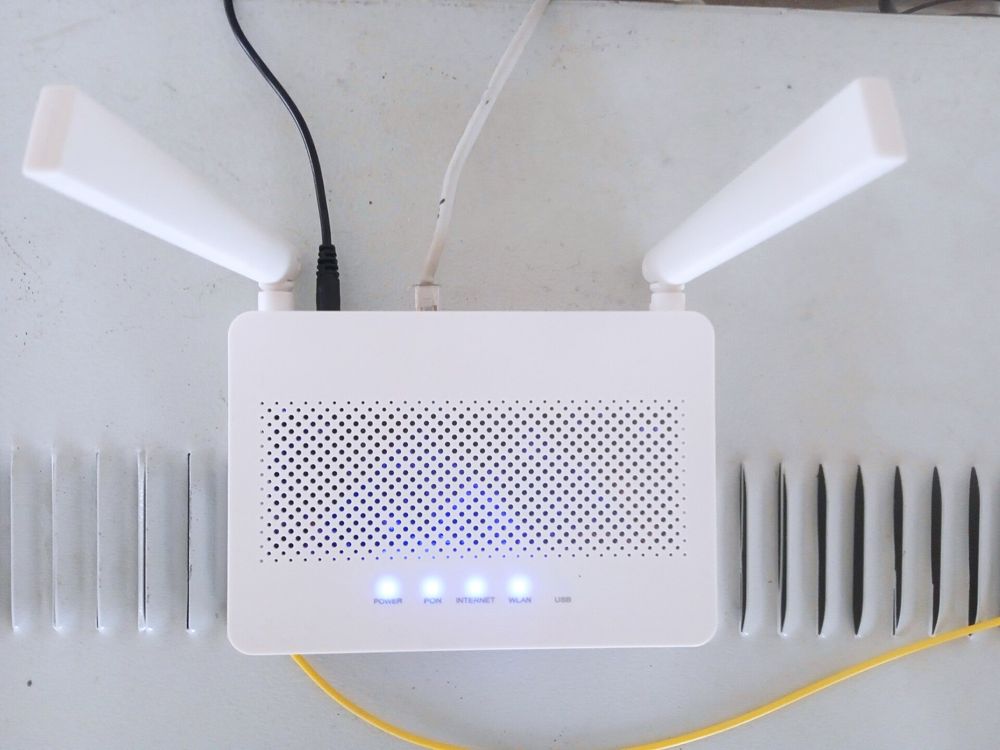
The release gives one worked example. A recommended action is to change the default password a manufacturer assigns to a device, as is common with Wi-Fi routers and other networked items. The rationale, per NIST, is that criminals can easily find these default passwords and use them to access the device1. The paper's table says to review the security settings on all devices to ensure that unique, strong passwords are created2, and it suggests that a growing business can later establish and regularly review policies and procedures for onboarding and managing devices2.
Some of the actions it lists
Near the start, the paper lists nine actions it says can significantly reduce cybersecurity risks2. Several are plain housekeeping. They include maintaining updated software on all devices and applications, establishing a data backup strategy that protects and tests backups, and making a list of contacts to call after an attack, with a paper version of this list as a backup2. On passwords, the paper says NIST guidance recommends that a password should be at least 15 characters long2 and mentions passkeys as a way to avoid relying on passwords.
Multi-factor authentication (MFA) gets its own box. The paper defines it as verifying identity with a combination of two or more of something you know, something you have and something you are2. It adds that some forms of MFA can be susceptible to phishing threats2, and names passkeys as a common phishing-resistant option. On backups, its table suggests having multiple data backups with at least one on a medium that is not connected to the device, such as an external hard drive or the cloud2.
Two threats get a page each. The paper defines phishing as a type of scam that uses convincing emails or other messages to trick people into opening harmful links or downloading malicious software2, and ransomware as a type of malicious attack in which criminals encrypt an organization's data and demand payment to restore access2.
What the guide says it is not
NIST is plain about the limits. The paper states that the tables are not intended to be a checklist or compliance criteria2, and Eliot said in the release that the publication is not comprehensive and won't address all the needs of every solopreneur1. The abstract adds that the information may also be useful to businesses with very few employees, while implementation will vary by sector, size, resources and any contractual or regulatory requirements.
The paper also points to three hypothetical use cases, kept in a separate appendices file in spreadsheet form: an intellectual property attorney, a new e-commerce company selling novelties made in a home workshop, and a marketing and sales consultant working with clients around the world2. People can send their own examples to a NIST address for possible inclusion in a public library of use cases, according to the paper.
Trivia
- In what year was the first version of this NIST small business guide published, under the number IR 7621? 2009, according to the new paper's change log2.
- How many functions does the NIST Cybersecurity Framework 2.0 have, as the paper lists them? Six: Govern, Identify, Protect, Detect, Respond and Recover2.
- According to the paper, how long should a password be at minimum under NIST guidance? At least 15 characters2.
- What word does NIST's news release use for a business whose only paid worker is the owner? Solopreneur1.
- What happened on November 2, 2026 to NIST IR 7621 Revision 1, the 2016 version of the guide? NIST's publication page says it was withdrawn and superseded by CSWP 503.
Sources
- NIST, "Self-Employed? Solopreneur? NIST Has a Cybersecurity Guide Just for You," news release, November 2, 2026. Accessed November 2, 2026.
- Daniel Eliot, Jeffrey A. Marron and Savann Thorn, "Small Business Cybersecurity: Non-Employer Firms," NIST Cybersecurity White Paper 50, November 2, 2026, doi:10.6028/NIST.CSWP.50. Accessed November 2, 2026.
- NIST IR 7621 Rev. 1, "Small Business Information Security: The Fundamentals," NIST Computer Security Resource Center publication page. Accessed November 2, 2026.