Nobel Prize in Physics 2026: Francis Halzen and the IceCube Telescope
Key Points
- The Royal Swedish Academy of Sciences awarded the 2026 Nobel Prize in Physics to Francis Halzen of the University of Wisconsin-Madison alone, and the prize amount is 12 million Swedish kronor.
- IceCube has 5,160 digital optical modules on 86 vertical strings, between 1,450 and 2,450 meters deep in the ice near the Amundsen-Scott South Pole Station.
- In November 2013, the collaboration announced 28 very high-energy particle events as the first solid evidence for astrophysical neutrinos.
- As of October 2026, IceCube expects the first science data with the IceCube Upgrade later this year.
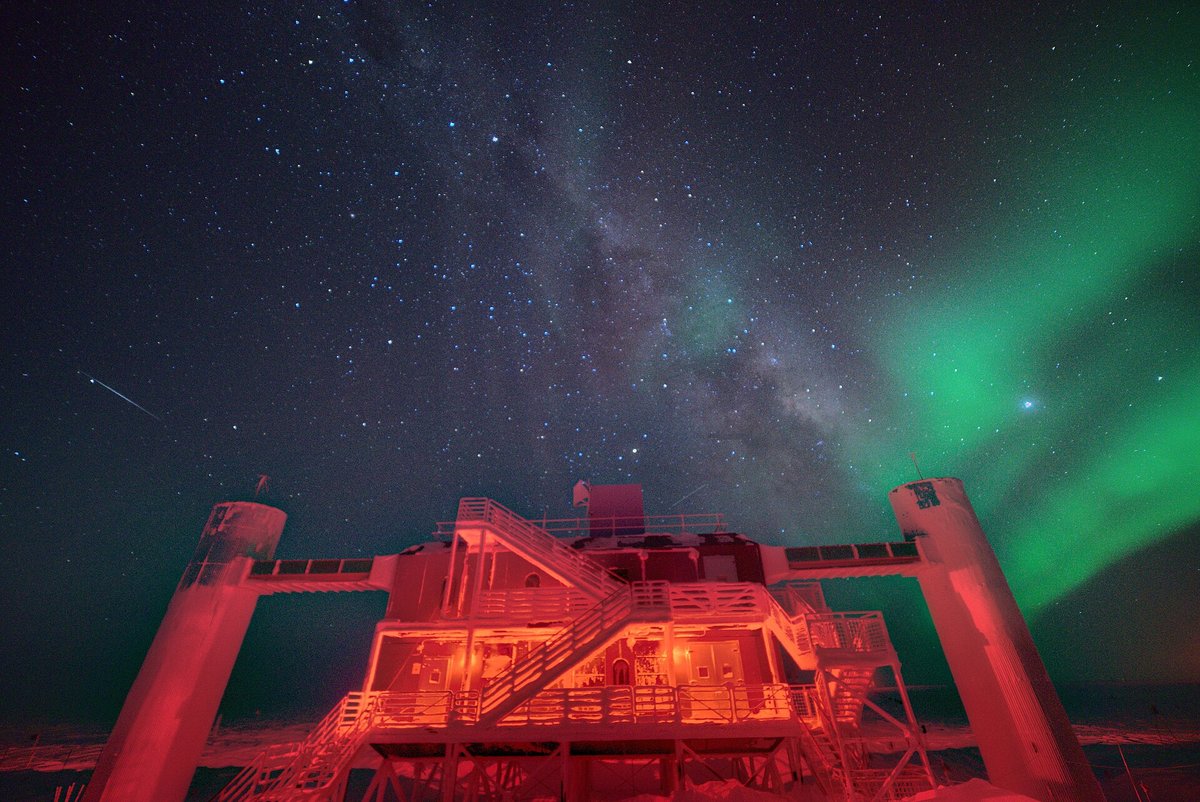

On 6 October 2026, the Royal Swedish Academy of Sciences awarded the Nobel Prize in Physics to one person, Francis Halzen of the University of Wisconsin-Madison, "for decisive contributions to the IceCube Neutrino Observatory and the discovery of high-energy neutrinos of astrophysical origin"1. The prize amount is 12 million Swedish kronor1. "His tenacity and scientific vision has paved the way for a new kind of astronomy,"1 said Mark Pearce, who chairs the Nobel Committee for Physics.
Halzen was born in 1944 in Tienen, Belgium, and earned his PhD at KU Leuven in 19691. He joined the physics faculty at UW-Madison in 19723 and is the principal investigator of IceCube. "It’s a great relief for me to finally deliver the recognition that this great collaboration deserves,"4 he said in IceCube's own announcement. UW-Madison counts him as the sixth physicist connected to the university to earn the Nobel Prize3, and the 23rd Nobel tied to the school overall.
The shyest particle
The Academy's popular explainer calls the neutrino "the shyest particle in the universe"2. It has no electric charge and almost no mass2, and it rarely bumps into anything. Every second, 65 billion neutrinos from the Sun flow through your little finger nail2 without you noticing.
Space is crossed by cosmic rays, and because those particles carry charge, magnetic fields warp their paths8 and hide where they came from. The same cosmic accelerators that launch them should also make neutrinos, which travel nearly undisturbed and give scientists "an almost direct pointer to their source"8. The Academy notes that nature's accelerators can reach energies up to a million times more than can be achieved in laboratories on Earth1.
An idea from the 1980s
In the 1980s Halzen realized that light sensors frozen into glacier ice could catch the flashes2 from rare neutrino collisions. He worked through the idea with John G. Learned, who was on the DUMAND project to do something similar in the deep ocean off Hawaii, and the two first presented their concept for a neutrino observatory in the ice of the South Pole in 19882. In 1992, a team made the first attempts to lower light sensors into the glacier at the South Pole2.
The first results were disappointing2. The upper ice was full of bubbles that scattered light, but below a depth of 1,400 meters the ice turned out to be extremely pure2, and flashes could travel 300 meters before being absorbed. That proof of concept, a smaller array called AMANDA, was under construction until January 20002. It worked as intended2, but it was too small to catch the rare, energy-rich neutrinos from deep space.
How IceCube works
IceCube is a cubic-kilometer particle detector made of Antarctic ice5, near the Amundsen-Scott South Pole Station. Its in-ice part is 5,160 digital optical modules on 86 vertical strings5, between 1,450 and 2,450 meters deep, set on a hexagonal grid 125 meters apart with 17 meters between sensors on a string. Each module carries a ten-inch photomultiplier tube and its own electronics. Halzen describes the sensors as a lightbulb in reverse2.
Neutrinos are never seen directly. When one interacts in the ice, it makes charged particles that emit Cherenkov light5 because they move faster than light travels in ice. The sensors timestamp that light and send it to computers in the IceCube Lab on the surface, which turn the pattern into a direction and an energy. The detector collects one terabyte of unfiltered data daily6, and about 100 gigabytes go out by satellite.
Building it meant hot-water drilling 60-centimeter holes to a depth of 2,450 meters5, only from November to February each year, the brief Antarctic summer. A hole took approximately 48 hours6 on average. The last string went into the ice on December 18, 20105, after seven austral summers. Construction cost $279 million, with around $242 million from the National Science Foundation5 and the rest from agencies in the US and abroad.
IceCube was funded and is operated primarily through an award from the U.S. National Science Foundation to the University of Wisconsin-Madison4. As of October 2026, the collaboration counts 450 scientists, from 58 institutions in 14 countries4.
What it found
In November 2013, the collaboration announced 28 very high-energy particle events7, found in data from May 2010 to May 2012, as the first solid evidence for astrophysical neutrinos. Halzen called it "the dawn of a new age of astronomy."7 The Academy notes that 2013 brought the first evidence and that a couple of years later2 the team had enough data to be certain.
Finding a source took longer. On Sept. 22, 20178, IceCube sent an alert about a neutrino of approximately 300 TeV8. NASA's Fermi telescope and the MAGIC telescope in the Canary Islands then saw a gamma-ray flare from TXS 0506+056, a blazar about 4 billion light years from Earth8, just off the left shoulder of Orion. About 20 observatories joined the follow-up, and a search of IceCube's archive turned up a flare of over a dozen astrophysical neutrinos8 from the same blazar in late 2014 and early 2015. The results ran in Science in July 20188.
In 2022, IceCube reported evidence for neutrinos from NGC 1068, an active galaxy that IceCube places 47 million light-years away9. The Academy counts 79 neutrinos that appear to come from the direction of this galaxy2 but says the evidence is not yet robust enough to name it a source.
Then, in June 2023, IceCube produced an image of the Milky Way using neutrinos10, from a dataset of 60,000 neutrinos spanning 10 years and sharpened with machine learning. Halzen's take on the result was that "in neutrinos, the universe outshines the nearby sources in our own galaxy."10
What comes next
The IceCube Upgrade was installed in 2025 to 20264 to lower the energy threshold and calibrate the ice better. During the final field season, crews used a 5-megawatt hot water drill system13 to drill five new holes13, each taking about three days, and lowered in sensors with two to three times more sensitivity13 than the originals. As of October 2026, IceCube expects the first science data with the IceCube Upgrade later this year4.
Beyond that sits the proposed IceCube-Gen2, with an optical array with 8 times larger volume4 and radio detectors for even higher energies. The Academy also points to neutrino telescopes in water rather than ice, in various stages of development, with projects in Lake Baikal, the Mediterranean, the South China Sea and off the west coast of Canada2.
Trivia
- Which Soviet plan inspired Halzen to think about catching neutrinos in Antarctic ice? A plan to use radio receivers to capture neutrino signals in Antarctica2, catching the radio wave from the spark a neutrino makes when it hits the ice.
- Where did Halzen and Learned first present the South Pole idea in 1988? At a conference in Poland2.
- How did Halzen spend Christmas Eve 1993? At the dinner table with his computer in his lap, waiting for a message to confirm that the first cable with optical modules had been installed in the ice2.
- How are IceCube sensors told apart? By name. Each of the 86 cables has a theme, and each DOM has a name that reflects that theme6.
- What nickname did IceCube give the 6.3 PeV Glashow resonance event of December 8, 2016? It was nicknamed "Hydrangea"11. Sheldon Glashow predicted that kind of event in 1960.
- When was the galaxy NGC 1068 first spotted, and in which constellation is it? It was first spotted in 17809, and it sits in Cetus.
- What did the IceCube Upgrade crew install beneath the ice with the U.S. Geological Survey? Two seismometers, the deepest in the world12.
- Who was the last active UW-Madison faculty member to win a Nobel Prize before Halzen? Howard Temin in 19753, whose work included the discovery of reverse transcriptase.
Sources
- Press release: Nobel Prize in Physics 2026, The Royal Swedish Academy of Sciences, NobelPrize.org, 6 October 2026. Accessed October 17, 2026.
- Anna Davour, Ice at the South Pole reveals cosmic particle accelerators, Popular information, Nobel Prize in Physics 2026, NobelPrize.org, The Royal Swedish Academy of Sciences, October 2026. Accessed October 17, 2026.
- Alisa King-Klemperer, University of Wisconsin-Madison Professor Francis Halzen named 2026 Nobel laureate in physics, UW-Madison News, October 6, 2026. Accessed October 17, 2026.
- Francis Halzen, IceCube principal investigator, wins 2026 Physics Nobel Prize, IceCube Neutrino Observatory, October 6, 2026. Accessed October 17, 2026.
- IceCube, IceCube Neutrino Observatory. Accessed October 17, 2026.
- IceCube Quick Facts, IceCube Neutrino Observatory. Accessed October 17, 2026.
- IceCube pushes neutrinos to the forefront of astronomy, IceCube Neutrino Observatory, November 21, 2013. Accessed October 17, 2026.
- IceCube neutrinos point to long-sought cosmic ray accelerator, IceCube Neutrino Observatory, July 12, 2018. Accessed October 17, 2026.
- IceCube neutrinos give us first glimpse into the inner depths of an active galaxy, IceCube Neutrino Observatory, November 3, 2022. Accessed October 17, 2026.
- Our galaxy seen through a new lens: neutrinos detected by IceCube, IceCube Neutrino Observatory, June 29, 2023. Accessed October 17, 2026.
- IceCube detection of a high-energy particle proves 60-year-old theory, IceCube Neutrino Observatory, March 10, 2021. Accessed October 17, 2026.
- Alisa King-Klemperer, IceCube Neutrino Observatory gets a major upgrade beneath the ice, UW-Madison News, February 13, 2026. Accessed October 17, 2026.
- Alisa King-Klemperer, The IceCube Neutrino Observatory gets a major upgrade beneath the ice, IceCube Neutrino Observatory, February 12, 2026. Accessed October 17, 2026.