Off-Grid Solar Now Powers 149 Million People, World Bank Report Says
Key Points
- ESMAP and GOGLA report that "149 million people were served by affiliate off-grid solar products in 2025, up 26% from 2023, with 98 million reaching Tier 1+ energy access."
- Reaching all 398 million people for whom off-grid solar is the least-cost solution would take around USD 11.4 billion between 2027 and 2030, according to the report and the World Bank.
- The World Bank says "7.4 million people use off-grid solar to power microenterprises" or other income-generating activities.
- World Bank Group commitments to off-grid solar reached USD 974 million in the World Bank's fiscal years 2025 and 2026, level with the two fiscal years before.
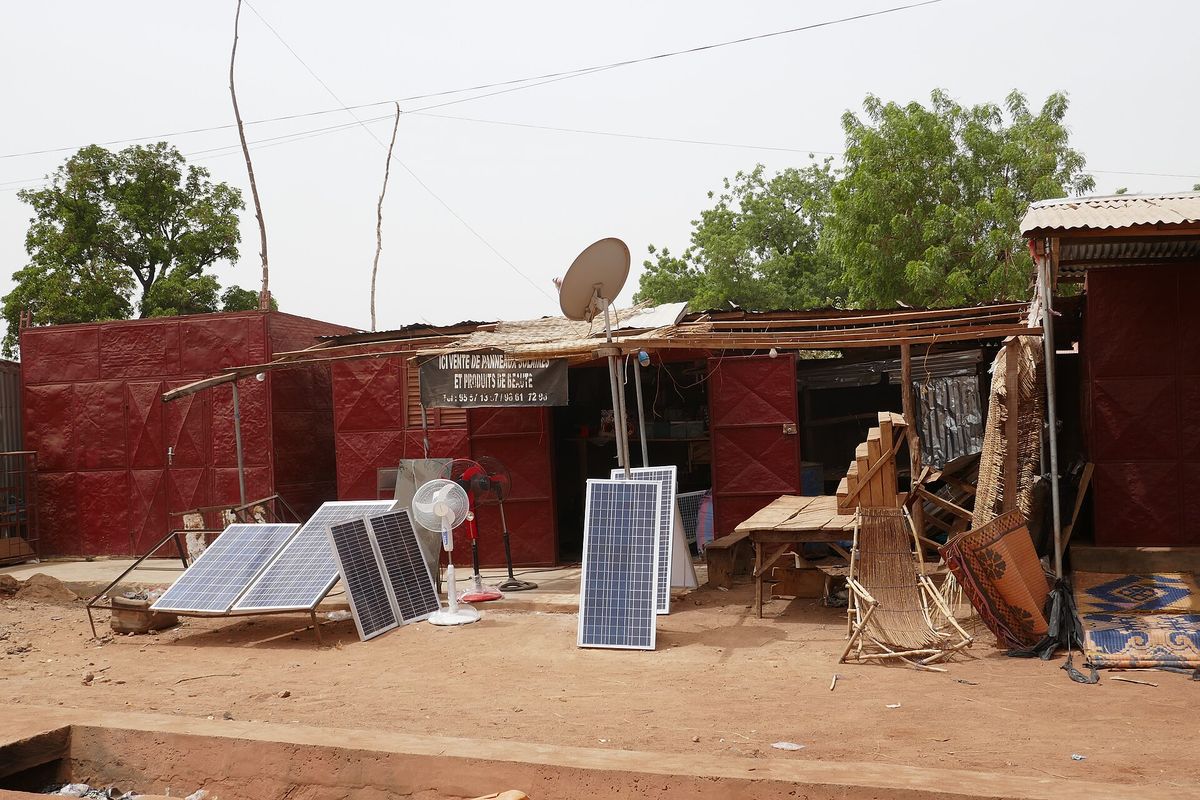

Solar home systems, lanterns, water pumps and other off-grid solar products now supply electricity to more people than ever. The Off-Grid Solar Market Trends Report 2026, released on 27 October 2026 by the World Bank Group's Energy Sector Management Assistance Program (ESMAP) and GOGLA, the global off-grid solar association, at the Global Off-Grid Solar Forum and Expo in Kigali, Rwanda, says the number of people using these products rose by 26% over two years, from 118 million to 149 million1, and that 98 million of them reached what it calls Tier 1+ energy access2.
What off-grid solar means
Off-grid solar products make electricity from sunlight with no connection to a national power grid. The World Bank's release lists solar home systems, water pumps, generators, lanterns1 and other products, from a single light up to equipment that can run a small business.
The report counts what it calls the affiliate market. The World Bank explains that its sales and employment figures cover GOGLA members1, companies whose products meet the VeraSol or International Electrotechnical Commission quality standards, and participants in the Global LEAP Awards or the Low Energy Inclusive Appliances (LEIA) program. Products sold outside that group are not in the 149 million.
What Tier 1 access means
A single lamp and a grid connection are very different services. The United Nations adopts the World Bank's Multi-Tier Framework, which, as Our World in Data explains, grades access from Tier 1, the lowest level, to Tier 5, the highest4. Tier 1 means at least four hours of electricity a day, enough for task lighting and for charging a phone or a radio, at about 22 kilowatt hours per person per year. Higher tiers add more hours, more power and bigger appliances.
Of the 149 million people served in 2025, 98 million reached Tier 1 or better, which leaves about 51 million whose products gave them less than that basic level of service.
How it compares with the grid
The wider picture is slow progress. According to the United Nations' Sustainable Development Goals Report 2026, as of 2024 the global access rate remained at 92 per cent3, leaving 655 million people without electricity, only 11.5 million fewer than in 2023. Sub-Saharan Africa accounts for 86 per cent of them. Since 2020, the UN says, average annual gains have fallen to around 0.35 percentage points, half the pace achieved between 2010 and 2020.
The report's case for off-grid solar rests on cost. It finds that reaching all 398 million people for whom off-grid solar is the least-cost solution2 would take around USD 11.4 billion. The World Bank's release says that money is needed between 2027 and 20301, made up of USD 1.3 billion a year in grants and affordability subsidies and USD 1.6 billion a year in equity, debt and receivables financing.
Electricity that earns money
The World Bank says 7.4 million people use off-grid solar to power microenterprises1 or other income-generating activities, and that over the past 15 years these products have generated an estimated USD 28 billion in additional income and savings for customers. The surveyed market employs 219,000 people1, and companies reported full-time employment up 29% between 2021 and 2025.
Grant makers have shifted toward that productive use. The report finds that the share of off-grid solar grants going to productive use of energy roughly doubled2, from 35% in 2022 to 2023 to 71% in 2024 to 2025, while the number of such transactions rose from 79 to 118.
The equipment also tends to last. Among surveyed customers, 95% reported that their solar home systems remained functional four or more years after purchase1. Repairs are a weaker spot. The key findings say only 36% of customers who had a technical issue felt it had been satisfactorily repaired or replaced, falling from 58% for products under warranty to 22%2 for those out of warranty.
Who pays for it
Affordability remains the main constraint. The World Bank says one-third of unelectrified households can afford an entry-level tier 1 solar home system1 on pay-as-you-go financing, and a further third can afford one only at a stretch. The key findings define affordable as spending up to 5% of household consumption expenditure2.
Public money is steady. World Bank Group commitments to off-grid solar1, which the release calls the largest source of public funding, reached USD 974 million in the World Bank's fiscal years 2025 and 2026, level with the two fiscal years before. Private investment is more concentrated. Corporate financing held stable at USD 315 million in 20252, three market leaders captured around 70% of corporate financing across 2024 and 2025, and locally owned companies received 3.1% of it in 2025.
Where it fits in Mission 300
Off-grid solar is part of Mission 300, the World Bank Group and African Development Bank effort to connect 300 million Africans to electricity by 20306. Countries taking part draw up National Energy Compacts, and the World Bank says 80% of the 35 National Energy Compacts1 developed under Mission 300 include distributed renewable energy in their connection targets.
"Off-grid solar has proven it can deliver at scale, through shocks, and in places the grid has not reached," said Sarah Malm, Executive Director of GOGLA1, who urged governments, investors and development partners to treat the sector as infrastructure. Fanny Missfeldt-Ringius, Manager of ESMAP, said, "Off-grid solar has grown from a basic lighting solution into a critical source of electricity for hundreds of millions of people."
Trivia
- In which city was the previous edition of the Off-Grid Solar Market Trends Report presented, in October 2024? Nairobi, Kenya5, at that year's Global Off-Grid Solar Forum and Expo, on 8 October 2024.
- How much investment did the 2024 edition say off-grid solar needed to reach its potential? USD 21 billion5, which it described as a sixfold increase over the investment levels of the time.
- Which three countries accounted for 47% of solar home system sales in sub-Saharan Africa in 2025? Kenya, Nigeria and Zambia2, according to the 2026 report's key findings.
- Of the 117 million forcibly displaced people worldwide, how many lack electricity, according to the 2026 report? 37 million2.
- What was the full name of GOGLA when its first Board was inaugurated in 2012? The Global Off-Grid Lighting Association7, whose first Board was inaugurated in mid-June 2012.
- In what year was ESMAP established, and what prompted it? 19838, as part of the World Bank's response to the oil price shocks of the late 1970s, which hit oil-importing developing countries hardest.
- What declaration did African leaders adopt at the Mission 300 summit in January 2025, and how many heads of state and government committed to reforms there? The Dar es Salaam Energy Declaration6, with thirty heads of state and government committing and twelve countries presenting National Energy Compacts.
Sources
- World Bank, press release: Off-Grid Solar Gains Ground as Least-Cost Driver of Energy Access, Jobs and Growth, 27 October 2026. Accessed November 13, 2026.
- ESMAP and GOGLA, Off-Grid Solar Market Trends Report 2026, key findings. Accessed November 13, 2026.
- United Nations, The Sustainable Development Goals Report 2026, Goal 7: Affordable and clean energy. Accessed November 13, 2026.
- Hannah Ritchie, Definition: Access to Electricity, Our World in Data, 2021. Accessed November 13, 2026.
- World Bank, press release: Off-grid Solar Could Provide First-time Electricity Access to Almost 400 Million People Globally by 2030, 8 October 2024. Accessed November 13, 2026.
- World Bank, press release: Heads of State Commit to Concrete Plans to Transform Africa’s Energy Sector, with Strong Backing from Global Partners, 28 January 2025. Accessed November 13, 2026.
- Lighting Global, Off-grid industry association comes to life, 26 July 2012. Accessed November 13, 2026.
- Wikipedia, Energy Sector Management Assistance Program. Accessed November 13, 2026.