Do Old-Age Words Slow Your Walk? The Priming Replication Record
Key Points
- A 2012 PLOS ONE paper reported that with infrared timing and 120 participants it could not reproduce the experiment in which old-age words were said to make people walk more slowly.
- In a second 2012 experiment with 50 participants, the infrared sensors showed a walking speed gap only when experimenters expected primed participants to be slower.
- A 2013 paper reported that 9 experiments with 475 participants did not obtain a professor priming effect on general knowledge questions.
- A 2016 meta-analysis of 133 sets of word priming experiments reported a small average effect, and its abstract does not single out the walking experiment.
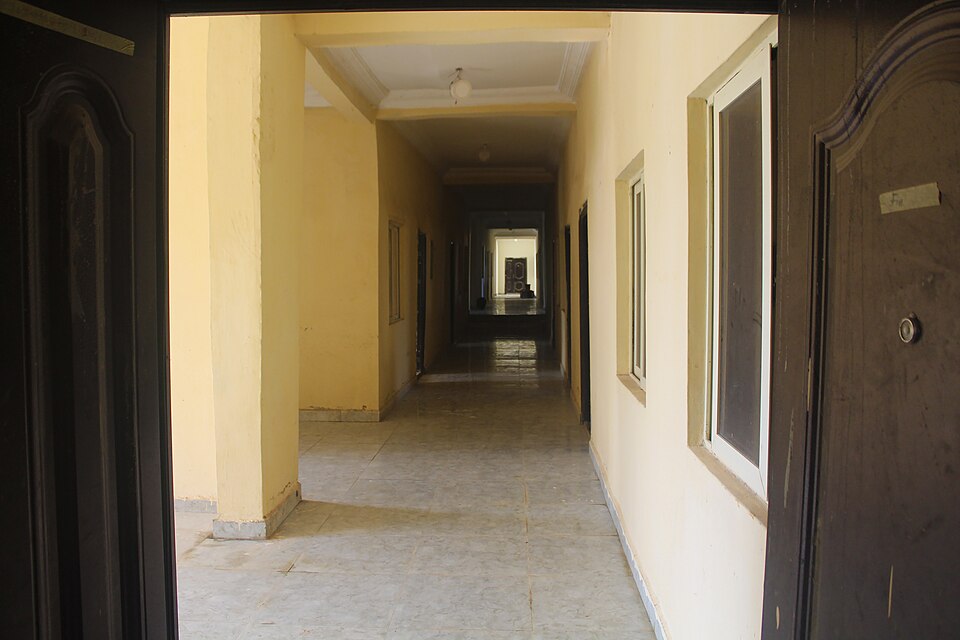

In a 2012 PLOS ONE paper, Stéphane Doyen and colleagues tried to repeat a famous experiment in which people who had unscrambled sentences containing words about old age were said to walk more slowly down a hallway afterward, and with automated timing their first experiment found no difference between the two groups1. The idea behind it, called behavioral priming, is that a subtle cue can change what you do without your noticing. The sources below show what that experiment claimed, what the retests found, and where the question stands.
The experiment people remember
Doyen and colleagues describe the 1996 experiment by Bargh, Chen and Burrows as one in which participants picked the odd word out in groups of scrambled words, and a number of the groups could be rearranged into a sentence1. The word left out of the sentence was systematically related to the concept of being old, and the measure was how fast participants walked when they exited the laboratory1. The reported result was that participants exposed to old-age words walked slower than participants who had not been, and that they had not noticed the link between the words and their behavior1.
According to the 2012 paper, the finding was widely cited and generated considerable further research in social psychology, but had been replicated only twice at that point, and neither replication was exact1. The authors also point to details the original left open, since walking speed was timed by hand (by a confederate the original reports did not know the participant's condition) but no such precaution is reported for the experimenter who administered the task, and they describe manual timing as prone to error and bias1. They add that in the original, only 1 of 19 participants was found to be aware of the influence of the primes1.
The 2012 retest, in two parts
The first experiment used 120 undergraduate students, a task adapted into French, and two infrared sensors hidden in a corridor 9.75 meters apart, the same distance as in the original1. The questionnaires were sealed in envelopes that participants opened themselves, so that experimenters stayed unaware of each participant's condition1. The primed group averaged 6.27 seconds along the hallway and the unprimed group 6.39 seconds, a difference the paper reports as not significant1. The authors write that despite a sample of 120 participants, against 60 in the original's two walking experiments combined, and despite precise measurement, they could not replicate the effect1.
The second experiment asked whether the experimenters' beliefs could matter. It used 50 new participants and 10 experimenters, each of whom tested 5 participants. Half the experimenters were told in a one hour briefing that primed participants would walk slower, and the other half that they would walk faster, and each participant's condition was made salient to the experimenter1. The experimenters also timed each walk by hand with a stopwatch, in addition to the infrared sensors1.
By stopwatch, primed participants tested by experimenters who expected them to be slower took 7.25 seconds against 6.73 seconds for the unprimed, while under experimenters who expected them to be faster the primed took 5.8 seconds against 6.43 seconds1. By the infrared sensors, the slow expectation group still showed a gap, 6.95 seconds against 6.52 seconds, and the fast expectation group showed none, 6.07 seconds against 6.01 seconds1. The authors read this as suggesting that both priming and experimenters' expectations are instrumental in the walking speed effect, and they report that debriefing was suggestive of awareness of the primes1. With 50 participants split across four combinations of prime and expectation, each cell is small, which is a reason to treat the result as a lead and not a verdict.
A second famous result that did not return
A 2013 PLOS ONE paper by David Shanks and colleagues tested a related claim, that people answer more general knowledge questions correctly after thinking about the attributes of a professor than after thinking about soccer hooligans2. In 9 experiments with 475 participants, using the original procedures and several variants, none obtained the effect, although financial incentives did boost performance, and a Bayesian analysis showed considerable support for the null hypothesis2.
The authors note that in traditional word priming research, generalization is often extremely narrow and context-specific, and that unconscious influences on behavior are exceptionally difficult to demonstrate and, where found, tend to last under a second2. Against that background, they write, effects that carry over from reading a word to something like walking speed, over a few minutes, are surprising2.
What a 2016 meta-analysis found
Individual failures do not settle a whole literature, and a larger pooled analysis asks a broader question. A 2016 meta-analysis in Psychological Bulletin by Weingarten and colleagues combined 352 effect sizes from 133 studies, in which word primes were incidentally presented before a behavioral measure, and reported a small behavioral priming effect, with a fixed-effects estimate of 0.332 and a random-effects estimate of 0.3523. The abstract says the effect was robust across methodological procedures and only minimally biased by the publication of positive over negative results3. It also reports that behavior or goal concepts that were more valued were associated with stronger effects3.
That analysis covers word primes and behavior in general. Its abstract does not single out the old-age walking experiment, so it neither confirms nor refutes that one result. The three sources are best read together as pointing at different layers of the same question.
What is and is not established
The sources support these statements. The old-age walking result was not reproduced with automated timing in a 120 person retest. A professor priming result was not reproduced in 9 experiments. In one 50 person experiment, the infrared sensors showed a walking speed gap only when experimenters expected primed participants to be slower, and the stopwatch times followed the experimenters' expectation in both directions. A pooled analysis of 133 sets of word priming experiments reports a small average effect.
The sources do not establish that priming never changes behavior, since the meta-analysis reports a small effect. They do not show that the experimenter expectation result, from one small experiment, is the explanation for the original finding. And they do not settle whether the pooled effect holds for the dramatic, minutes-long effects that made the original famous. Those questions are open in the material opened here.
Trivia
- How many meters apart were the two infrared sensors in the 2012 retest, the same distance as in the original? 9.75 meters1.
- How many undergraduate students took part in the first 2012 experiment? 1201.
- In the 2013 PLOS ONE paper, how many experiments and participants tried to find the professor priming effect? 9 experiments with 475 participants2.
- Which journal published the 2016 meta-analysis of 133 word priming studies? Psychological Bulletin3.
- In the second 2012 experiment, what did half the experimenters expect primed participants to do? Walk slower (the other half expected them to walk faster)1.
Sources
- Stéphane Doyen, Olivier Klein, Cora-Lise Pichon and Axel Cleeremans, Behavioral Priming: It's All in the Mind, but Whose Mind?, PLOS ONE, 7(1): e29081, January 18, 2012. Accessed November 16, 2026.
- David R. Shanks, Ben R. Newell, Eun Hee Lee, Divya Balakrishnan, Lisa Ekelund, Zarus Cenac and others, Priming Intelligent Behavior: An Elusive Phenomenon, PLOS ONE, 8(4): e56515, April 24, 2013. Accessed November 16, 2026.
- Elizabeth Weingarten, Qijia Chen, Maxwell McAdams, Jessica Yi, Justin Hepler and Dolores Albarracin, From primed concepts to action: A meta-analysis of the behavioral effects of incidentally presented words, Psychological Bulletin, 2016. Accessed November 16, 2026.