Almost a Kilometre of Oxford Street in London Goes Traffic-Free
Key Points
- Almost a kilometre of Oxford Street, between Orchard Street and Great Portland Street, closed to private motorised vehicles, buses, taxis, private hire vehicles, cycles, scooters and pedicabs on Monday, 26 October 2026.
- Emergency services keep access at all times, and deliveries can be made in the traffic-free area from midnight to 7am.
- Bus routes 7, 94, 98, 139 and 390 are affected, with buses diverted and route 94 shortened, and new bus stops on Wigmore Street, Henrietta Place and Cavendish Place sit about 200 metres from the traffic-free area.
- The Mayor's office calls the first phase a temporary transitional scheme and says more than 50 new trees and two new public squares should arrive by the end of spring 2027.
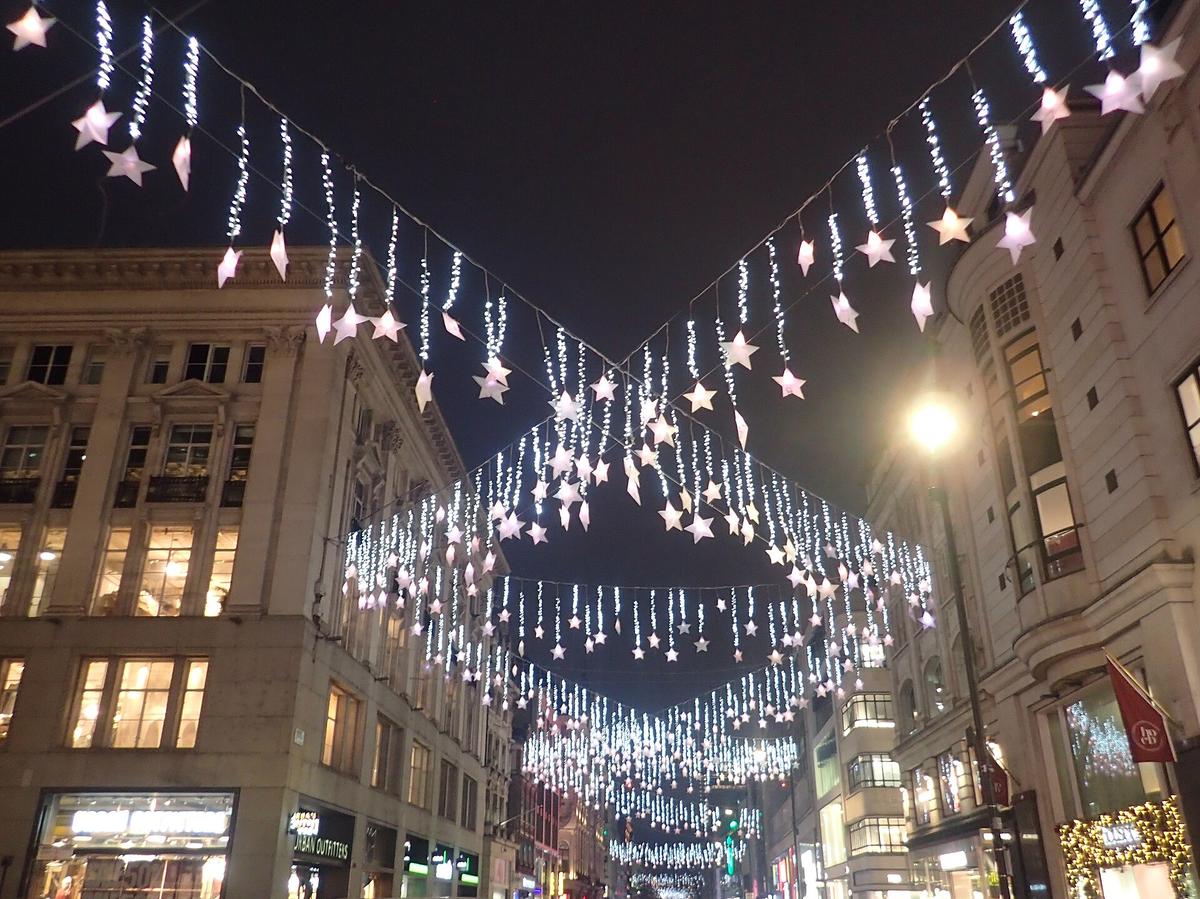

Almost a kilometre of Oxford Street, which ABC News called Europe's busiest shopping street6, closed to traffic on Monday, 26 October 2026. The Mayor of London's office said the day marked the moment Oxford Street became permanently traffic-free1, with the road between Orchard Street and Great Portland Street now closed to private motorised vehicles, buses, taxis, private hire vehicles, cycles, scooters and pedicabs. Time Out puts the length at 0.9km7 and notes that the closed section takes in the Oxford Circus junction.
The whole street runs to about two kilometres9, so roughly half of it is now given over to people on foot. Oxford Street draws around half a million visitors each day8, Australian Associated Press reported, and the Mayor's office describes it as a street with an annual spend of around £3.1bn1 (about US$4.1 billion at the European Central Bank reference rate of US$1.3348 per pound for 26 October 202611).
Who can still use the street
Emergency services have access at all times1, and deliveries can be made inside the traffic-free area from midnight to 7am. Westminster City Council keeps the job of street cleaning there, while Transport for London (TfL) watches the traffic that has been diverted onto nearby roads. Time Out reports that refuse collection also has access at set times of day7, and that vehicles can still cross the closed section at a handful of side streets, including Davies Street, Stratford Place and Vere Street, with Duke Street, Holles Street and Harewood Place open northbound only and New Bond Street southbound only.
Buses on nearby streets
Time Out lists the day routes 7, 94, 98, 139 and 3907 as affected by the closure, along with the night routes N7, N98, N113, N137 and N207, and says buses will have to be diverted. The Mayor's office says new bus stops on Wigmore Street, Henrietta Place and Cavendish Place1 sit about 200 metres from the traffic-free area.
The Mayor's formal decision of February 2026 set out what TfL expected from the diversions. The routes facing the largest increase in journey time are the 98 and the 3902, with the 98 towards Pound Lane expected to take two to three minutes longer in the morning peak and three to five minutes longer in the evening peak, and route 94 is being shortened. The same decision says removing most traffic would significantly reduce road-danger risks for pedestrians, and forecasts nitrogen dioxide falling fractionally (by 0.1 µg/m³) at 24 locations across the study area and rising by the same amount at 43.
How it got here
Sadiq Khan first announced plans to make the street traffic-free in 20179, and Westminster Council blocked them, Dezeen reported. The current effort moved through two public consultations. The first, held between 28 February and 2 May 2025, received 6,642 submissions4, and 66 per cent of those who answered the question supported pedestrianisation. The second ran from 21 November 2025 to 16 January 20262 and drew 2,716 responses.
The Mayor approved the scheme for the stretch between Great Portland Street and Orchard Street in decision MD3475, signed on Thursday 26 February 20262, and directed TfL to remove traffic from it. In March, his office said the aim was a street free from traffic by the end of summer 20263; the closure came on 26 October. Westminster City Council dropped plans for a judicial review in June 202610, FashionUnited reported.
The Oxford Street Development Corporation is a Mayoral Development Corporation established by the Mayor of London in January 20261 to lead the street's regeneration. The London Assembly said in March that the first phase will cost £150 million18 (about US$200 million at the European Central Bank reference rate for 26 October 202611) and will be funded by borrowing.
What comes next
The Mayor's office calls the first phase a temporary transitional scheme1 whose design changes are meant to be temporary, with feedback shaping the final designs and little construction in the first weeks to reduce disruption over the busy Christmas period. By the end of spring 2027 it says visitors should see more than 50 new trees, two new public squares, better signage, and more than a hundred new seats, dining tables and new lighting.
Dezeen reported that the two squares are planned near Holles Street and near Duke Street9, that trees will go into pots first and into the ground later, and that the transition design comes from the architecture practice East with JL Gibbons, Gehl and Publica. A separate vision for the whole street, from Tottenham Court Road to Marble Arch, is being developed by Hawkins\Brown, and the full transformation is expected to begin in 2027 and finish by 2028. The Mayor's office says any traffic plans for the rest of the street will be subject to consultation1.
How it compares
Copenhagen's main street, Strøget, was converted in 1962 as an experiment12 and has been upgraded several times since, according to the Global Street Design Guide, which gives its length as 1.15 km. By those figures the new Oxford Street section is a little shorter than Strøget.
Trivia
- On what date did Selfridges open its Oxford Street store? On 15 March 190913, according to Grace's Guide to British Industrial History.
- Which Tokyo junction inspired the diagonal crossing at Oxford Circus? The crossing at Shibuya14, which Building magazine described in 2008 as reportedly the busiest pedestrian junction in the world.
- Who unveiled the Oxford Circus diagonal crossing in November 2009, and who paid for it? London mayor Boris Johnson15 unveiled the £5 million scheme (about US$6.7 million at the European Central Bank reference rate for 26 October 202611), which was jointly funded by the Crown Estate and Transport for London.
- In what year was Oxford Street first decorated for Christmas from one end to the other? In 195916, according to the Survey of London blog at University College London.
- In what year were Christmas lights first put up in Regent Street? In 195416, five years before Oxford Street's first full display.
- Which architect shaped Regent Street? John Nash17, who in 1811 was commissioned to develop the Crown Estate of Marylebone Park, according to English Heritage.
- How long has John Lewis been trading on Oxford Street? Over 160 years4, according to John Lewis managing director Peter Ruis, quoted in the Mayor's office release of June 2025.
- Which stretch of Oxford Street went traffic-free for a one-day trial on Sunday 21 September 2025? The section from Orchard Street to Oxford Circus5, from 12pm to 8pm.
Sources
- Mayor of London, Mayor of London marks momentous new era for Oxford Street as it goes traffic-free, press release, 26 October 2026. Accessed October 27, 2026.
- Mayor of London, MD3475 Traffic and highway changes to enable the pedestrianisation of Oxford Street from Great Portland Street to Orchard Street, Mayoral decision, 26 February 2026. Accessed October 27, 2026.
- Mayor of London, Mayor confirms next steps to make world-famous Oxford Street traffic-free by the end of this summer, press release, 4 March 2026. Accessed October 27, 2026.
- Mayor of London, Overwhelming support from Londoners and businesses for Mayor's bold plans to pedestrianise Oxford Street, press release, 17 June 2025. Accessed October 27, 2026.
- Mayor of London, Oxford Street to go traffic-free to showcase transformative benefits of proposals to pedestrianise the iconic street, press release, 29 August 2025. Accessed October 27, 2026.
- Katlyn Ma, London's Oxford Street, Europe's busiest shopping street, goes pedestrian-only, ABC News, 26 October 2026. Accessed October 27, 2026.
- Amy Houghton, Oxford Street will officially be pedestrianised next week: everything you need to know, Time Out London, 19 October 2026. Accessed October 27, 2026.
- Ellie Ng, Part of London's Oxford Street to be pedestrianised, Australian Associated Press in The Canberra Times, 29 September 2026. Accessed October 27, 2026.
- Cajsa Carlson, Photos reveal walkable Oxford Street as first phase of pedestrianisation begins, Dezeen, 27 October 2026. Accessed October 27, 2026.
- Oxford Street pedestrianisation to begin on 26 October, FashionUnited, 29 September 2026. Accessed October 27, 2026.
- Frankfurter, GBP to USD reference rate for 26 October 2026, European Central Bank data. Accessed October 27, 2026.
- Global Designing Cities Initiative, Pedestrian streets case study: Strøget, Copenhagen, Global Street Design Guide. Accessed October 27, 2026.
- Selfridge and Co, Grace's Guide to British Industrial History. Accessed October 27, 2026.
- Atkins helps pedestrians cut across Oxford Circus, Building, 16 July 2008. Accessed October 27, 2026.
- Pete Hayman, New X-shaped crossing for Oxford Circus, Attractions Management, 3 November 2009. Accessed October 27, 2026.
- Survey of London, Christmas shopping on Oxford Street, UCL Survey of London blog, 18 December 2015. Accessed October 27, 2026.
- English Heritage, John Nash, blue plaque. Accessed October 27, 2026.
- London Assembly, How will Oxford Street development deliver for London's economy?, press release, 18 March 2026. Accessed October 27, 2026.