Peruvian Diving Petrels Rebound to Nearly 90,000 Pairs in Chile
Key Points
- A November 2024 census estimated 89,876 breeding pairs of Peruvian diving petrels on Choros Island, Chile, up from about 300 pairs in 1980.
- The authors describe a “300-fold recovery over 44 years” and a 7.5-fold increase since 2013.
- Growth sped up after European rabbits were removed from the island in 2013, from about 10.8% a year to about 23.1% a year.
- The authors name artificial light as the most immediate threat to the colony.
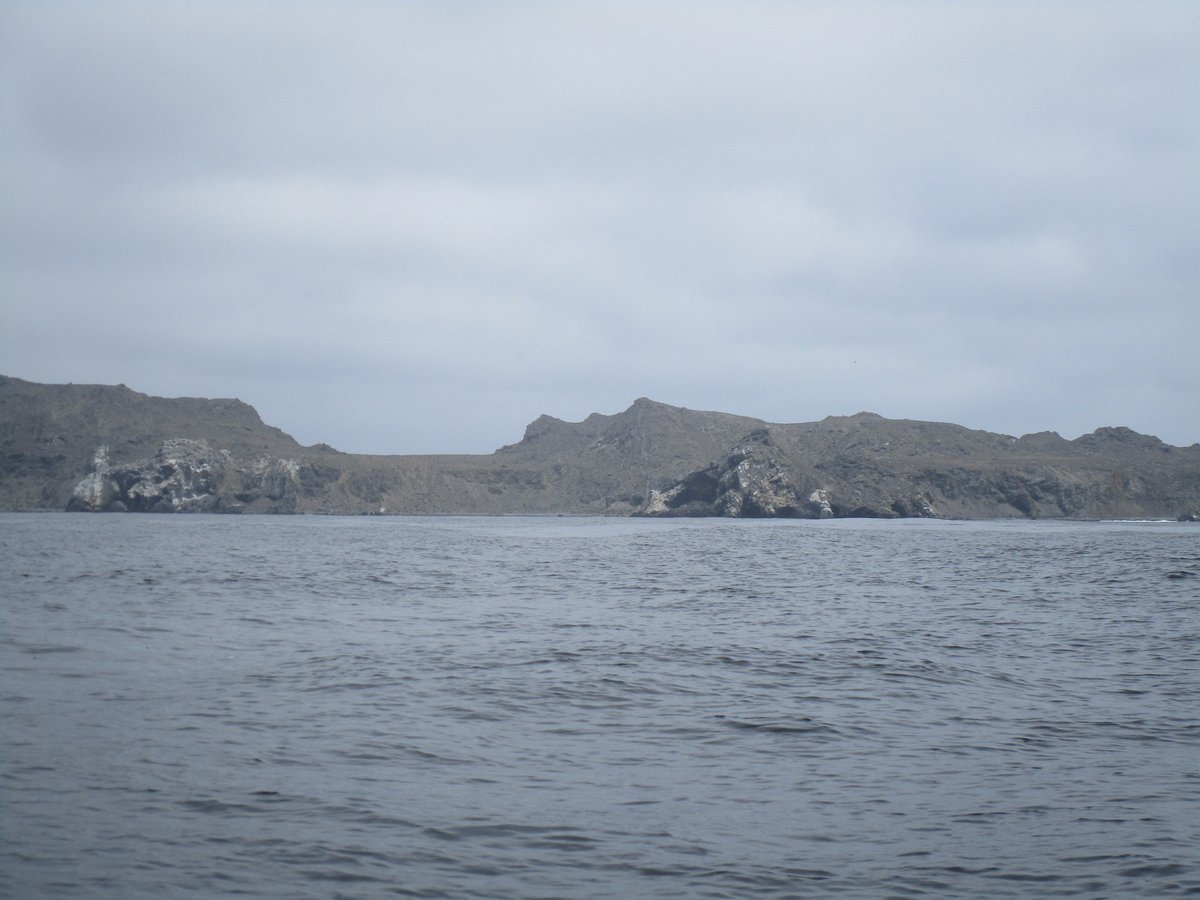

On Choros Island, now the main Chilean breeding site of a small seabird, only about 300 breeding pairs were estimated in 1980. A census of the island, off the coast of the Coquimbo Region, estimated 89,876 breeding pairs1 of Peruvian diving petrels in November 2024. The authors, from the Universidad Católica del Norte, Kiel University and the CEAZA research centre, describe this as a 300-fold recovery over 44 years1 and a 7.5-fold increase since 2013. Their paper appeared in the journal Marine Ornithology in October 20262.
The authors write that Choros now holds about 95% of the Chilean breeding population1, a figure based on the 2013 count, and they credit the rise to decades of protection and the removal of European rabbits from the island in 2013.
A seabird built for diving
The Peruvian diving petrel (Pelecanoides garnotii) is a small seabird with a dark back, pale belly and blue feet4, 20 to 24 centimetres long. It feeds in the offshore waters of the Humboldt Current off Peru and Chile and catches small fish larvae and planktonic crustaceans by pursuit diving, chasing prey under water. Most of its diet, 85 to 91% by one count, is plankton4; the rest is fish, mainly anchovies.
It nests in burrows and rock crevices. According to the paper, guano extraction, people walking through colonies, the harvesting of adults and eggs1, light pollution and introduced mammals all hit its breeding sites in Chile. The largest colony, on nearby Chañaral Island, was once estimated at more than 100,000 breeding pairs and was completely extirpated1. Rabbits were introduced to Chañaral in the 20th century and were likely brought to Choros around the same time, degrading the habitat on both islands.
According to the authors, the species was classified as Threatened in 1988. It has since been downlisted to Near Threatened1, reflecting the recovery, although the authors note that its breeding colonies remain highly localized. Four colonies are known in Chile today, on Grande de Atacama, Pan de Azúcar, Pájaros II and Choros islands.
How the island was protected
Protection came in layers. The Pingüino de Humboldt National Reserve was established in 1990 to protect the Humboldt penguin, and because it covers both Choros and Chañaral, it also restricted public access1 to the petrel colonies. In 2005 two marine reserves added a one nautical mile buffer around each island. In 2023 the Archipiélago de Humboldt Multiple-Use Conservation Area expanded marine and coastal protection to over 574,000 hectares1.
The rabbit removal was run by Chile’s National Forestry Corporation (CONAF) and the nonprofit Island Conservation. Work on Choros began in 2013 and the partners declared the project a success3 a year later, in 2014. Work on Chañaral began in 2016, and the island and the whole reserve were afterwards declared free of invasive vertebrate pest species. Island Conservation described the reserve as the first protected area of its kind3 in Chile’s national protected areas network to reach that status. The three islands of the reserve hold 80% of the world’s Vulnerable Humboldt Penguin3 population, according to the group.
What the 2024 census found
Fieldwork ran from 8 to 12 November 20241, following the same standard protocol the team has used since 2010. Researchers mapped each nesting patch by walking its edge with a GPS unit, then counted nests directly in small patches or with circular sample plots, set down at random on a rope and pulled back, in larger ones. Using the rope let them count without stepping into a patch, which lowers the risk of collapsing a burrow.
They mapped 55 patches1, mostly on the western side of the island, covering a total colony area of 108,369 square metres. The total area occupied by nesting birds more than tripled between 2013 and 2014 and kept rising through 2024. Nest density did not differ significantly from the 2010 to 2014 average of 0.89 nests per square metre, the authors found.
The headline estimate carries a 95% confidence interval1 of 80,952 to 98,800 pairs. It is consistent with the 98,000 pairs Island Conservation reported for 2023, though that figure came from a different method. No census was carried out from 2015 to 2022 because of funding limits and, later, COVID-19 restrictions.
The growth rate changed after the rabbits left. From 1980 to 2013 the population grew by about 10.8% per year1, and from 2013 to 2024 by about 23.1% per year. The authors caution that the later rate rests on four census years and has a wide confidence interval. They think most of the gain came from better breeding success and survival on the island itself, along with mature birds that had not been breeding and moved into the burrow space freed up by the rabbits. Genetic evidence suggests Choros has historically sent birds to other colonies rather than received them.
How it compares
Seabird recoveries after the removal of introduced mammals have been seen elsewhere, and the paper sets Choros against several. The Bermuda petrel went from 18 breeding pairs in 1961 to 85 pairs by 20081, with predator control, artificial burrows and the moving of chicks to a new colony on Nonsuch Island. On Macquarie Island, blue petrels and grey petrels recolonised after cats were removed and grew by about 14% and 10% a year. The authors write that the long-term rate on Choros, 14.4% per year1 from 1980 to 2024, exceeds that reported for most recovering birds in the order Procellariiformes.
Chañaral, the island that lost its great colony, has not yet returned to pre-collapse levels. Artificial nests and an acoustic attraction system were installed there in 2019, and the breeding pairs detected since are the first reproductive activity recorded1 on the island in decades. Chañaral lies only about 23 km from Choros, and the authors suggest Choros may increasingly send birds there.
What could hold it back
The authors name artificial light as the most immediate threat. The breeding islands sit about 7 km from small towns and coves1 on the mainland coast, and petrels active at night are drawn to lights, which causes collisions and groundings that kill both young birds and adults. That toll rises in January, when coastal tourism picks up.
They also write that the proposed Dominga mining and port project next to the island, if approved, would bring more ship traffic into the birds’ feeding areas, raise the risk of vessel strikes and hydrocarbon spills, discharge brine from a desalination plant and add more light. In their view, the population’s long-term future depends on keeping its breeding habitat free of predators and intact, protecting the birds’ main feeding areas at sea and limiting light pollution around the colonies.
Trivia
- What is the Peruvian diving petrel called locally in Peru? Potoyunco4.
- How deep can a Peruvian diving petrel dive? Up to 83 metres4, with an average dive of about 30 metres.
- Who formally described the species, and when? The French naturalists René Lesson and Prosper Garnot, in 18284, under the name Puffinuria garnotti.
- What does the bird dig its nesting burrow into? Guano4. It lays a single egg and breeds all year round.
- What is the local name of the marine otter found in the Pingüino de Humboldt National Reserve? Chungungo5.
- Which flowering plant has returned to Choros Island since the rabbits were removed? Alstroemeria philippii5.
Sources
- Marián A. Méndez, Nicolás Luna and Guillermo Luna-Jorquera, The Peruvian Diving Petrel Pelecanoides garnotii bounces back: A 300-fold population increase on Choros Island, Northern Chile, Marine Ornithology 54(2): 467-473, 2026. Accessed November 16, 2026.
- The Peruvian Diving Petrel Pelecanoides garnotii bounces back, article page, Marine Ornithology, 2026. Accessed November 16, 2026.
- Humboldt Penguin National Reserve in Chile Free of Invasive Species, Island Conservation, 7 February 2018. Accessed November 16, 2026.
- Peruvian diving petrel, Wikipedia. Accessed November 16, 2026.
- Pingüino de Humboldt National Reserve, Wikipedia. Accessed November 16, 2026.