Philippine Economy Grows 2.1% in Q3 2026, Weakest Since Early 2021
Key Points
- The Philippine Statistics Authority reported GDP growth of 2.1% in the third quarter of 2026 from a year earlier, after a revised 2.4% in the second quarter and 4% a year before.
- Services grew 3.7% and exports of goods and services 8.6%, while agriculture, forestry and fishing shrank 4.8% and industry was flat.
- Growth for January to September was 2.5%, against a full year government goal of 3.5% to 4.5%.
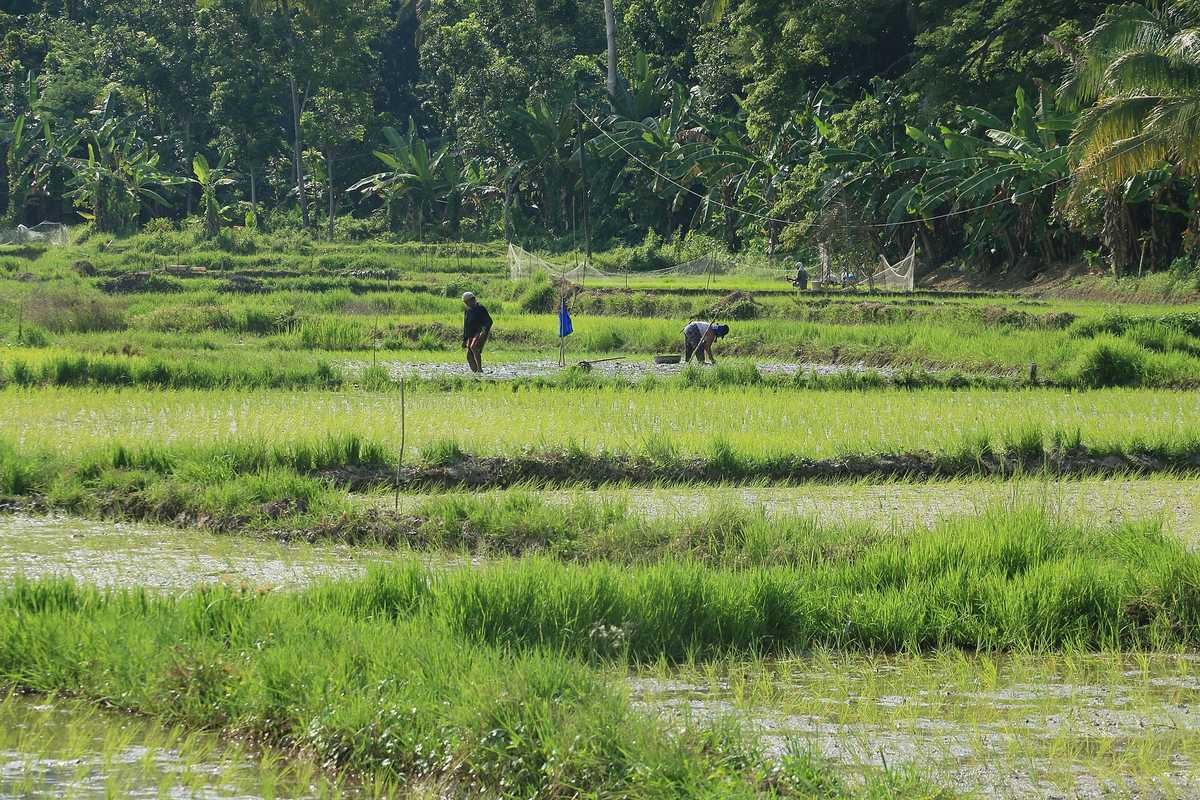

The Philippine economy slowed again in the third quarter of 2026. The Philippine Statistics Authority (PSA) reported on Monday, 9 November 2026, that gross domestic product grew 2.1% from a year earlier1 in July to September, after a revised 2.4% in the second quarter and 4% in the third quarter of 2025. That was the weakest quarterly result since the first quarter of 2021, when the economy shrank 3.8%, and the slowest outside the pandemic period since the fourth quarter of 2009, when growth was 1.8%.
Measured against the quarter just before and adjusted for seasonal patterns, output rose 0.1%1. Xinhua called it the “fifth straight quarter of deceleration”6 for the country.
What the number measures
Gross domestic product is the income generated by producing goods and services in an economy over a set period, and the World Bank notes that “it can be measured in three different ways”10, by production, by spending and by income. The growth rate uses constant prices, which strips out inflation. So a 2.1% rise means the Philippines produced about 2.1% more in real terms than it did in the same months of 2025, not that prices went up 2.1%.
Services carried the quarter
Services grew 3.7%1 and were the main source of growth. They added 2.5 percentage points5 to the total, according to a summary of the release by the Makati Business Club. The fastest growing industries were public administration and defense, including compulsory social security, at 9.9%, human health and social work at 5.1%, electricity, steam, water and waste management at 4.7%, and professional and business services at 4.6%. Wholesale and retail trade made the largest single contribution, 0.8 of a percentage point, followed by public administration at 0.5 and financial and insurance activities at 0.4.
Industry was flat, with a marginal contraction of 0.003%1. Agriculture, forestry and fishing shrank 4.8%. Arsenio Balisacan, secretary of the Department of Economy, Planning and Development (DEPDev), said tropical cyclones and the enhanced southwest monsoon3 hit farm output, and output of palay (rice) and corn fell by more than 17%4.
Households slowed, government and exports grew
Household spending grew 2.4%1, down from 2.9% in the second quarter3 and 4% a year earlier2. It contributed 1.7 percentage points5 to growth, against 1.9 in the second quarter. Balisacan pointed to high food and energy prices and said rising fuel prices2 pushed up transport, electricity and production costs. He added, “Inflation of 7.8 percent in October underscores the continuing pressure on purchasing power3.”
Government consumption rose 6.8%1, adding 1.0 percentage point5, down from 1.5 in the previous quarter. Exports of goods and services grew 8.6%1 and imports 7.7%. Electronics exports grew faster still, up 19.4%2.
Investment was the weak spot. Gross capital formation, the measure of investment in the national accounts, contracted 0.2%1. Spending on durable equipment fell 7.8%2, and public construction shrank for a sixth straight quarter3, although the drop narrowed to 15.1% from 33.4% in the second quarter. Balisacan said “weather disruptions and delays in project validation and payments constrained infrastructure delivery4,” and he also cited tighter financing conditions3.
Income from abroad
Gross national income grew 2.7%1, faster than GDP. The difference comes from net primary income from the rest of the world, which includes income from overseas investments and employment and rose 6.6% in the quarter.
The year so far and the target
Growth for January to September was 2.5%4, against 4.9% in the same period of 2025. The government's goal for the full year is 3.5% to 4.5%6. DEPDev estimates that the economy would need to grow about 6.3% in the fourth quarter2 to reach the lower end of that range.
The result came in below what forecasters expected. Economists polled by BusinessWorld had a median forecast of 2.7%4, the median of 14 economists surveyed by the Inquirer was 2.8%6, and the Makati Business Club put the median economist forecast at 3%5. Before the release, the Asian Development Bank had cut its 2026 growth forecast for the Philippines to 3.3% from 3.8%5.
Balisacan said “recovery toward next year's 5 to 6 percent target remains possible but requires stronger investment3,” and named “energy shocks, El Niño, and implementation delays” as risks. Ateneo economist Ser Percival Peña-Reyes called this year's target “highly improbable”3, while John Paolo Rivera of the Philippine Institute for Development Studies said a fourth quarter rebound is possible3 with help from holiday spending. Nicholas Mapa of Metrobank said the central bank, the Bangko Sentral ng Pilipinas (BSP), has a stronger case to keep interest rates unchanged3 in December. The BSP raised its key rate by 25 basis points to 5% in August4 and by 50 basis points to 5.5% in October4, and its last policy meeting of the year is set for 17 December.
How this compares
The slowdown began before this year. The economy grew 4.4% in 20257, down from 5.7% in 2024, and missed the government's 5.5% to 6.5% goal, the third year in a row that growth fell short of target. Before the pandemic, World Bank figures show annual growth of between about 6.1% and 7.1%9 every year from 2013 to 2019, followed by a contraction of about 9.5% in 2020.
In size, the World Bank puts the Philippine economy at about US$487 billion in 20258, in current US dollars, up from about US$462 billion in 2024.
Trivia
- Which law created the Philippine Statistics Authority, and when was it signed? Republic Act No. 1062511, the Philippine Statistical Act of 2013, signed by President Benigno Simeon Aquino III on 12 September 2013.
- Which four agencies were merged to form the PSA? The Bureau of Agricultural Statistics11, the Bureau of Labor and Employment Statistics, the National Statistical Coordination Board and the National Statistics Office.
- What is the title of the head of the PSA, and what second role comes with it? The National Statistician11, who is also the Civil Registrar General.
- When was the Central Bank of the Philippines inaugurated, and who was its first governor? On 3 January 194912, with Miguel Cuaderno Sr. as its first governor.
- Under which law was the Bangko Sentral ng Pilipinas established in 1993? Republic Act 765312, the New Central Bank Act of 1993, with the bank established on 3 July 1993.
- What is the Philippine peso's ISO currency code, and into how many sentimo is it divided? The code is PHP13, and one peso is 100 sentimo (also called centavos).
- In which year between 2012 and 2025 did the Philippine economy grow fastest, according to the World Bank? In 20229, at about 7.6%.
Sources
- Justine Xyrah Garcia, PSA: GDP slows further to 2.1% in Q3 2026, BusinessMirror, 9 November 2026. Accessed November 10, 2026.
- Third Anne Peralta-Malonzo, PH economic growth slows to 2.1% in Q3, SunStar Philippines, 9 November 2026. Accessed November 10, 2026.
- Thony Rose Lesaca, DEPDev: Economy needs 6.3% growth in Q4 to hit target, Manila Standard, reproduced by Atin Ito, 10 November 2026. Accessed November 10, 2026.
- Van Garzon, Philippine GDP Q3 2026: Economy Slows to 2.1%, Weakest Growth Since the Pandemic, PhilNews, 9 November 2026. Accessed November 10, 2026.
- Makati Business Club, PH Economy Slows Further to 2.1% in Q3 2026 Marking New Post-Pandemic Low and Slowest in 16 Years, Eco at a Glance, 9 November 2026. Accessed November 10, 2026.
- Philippine Q3 growth slows to 2.1 pct, Xinhua, 10 November 2026. Accessed November 10, 2026.
- Ted Cordero, PH economy misses growth target anew, slows down to 4.4% in 2025, GMA Integrated News, 29 January 2026. Accessed November 10, 2026.
- World Bank, GDP (current US$), Philippines, World Development Indicators. Accessed November 10, 2026.
- World Bank, GDP growth (annual %), Philippines, World Development Indicators. Accessed November 10, 2026.
- World Bank, GDP growth (annual %), indicator definition, World Development Indicators. Accessed November 10, 2026.
- Philippine Statistics Authority, Wikipedia. Accessed November 10, 2026.
- Bangko Sentral ng Pilipinas, Wikipedia. Accessed November 10, 2026.
- Philippine peso, Wikipedia. Accessed November 10, 2026.