Power Posing: The 2010 Study, the Replications and the Retreat
Key Points
- The 2010 Psychological Science paper on power posing reported that two 1-min poses raised testosterone, lowered cortisol and increased risk tolerance and feelings of power.
- A 2015 replication in Psychological Science was titled as finding no effect on hormones and risk tolerance in a large sample of men and women, and a 2017 study of 247 men found no main effect of pose.
- A position statement by the 2010 paper's first author says the effects are not believed to be real and lists a final sample of 42 among its criticisms.
- A 2018 reply by a co-author of the 2010 paper and two others is titled as finding clear evidential value for power-posing effects, so the sources opened here do not all agree.
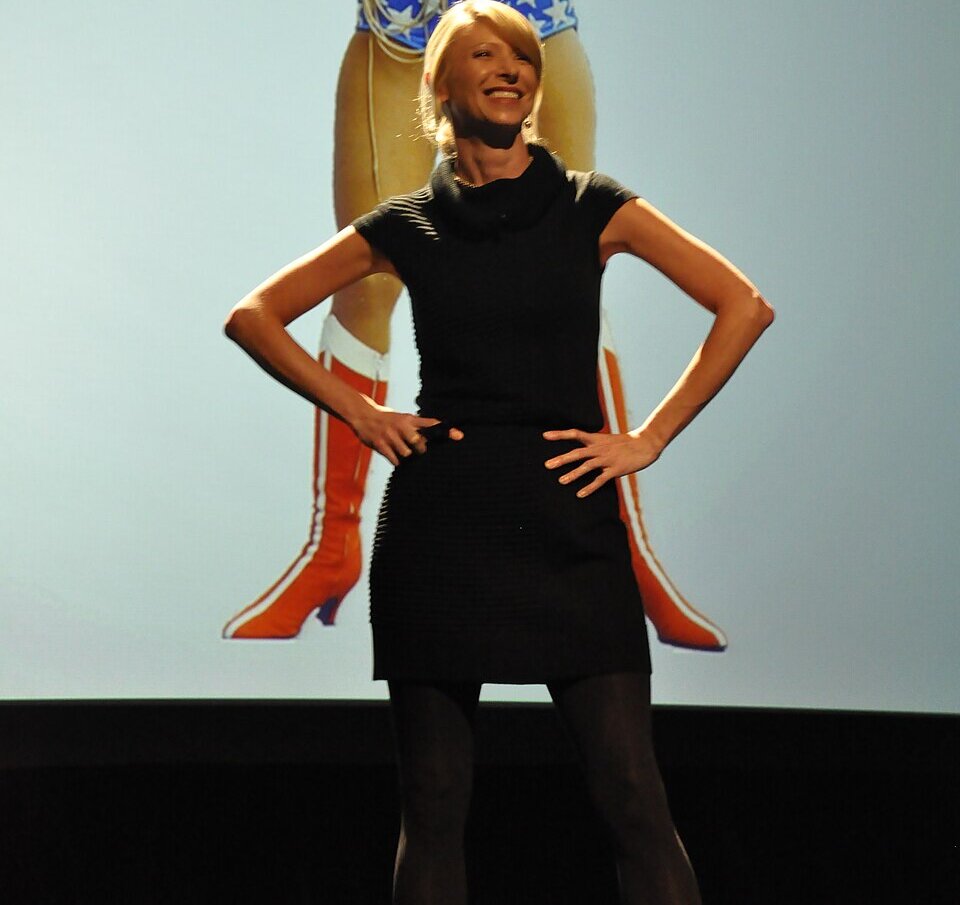

A 2010 paper in Psychological Science reported that holding open, expansive postures for one minute changed hormone levels and risk tolerance1. The paper's first author later posted a statement saying that the effects are not real in the author's view. This article follows the claim from the original abstract to the replications and the dispute that came after, and says where each source stops.
What the 2010 paper claimed
Dana Carney, Amy Cuddy and Andy Yap published “Power posing: brief nonverbal displays affect neuroendocrine levels and risk tolerance” in Psychological Science, volume 21, issue 10, October 2010, with the article first appearing online on September 20, 20101. Its abstract says the results confirmed the authors' prediction that posing in high-power nonverbal displays, as opposed to low-power nonverbal displays, would cause neuroendocrine and behavioral changes for both male and female participants1.
According to the abstract, high-power posers experienced elevations in testosterone, decreases in cortisol, and increased feelings of power and tolerance for risk, while low-power posers exhibited the opposite pattern1. The abstract describes the manipulation as two 1-min poses1.
Replications
Eva Ranehill and five co-authors published “Assessing the robustness of power posing: no effect on hormones and risk tolerance in a large sample of men and women” in Psychological Science, volume 26, issue 5, with online publication on March 25, 20152. PubMed lists it as a comment on the 2010 paper2. The PubMed record carries no abstract, so this article reports only what the title says: no effect on hormones or risk tolerance in a large sample of men and women.
A 2017 paper in Hormones and Behavior by Kristopher Smith and Coren Apicella tested the poses in the context of a competition3. Using a sample of 247 male participants, natural winners and losers of a physical competition were randomly assigned to hold a low, neutral or high-power postural display3. The authors found no main effect of pose type on testosterone, cortisol, risk or feelings of power3. Winners assigned to a high-power pose had a relative, albeit small, rise in testosterone, while for losers, if anything, the reverse was observed, a reduction in testosterone after high-power poses3. The authors say effects were small, multiple comparisons were made and the results ran counter to their predictions, and they treat their conclusions as preliminary3.
The first author's statement
A position statement hosted on the Berkeley Haas faculty site, written by the 2010 paper's first author6 is undated, but it calls the Simmons and Simonsohn paper “in press,” which places it before that paper's 2017 publication. The statement says the author does not believe that the “power pose” effects are real6, and that the evidence against the existence of power poses is, in the statement's word, undeniable6.
The statement lists problems with the 2010 study as its author describes them: the final sample size was N = 42 after 5 exclusions, and the statement calls the sample size tiny6. It says participants were run in chunks while the effect was checked along the way, a sequence recalled as about 25 subjects, then 10, then 7, then 56. For the risk-taking measure it says a Pearson chi square gave a p-value of .052 and a likelihood ratio gave .05, and the smaller was reported6. It adds that the experimenters who ran the main experiment knew the hypothesis6, and that participants learned right after the risk task whether they had won, which it says may account for the testosterone result6. The statement still describes the data as real6.
A published reanalysis and a reply
Joseph Simmons and Uri Simonsohn published “Power Posing: P-Curving the Evidence” in Psychological Science, volume 28, issue 5, in May 2017, with online publication on March 20, 20174. PubMed lists it as a comment on the 2010 paper4, and that record has no abstract either. The first author's statement says the 2015 review and summary paper it mentions offered a set of studies for a p-curve analysis that demonstrated no effect6; that is the statement's description, not a quotation from the paper.
A 2018 reply in Psychological Science, volume 29, issue 4, by Amy Cuddy, S. Jack Schultz and Nathan Fosse, is titled “P-Curving a More Comprehensive Body of Research on Postural Feedback Reveals Clear Evidential Value for Power-Posing Effects: Reply to Simmons and Simonsohn (2017)”5. This article read only that title and the PubMed record, so it cannot say what the reply found. The title shows that its authors disagree with the 2017 comment.
Where the evidence stands
The sources opened here do not agree on whether power posing does anything. The 2010 abstract reports hormone and risk effects. A large-sample replication, as its title states, found none. A 247-man study found no main effect of pose, and its authors call their small subgroup differences preliminary. The first author of the original paper says the effects are not believed to be real, and the 2018 reply keeps the argument open. The sources opened here address hormones, risk-taking and self-reported feelings of power in lab settings. Nothing opened here shows whether any pose helps anyone in a particular situation, so this article draws no advice from them.
Trivia
- In which journal and year did the original power posing paper appear? Psychological Science, October 2010 (volume 21, issue 10), first online on September 20, 20101.
- How long did the 2010 abstract say each pose was held? One minute, in two 1-min poses1.
- According to the first author's statement, what was the final sample size of the 2010 study? N = 42, after 5 exclusions6.
- How many male participants were in the 2017 Hormones and Behavior study of winners and losers? 2473.
- Which two hormones did the 2010 abstract report changing with the poses? Testosterone (up) and cortisol (down) for high-power posers1.
Sources
- Carney DR, Cuddy AJC, Yap AJ. Power posing: brief nonverbal displays affect neuroendocrine levels and risk tolerance. Psychological Science, 21(10), 2010 (PubMed 20855902). Accessed October 30, 2026.
- Ranehill E, Dreber A, Johannesson M, Leiberg S, Sul S, Weber RA. Assessing the robustness of power posing: no effect on hormones and risk tolerance in a large sample of men and women. Psychological Science, 26(5), 2015 (PubMed 25810452). Accessed October 30, 2026.
- Smith KM, Apicella CL. Winners, losers, and posers: The effect of power poses on testosterone and risk-taking following competition. Hormones and Behavior, 92, 2017 (PubMed 27840104). Accessed October 30, 2026.
- Simmons JP, Simonsohn U. Power Posing: P-Curving the Evidence. Psychological Science, 28(5), 2017 (PubMed 28485698). Accessed October 30, 2026.
- Cuddy AJC, Schultz SJ, Fosse NE. P-Curving a More Comprehensive Body of Research on Postural Feedback Reveals Clear Evidential Value for Power-Posing Effects: Reply to Simmons and Simonsohn (2017). Psychological Science, 29(4), 2018 (PubMed 29498906). Accessed October 30, 2026.
- Carney D. My position on power poses (position statement, Berkeley Haas faculty site; undated). Accessed October 30, 2026.