RBA Raises Its Cash Rate Target to 4.85% in a 6 to 3 Vote
Key Points
- The Reserve Bank of Australia raised its cash rate target by 25 basis points to 4.85 per cent on 3 November 2026, with six Board members voting to increase and three voting to leave it at 4.60 per cent.
- It is the fifth increase of 2026 in the RBA's table of decisions, taking the target up 1.25 percentage points from 3.60 per cent.
- The Board says inflation is broadly based and is not expected to reach the top of the 2 to 3 per cent target range until late 2027, about three quarters later than previously forecast.
- The RBA's staff forecasts, finalised on 28 October, have the unemployment rate at 4.7 per cent in the December 2026 quarter and 5.1 per cent by the December 2028 quarter.
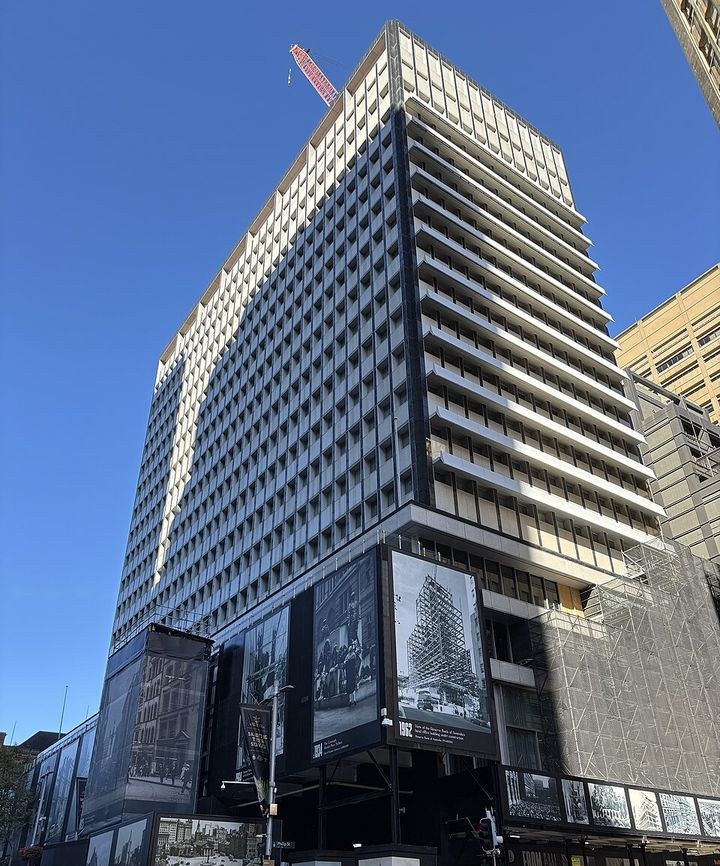

Australia's central bank raised its main interest rate on Tuesday, 3 November 2026. In a statement that day, the Reserve Bank of Australia (RBA) said its Monetary Policy Board decided to increase the cash rate target by 25 basis points to 4.85 per cent1. A basis point is one hundredth of a percentage point, so the move was a quarter of a point. The decision was not unanimous: six members voted to increase the rate, and three voted to leave it unchanged at 4.60 per cent1.
Where the rate has been this year
The cash rate is the interest rate on unsecured overnight loans between banks3, and the RBA sets a target for it at each Board meeting. The RBA's own table of rate decisions shows the target at 3.60 per cent after the December 2025 meeting3. It then lists increases of 0.25 percentage points taking effect on 4 February, 18 March, 6 May and 30 September 20263, which brought the target to 4.60 per cent, and a fifth on 4 November, which brings it to 4.85 per cent. The table lists the target as left at 4.35 per cent at the June and August meetings3. A change in the target takes effect the day after the decision, which is why the table's dates run a day after the meeting dates (the RBA's page lists the November meeting date as 3 November 20264). Counting all five increases, the target has risen 1.25 percentage points in 2026.
The September decision, on 29 September, was unanimous2. That statement described the economy as appearing to be slowing2 after three increases earlier in the year, while saying inflation was still too high.
What the Board said drove the decision
The Board's statement says that inflation remains elevated and recent data indicate that it is broadly based1, and that the inflation outlook was revised materially higher in the updated staff forecasts1. It gives several reasons. Part of the change reflects higher fuel and other commodity prices affected by the conflict in the Middle East1. The Board also says domestic capacity pressures are also judged to have been a little tighter than earlier thought1, and that AI-related investment is driving rapid growth in prices for technology-related goods1. From its liaison with businesses, it reports that many firms are experiencing cost pressures1 and are raising prices or looking to.
The statement says inflation is now forecast to remain elevated through much of 2027 and is not expected to reach the top of the 2 to 3 per cent target range until late 20271, which it describes as around three quarters later than previously forecast. The Board wrote that it judged that a further tightening in financial conditions is warranted1 to support the return of inflation to target, and that it will be attentive to the data and the evolving outlook.
The economy the RBA described
The statement describes an economy that is cooling: the economy is slowing, housing prices have fallen significantly and the unemployment rate has risen1. The RBA's accompanying Statement on Monetary Policy, which holds the staff analysis and forecasts, adds the detail. It says housing prices in September were almost 5 per cent below their March peak5, and that the unemployment rate rose by more than expected to average 4.6 per cent in the September quarter5. It says the rise appears to largely reflect a stronger-than-expected pick-up in labour force participation, and that employment growth has held up. On prices, the Statement gives headline inflation of 3.9 per cent over the year to the September quarter and trimmed mean inflation of 3.7 per cent5. These are annual rates measured at the September quarter, a different basis from a single month's reading.
There are brighter spots in the same documents. The Board's statement says growth in Australia's major trading partners has been stronger than expected, as the boost from AI-related investment has outweighed the adverse effects of the Middle East conflict1. It also says employment is expected to continue to grow1 and that growth in overall business investment is forecast to be stronger in the near term, including data centre-related investment1. The Statement says activity this year has been a little stronger than the August forecasts, supported by rapid growth in data centre investment5.
What the staff forecasts say
The Statement's forecast table, which the RBA says was finalised on 28 October5, before the decision, shows slower growth and a gradual return of inflation. Gross domestic product is forecast to grow 1.6 per cent through the four quarters to December 2026 and 1.3 per cent to December 20275. The unemployment rate is forecast at 4.7 per cent in the December 2026 quarter, rising to 5.1 per cent by the December 2028 quarter5. The consumer price index is forecast to rise 4.5 per cent through the year to December 2026, 3.7 per cent to June 2027 and 2.7 per cent to December 20275, with trimmed mean inflation at 3.6, 3.5 and 2.9 per cent over the same dates5. The Statement says headline and underlying inflation are expected to remain above 3 per cent until end-2027, and reach the midpoint of the 2 to 3 per cent range in mid-20285.
The forecasts use a technical assumption for the cash rate: it is assumed to move in line with expectations derived from financial market pricing5, so the table's cash rate path is not a decision or a promise by the Board. The Statement notes that before the meeting, market pricing was implying expectations of around one and a half further cash rate increases by mid-20275.
Risks the Board named
The Board says there continue to be heightened uncertainties about the outlook for domestic economic activity and inflation1. In its words, the Middle East conflict remains unresolved, and there are scenarios where inflation is higher and activity lower than forecast1, and global oil supply disruptions are keeping upward pressure on energy prices. It also points to weak productivity growth1 as a constraint on potential growth, and to uncertainty about how far the housing downturn will affect the wider economy. The Statement says risks to the inflation outlook remain skewed to the upside5. The Board said it will continue to do what it considers necessary to bring inflation sustainably back to target.
Trivia
- On what date did the Reserve Bank of Australia take over central banking from the Commonwealth Bank? On 14 January 19606, when the Reserve Bank Act 1959 removed the central banking functions from the Commonwealth Bank.
- The Australian dollar replaced the Australian pound on what date, and at what rate? On 14 February 19667, at two dollars to the pound.
- In what year did the first Australian polymer banknote appear, and which research agency did the RBA develop the technology with? In 19887, developed jointly with the Commonwealth Scientific and Industrial Research Organisation (CSIRO).
- The decision day, 3 November 2026, was the first Tuesday of the month, the day the Melbourne Cup is traditionally run. At what racecourse, and over what distance? The race is run at Flemington Racecourse over 3,200 metres8, on the first Tuesday in November.
- Counting the 3 November decision, how many times has the RBA raised its cash rate target in 2026, and what is the total rise? Five increases, from 3.60 to 4.85 per cent, a total of 1.25 percentage points3 by the RBA's table.
Sources
- Statement by the Monetary Policy Board: Monetary Policy Decision, media release 2026-30, Reserve Bank of Australia, 3 November 2026. Accessed November 3, 2026.
- Statement by the Monetary Policy Board: Monetary Policy Decision, media release 2026-27, Reserve Bank of Australia, 29 September 2026. Accessed November 3, 2026.
- Cash Rate Target, Reserve Bank of Australia. Accessed November 3, 2026.
- Monetary Policy Decisions 2026, Reserve Bank of Australia. Accessed November 3, 2026.
- Statement on Monetary Policy, November 2026, Reserve Bank of Australia, 3 November 2026. Accessed November 3, 2026.
- Reserve Bank of Australia, Wikipedia. Accessed November 3, 2026.
- Australian dollar, Wikipedia. Accessed November 3, 2026.
- Melbourne Cup, Wikipedia. Accessed November 3, 2026.