New Zealand Holds Its Cash Rate at 2.75% in a 4 to 3 Vote
Key Points
- The Reserve Bank of New Zealand kept the Official Cash Rate at 2.75% on 28 October 2026, after a 4 to 3 vote of its Monetary Policy Committee.
- Three members wanted a 25 basis point increase to 3%, and one market report put the chance of a hike at roughly 90%.
- Consumer prices rose 3.7% over the year to the September 2026 quarter, down from 4.1% in the June quarter and still above the 1 to 3 percent band.
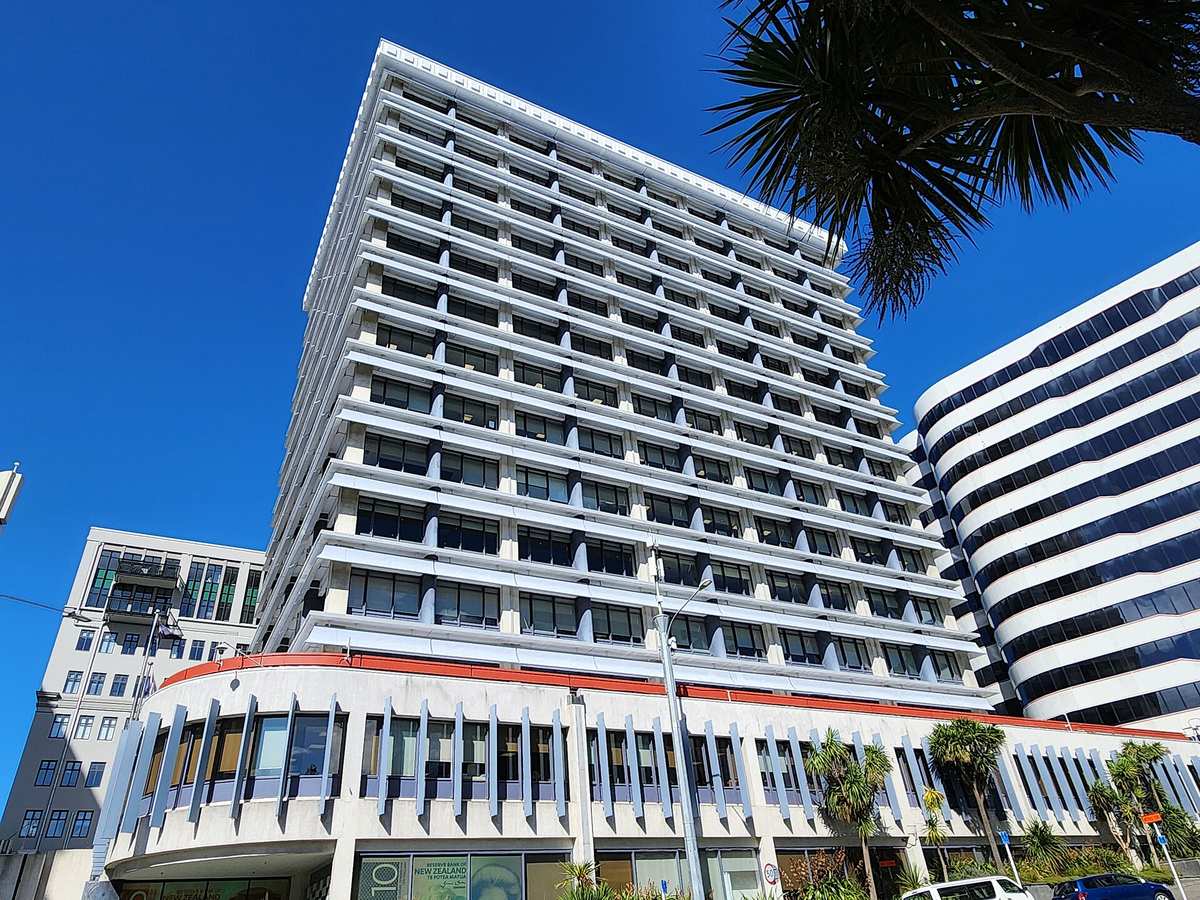

New Zealand's central bank left its main interest rate unchanged on Wednesday, 28 October 2026. The Reserve Bank of New Zealand kept the Official Cash Rate at 2.75%1 after a 4 to 3 vote of its Monetary Policy Committee. The three members in the minority wanted a 25 basis point increase to 3%1. A basis point is one hundredth of a percentage point, so the minority's proposal was a quarter of a point.
The hold caught markets off guard. Before the announcement, markets had priced roughly a 90% chance of a hike1, and ANZ, ASB, BNZ, Westpac and Kiwibank had all forecast one, according to investingLive. Westpac said a 25 basis point hike had been nearly fully priced by markets3. FXStreet reported that the decision “surprised markets, which had expected the central bank to raise the OCR by 25 basis points”5. 1News called it a surprise hold6 that came 10 days before the general election.
What the Official Cash Rate is
The Official Cash Rate, or OCR, is “the rate of interest which the central bank charges on overnight loans between commercial banks”13. The bank moves it to meet an inflation target that defines price stability as consumer price increases of between 1 and 3 percent on average over the medium term13.
How the committee decides
Since 2019 the rate has been set by a Monetary Policy Committee14, created by an amendment to the Reserve Bank's law passed in December 2018, which replaced a model where the Governor alone made the call. The committee has internal and external members14. In September the decision was described as a unanimous consensus with no formal vote required10.
When members disagree, they vote. In October seven members voted, four of them, the Governor included, for the hold1, and three for the increase. This was the second split decision of 2026. The April hold was reached without a vote17, and May's 3 to 3 vote settled by the Governor's casting vote4, which held the rate at 2.25%.
How the rate got to 2.75%
After the May hold, the committee began to raise the rate. In July it lifted the OCR by 25 basis points to 2.5%9, a decision Westpac's review said was reached by consensus. On 2 September 202610 it added another 25 basis points, taking the rate from 2.50% to 2.75%. October's hold is the first pause since those two increases.
Why the majority waited, and why three members did not
In its 28 October statement, the committee said “tighter monetary policy is likely to be required, but remains conditional on the economic outlook”2. Members also said that “information arriving over the next six weeks could meaningfully change the appropriate policy stance in either direction”2.
The three members who wanted a hike argued that core inflation had sat above the level consistent with the target midpoint for some time1, and they favoured moving toward the midpoint of the neutral range.
Household behaviour featured too. The statement said the aggregate saving rate is estimated to be 3.7 percent, above the 10 year average of 1 percent2. investingLive reported that the trade weighted New Zealand dollar index had fallen about 3% since early September1. On the day of the decision, as FXStreet reported, the New Zealand dollar traded at 0.5600 US dollars, down 1.46% on the day5.
The inflation numbers
Consumer prices rose 0.7% in the September 2026 quarter and 3.7% over the year7, down from 4.1% in the June quarter, Westpac reported on 22 October. The annual figure was below the Reserve Bank's own forecast of 3.9% and the market's 3.8%. Inflation is still above the top of the 1 to 3 percent band.
Fuel did much of the work. Trading Economics reported that petrol prices were up 19.1% over the year8, the largest upward contributor, with electricity up 9.3% and international airfares up 12.5%. Excluding fuel, annual inflation was 3.0%7, Westpac reported.
The underlying measures rose. Westpac's figures show the 30% trimmed mean, which drops the largest price moves in both directions, climbing to 3.0% from 2.6%7, and the weighted median climbing to 3.1% from 2.7%. investingLive reported that 56% of the CPI basket1, by weight, was rising more than 3% over the year, and that the bank expects annual inflation to reach 4.4% in the December quarter1, mainly because of fuel.
Growth has been firmer than expected. FXStreet reported that second quarter GDP came in at 2.6% year on year5, above an estimate of 2.3%.
What it means for mortgage holders
The two increases this year reached floating rates quickly. After the September hike, ANZ lifted its floating home loan rate from 6.04% to 6.29%11, and ASB made a matching 25 basis point rise, according to Mortgage Professional (MPA). October's hold leaves the OCR where September's increase put it.
Fixed rates work differently. An ANZ executive told MPA that fixed home loans are “influenced more by wholesale rates and expectations of where the OCR is heading next”11. That matters because, as realestate.co.nz noted in September, most New Zealand mortgages are fixed for one to three years12, so a change in the cash rate reaches many households only when their fixed term ends.
The next decision comes with the December Monetary Policy Statement1, which will carry updated forecasts.
Trivia
- When did the Reserve Bank of New Zealand begin operating? On 1 August 193414, under the Reserve Bank of New Zealand Act 1933. It has been wholly owned by the government since 1936.
- New Zealand was the first country to adopt inflation targeting. What was the first target range, set in March 1990? 0 to 2 percent14, under a Policy Targets Agreement.
- In which month and year was the Official Cash Rate introduced? In March 199913.
- How many times a year has the bank reviewed the OCR since 2016? Seven13, down from eight a year until 2015. Four of those reviews come with a Monetary Policy Statement.
- In what year did polymer banknotes replace New Zealand's paper notes? In 199915, with the series 6 notes.
- On what date did the New Zealand dollar replace the New Zealand pound? On Monday 10 July 196715.
- When was the New Zealand dollar floated, and at what starting rate? On 4 March 198515, at an initial rate of US$0.4444. The currency is sometimes called the kiwi, after the bird on the one dollar coin.
- What economic model built from water tanks and pipes is on permanent display in the Reserve Bank Museum? The MONIAC16, an analogue computer built in 1949 by a New Zealander. The museum's machine was restored in 2007.
Sources
- Eamonn Sheridan, RBNZ holds OCR at 2.75% in surprise 4-3 vote, says tighter policy still likely, investingLive, 28 October 2026. Accessed October 28, 2026.
- Reserve Bank of New Zealand, OCR held at 2.75%, media release and summary record as reproduced by ActionForex, 28 October 2026. Accessed October 28, 2026.
- Westpac Banking Corporation, RBNZ October 2026 Monetary Policy Review: Sticking with the Plan, ActionForex, 28 October 2026. Accessed October 28, 2026.
- Eamonn Sheridan, NZD jumps, RBNZ holds OCR at 2.25% by casting vote as committee splits 3-3 on rate hike, investingLive, 27 May 2026. Accessed October 28, 2026.
- Christian Borjon Valencia, What can we expect from the RBNZ monetary policy decision?, FXStreet, 27 October 2026, updated 28 October 2026. Accessed October 28, 2026.
- OCR wrap: Reserve Bank 'stuns' with surprise hold decision on rate, 1News, 28 October 2026. Accessed October 28, 2026.
- Westpac Banking Corporation, First Impressions: NZ Consumers Price Index Q3 2026 and Change of OCR Call, ActionForex, 22 October 2026. Accessed October 28, 2026.
- Isabela Couto, New Zealand Inflation Eases in Q3, Trading Economics, 21 October 2026. Accessed October 28, 2026.
- Kelly Eckhold, RBNZ Monetary Policy Review July 2026, Westpac IQ, 8 July 2026. Accessed October 28, 2026.
- Linh Chung, RBNZ OCR September 2026, OrbitRemit Blog, 3 September 2026. Accessed October 28, 2026.
- Mina Martin, Major banks lift mortgage rates after OCR rise to 2.75%, Mortgage Professional (MPA), 3 September 2026. Accessed October 28, 2026.
- Sarah Wood, OCR update September 2026, realestate.co.nz, 2 September 2026. Accessed October 28, 2026.
- Official cash rate, Wikipedia. Accessed October 28, 2026.
- Reserve Bank of New Zealand, Wikipedia. Accessed October 28, 2026.
- New Zealand dollar, Wikipedia. Accessed October 28, 2026.
- MONIAC, Wikipedia. Accessed October 28, 2026.
- Westpac Institutional Bank, RBNZ April 2026 Monetary Policy Review, Westpac IQ, April 2026. Accessed October 28, 2026.