Riksbank Raises Its Policy Rate to 2%, First Rise Since 2023
Key Points
- Sweden's Riksbank raised its policy rate by 0.25 percentage points to 2 per cent on 4 November 2026, applying from 11 November, after a rate of 1.75 per cent that had been in place since 1 October 2025.
- The bank said "stronger economic activity combined with cost increases due to supply disruptions" mean inflation is expected to keep rising, and that further rises are likely in the coming year if the outlook holds.
- CPIF inflation, the measure behind the 2 per cent target, was 1.5 per cent in September 2026, or 3 per cent excluding the direct effects of temporary fiscal policy measures.
- Reuters reports that "around 75% of households have floating-rate mortgages" in Sweden.
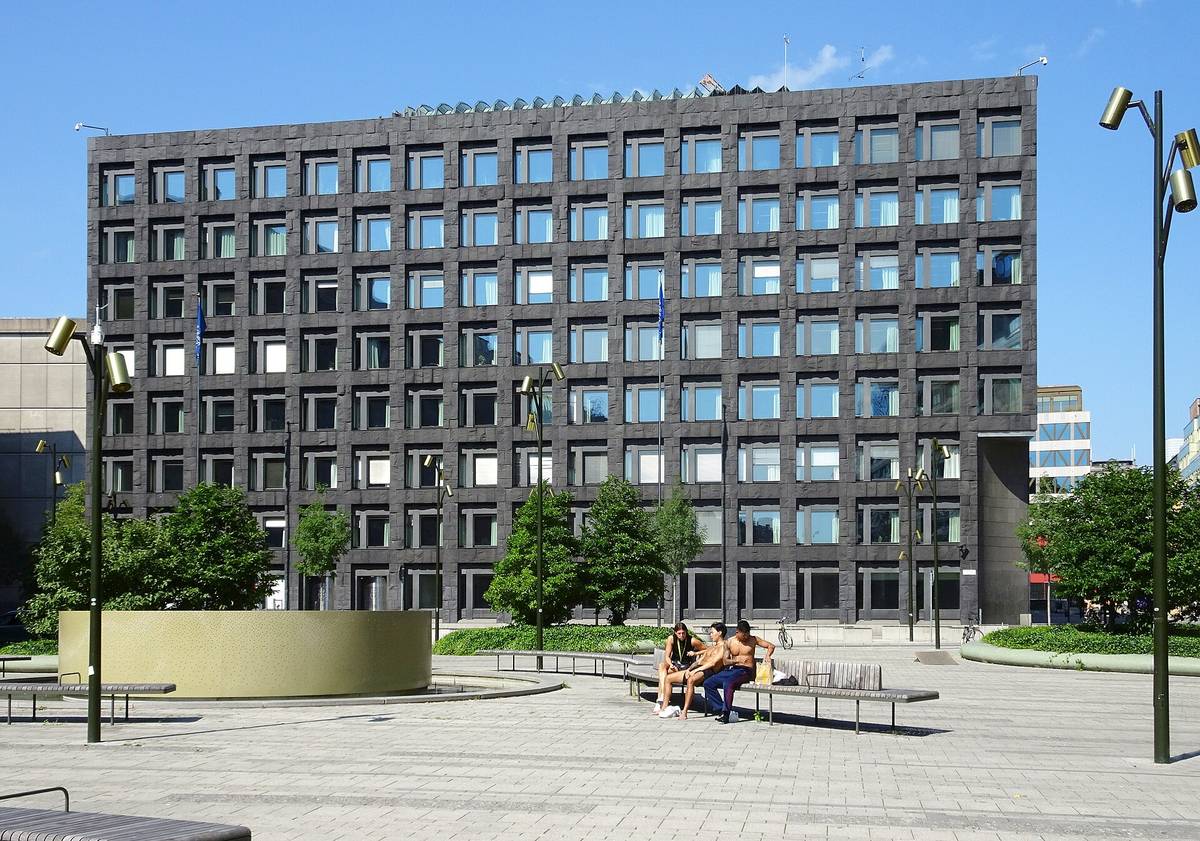

Sweden's central bank raised its main interest rate on Wednesday, 4 November 2026. The Riksbank said its Executive Board had decided to raise the policy rate by 0.25 percentage points to 2 per cent1, up from 1.75 per cent, and that the new rate will apply from 11 November 20261. Reuters reported that it was the first change to the rate since September 2025, and the first hike since 20238. The rise was expected, and analysts in a Reuters poll had been unanimous in expecting a hike8. The bank also signalled more to come, saying that if the outlook for inflation and economic activity holds, it is likely that the policy rate will be raised further in the coming year, in line with the policy rate forecast in September1.
What the Riksbank and its policy rate are
The Riksbank is Sweden's central bank. Under the Sveriges Riksbank Act, its overriding objective2 is to maintain sustainably low and stable inflation, and, without prejudice to that goal, to contribute to a balanced development of production and employment. The policy rate is the bank's main monetary policy tool6. The Riksbank's statistics page describes it as the interest rate decided upon by the Executive Board of the Riksbank4, used to steer the overnight market rate and influence other interest rates. In the bank's own plain explanation, a higher policy rate leads to the banks raising their interest rates6, and when bank rates rise, people and businesses do not buy as much as it becomes more expensive to borrow money6, which in turn slows price rises.
In September 2017 the Riksbank decided that the target is an annual increase in the consumer price index with a fixed interest rate (CPIF) of 2 per cent2. Statistics Sweden (SCB), which publishes the figures, explains that the CPI and CPIF cover the same goods and services, but the CPIF holds household mortgage interest rates constant7, so changes in mortgage rates show up only in the CPI.
The rate path from 2022 to 2026
The Riksbank's own policy rate series shows the rate at zero at the start of 2022. It then rose in steps, taking effect on 4 May 2022 (0.25 per cent), 6 July (0.75), 21 September (1.75) and 30 November 2022 (2.5)5, and again on 15 February 2023 (3.0), 3 May (3.5), 5 July (3.75) and 27 September 2023 (4.0)5. The rate held at 4 per cent until the cuts began. Those took effect on 15 May 2024 (3.75), 21 August (3.5), 2 October (3.25) and 13 November 2024 (2.75)5, followed by 8 January 2025 (2.50), 5 February 2025 (2.25), 25 June 2025 (2.00) and 1 October 2025 (1.75)4. The same table lists the 11 November 2026 rise to 2.00 as the next change, so the rate sat at 1.75 per cent for more than a year. The decision document says that the policy rate has been unchanged since September 20252, when the last cut was decided.
Why the bank raised it now
The Riksbank said stronger economic activity combined with cost increases due to supply disruptions mean that inflation is expected to continue rising going forward1. The Riksbank adds that energy prices have risen further and inflation abroad has increased1. At its September meeting, the bank had assessed that the policy rate should be raised this year if the outlook remains unchanged2.
CPIF inflation was 1.5 per cent in September 2026, up from 0.7 per cent in August7, according to SCB's release of 14 October, while the CPI rose 1.1 per cent7 over the twelve months to September. The Riksbank says the 1.5 per cent reading was in line with the Riksbank's latest forecast1, and that inflation is still being held back by direct effects of temporary fiscal policy measures1. Excluding those measures, CPIF inflation was 3 per cent1. The measure the bank says best reflects underlying inflation, which also excludes energy prices, was 1.6 per cent1, which was slightly lower than expected1. SCB says higher electricity and fuel prices contributed to the rise in the inflation rate in September, with electricity prices up 11.7 per cent and fuel up 13.3 per cent7 between August and September.
On growth, the Riksbank's Monetary Policy Update says that, according to preliminary statistics, GDP rose 0.4 per cent3 in the third quarter compared with the second, in line with its September forecast. It adds in a footnote that the preliminary statistics are based on a smaller amount of data than the National Accounts and should therefore be interpreted with caution3. Employment also rose. In the bank's words, sentiment among households declined in October, but among companies it rose further1. Overall, the bank judges that economic conditions will become normal next year1, and that stronger activity, supply-driven cost increases and a weaker krona this year1 will push both CPIF and underlying inflation above 2 per cent next year.
What it means for prices and mortgages
With this policy, the Riksbank says, inflation is expected to stabilise around the target of 2 per cent after a while1. For borrowers, the effect runs through banks. The Local, a Swedish English language news site, notes that the policy rate affects the banks' own interest rates on savings, loans and mortgages9. Reuters reports that around 75% of households have floating-rate mortgages8. The Riksbank says households and companies still have good lending conditions3 and that credit growth has risen to levels it assesses as roughly normal.
Who decided, and what forecasters expect
The decision document says the rise was decided by the Executive Board2 and lists all five of its members. The full minutes of the meeting are to be published on 10 November 20261. The update published with the decision carries no new forecasts, and the next Monetary Policy Report with forecasts is due on 16 December 20261.
Bank economists differ on how far the cycle runs. According to Reuters, Nordea expects the rate to stay unchanged in December, then a rise to 2.25% in February8, and Nordea and Swedbank both see February as the last increase, while DNB expects two further hikes in 2027, the first in March8.
The Riksbank lists risks in both directions. The causes of supply disruptions remain, which increases the risk that inflation will be too high1, and the economy could grow faster than expected. On the other side, it names geopolitical uncertainty, concerns about AI investments, and weak public finances in certain countries1 as possible sources of weaker demand, along with uncertainty about the strength of the labour market recovery.
Trivia
- In what year was the Riksbank founded, and under what name? It was established by the Riksdag in 1668 as the Riksens Ständers Bank10, and is described as the world's oldest surviving central bank.
- Which earlier Stockholm bank was the first in Europe to print banknotes, and when? Stockholms Banco, which began printing banknotes in 166111.
- What prize did the Riksbank create to mark its 300th anniversary? The Sveriges Riksbank Prize in Economic Sciences in Memory of Alfred Nobel12, established in 1968 and first awarded in 1969. The Royal Swedish Academy of Sciences selects the laureates.
- When was the krona introduced, and what did it replace? It arrived in 1873, replacing the riksdaler at par13. The word krona means "crown" in Swedish.
- When could Swedes last pay with a 50 öre coin? The final date for payments with 50 öre coins, the last coin worth less than one krona, was 30 September 201013.
- In what month and year did the Riksbank first adopt an inflation target? In January 199310, alongside a floating exchange rate.
- Since what year has the Riksbank had its head office in its current building at Brunkebergstorg 11 in Stockholm? Since 197610.
Sources
- Policy rate raised to 2 per cent, press release, Sveriges Riksbank, 4 November 2026. Accessed November 4, 2026.
- Monetary policy decision November 2026: policy rate decision, Annex A to the minutes of 3 November 2026, Sveriges Riksbank. Accessed November 4, 2026.
- Monetary Policy Update, November 2026, Sveriges Riksbank, 4 November 2026. Accessed November 4, 2026.
- Policy rate (previously repo rate), deposit and lending rate, Sveriges Riksbank. Accessed November 4, 2026.
- Policy rate series SECBREPOEFF, 2022 to 2026, Sveriges Riksbank statistics API. Accessed November 4, 2026.
- What is the policy rate (previously repo rate)?, Sveriges Riksbank. Accessed November 4, 2026.
- Consumer Price Index (CPI), September 2026, statistical news, Statistics Sweden, 14 October 2026. Accessed November 4, 2026.
- Sweden's central bank starts hiking cycle, Reuters via RTE, 4 November 2026. Accessed November 4, 2026.
- Sweden's central bank raises interest rate to 2 percent, The Local Sweden, 4 November 2026. Accessed November 4, 2026.
- Sveriges Riksbank, Wikipedia. Accessed November 4, 2026.
- Stockholms Banco, Wikipedia. Accessed November 4, 2026.
- Nobel Memorial Prize in Economic Sciences, Wikipedia. Accessed November 4, 2026.
- Swedish krona, Wikipedia. Accessed November 4, 2026.