Birds Nest Again on a Samoan Island After Rats and Pigs Are Removed
Key Points
- Between March 2025 and May 2026, field teams ran 12 expeditions and spent more than 130 days on the work that cleared invasive rats and feral pigs from Nu'utele, an island off eastern Upolu in Samoa.
- About one month after the removal, researchers found several active shy ground dove nests with eggs in bird's-nest ferns, and they also recorded a Samoan starling nest.
- Island Conservation reports native seedlings regrowing, sea turtles nesting again and a land crab species new to the island.
- An earlier attempt to eradicate rats from Nu'utele in 2009 did not succeed, and long-term monitoring is planned this time.
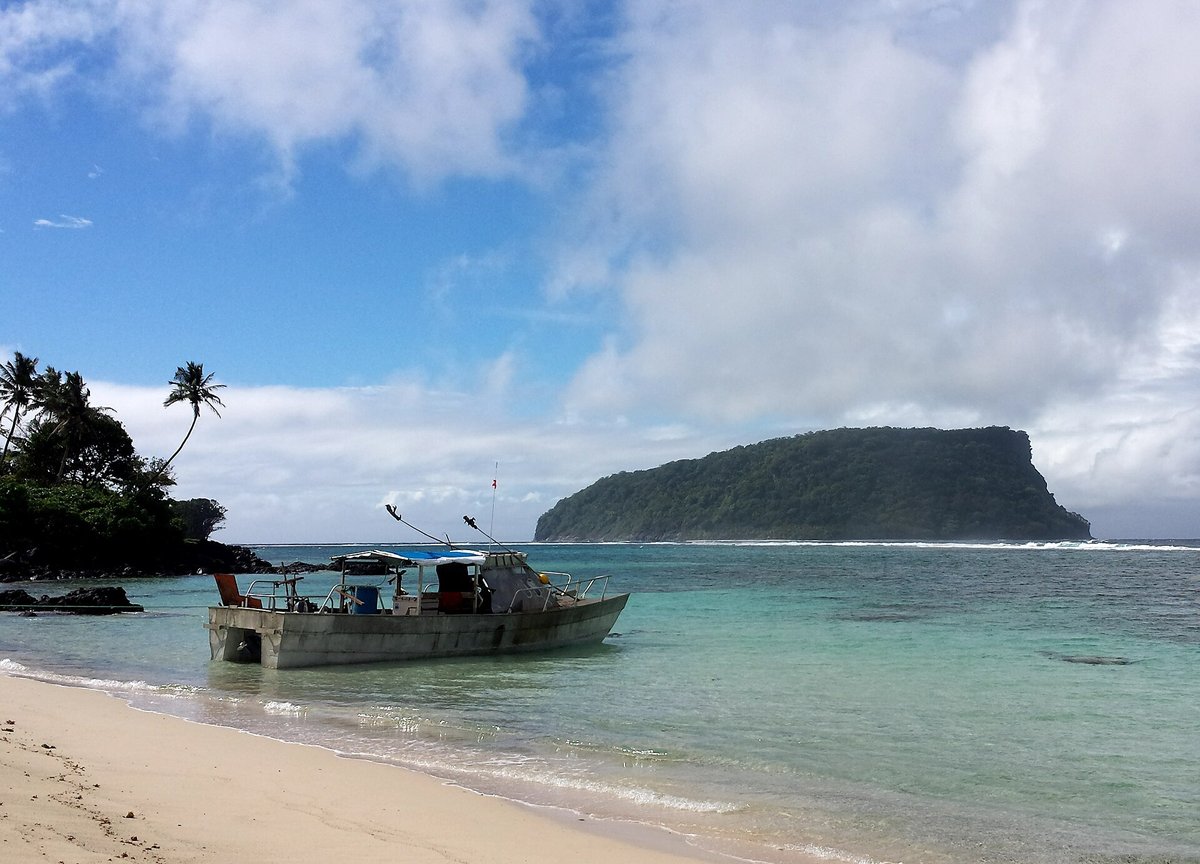

Island Conservation says that a year after rats and feral pigs were removed from Nu'utele, a forested island off the eastern tip of Upolu in Samoa, the island is recovering quickly. In a press release dated October 20, 20261, it reported native seedlings spreading across the forest floor, ground doves nesting in ferns, sea turtles nesting again and a land crab species new to the island.
Where Nu'utele is
Nu'utele is the largest of the four Aleipata islands, which face the easternmost point of Upolu, according to a review of invasive species management in the Aleipata islands4 prepared for Samoa's Ministry of Natural Resources and Environment (MNRE). The review gives its area as 1.08 square kilometres and places it, with its smaller neighbour Nu'ulua, 1.3 km off the far eastern end of Upolu and outside the coral reef. Both are forested volcanic islands. Both are customarily owned by families from the villages of Satitoa and Ulutogia in the Aleipata District, the review says.
Island Conservation describes Nu'utele as a Key Biodiversity Area1 that sits within a marine protected area and holds Samoa's best preserved tropical forest. The island has never been cleared, and the invasive plants found on the mainland have not colonized it.
Twelve expeditions, March 2025 to May 2026
MNRE led the work with local landowners, community members from Aleipata, Island Conservation and the Pacific Regional Invasive Species Management Support Service (PRISMSS), a service led by the Secretariat of the Pacific Regional Environment Programme (SPREP). Between March 2025 and May 2026, field teams ran 12 expeditions and spent more than 130 days1 carrying out and checking the work across the island's rugged terrain. The release thanks New Zealand's Ministry of Foreign Affairs and Trade and UK International Development for funding the PRISMSS Predator Free Pacific programme, and Bell Laboratories gave in-kind support.
When the effort was announced in October 2024, the Samoa Observer reported that rats and feral pigs were the biggest contributors to biodiversity loss2 on the island, and named the endemic Samoa flying fox (Pteropus samoensis) and the white-throated storm petrel among the species in decline. The rats on Nu'utele are Pacific rats (Rattus exulans), according to a 2012 paper on the birds of the Aleipata Islands12 in the journal Notornis. The pigs, according to an advisory group cited in the MNRE review, escaped from captivity4 on the island in mid 2006.
What the teams are seeing
"In many areas, native seedlings are carpeting the forest floor," said Paul Jacques, Project Manager for Island Conservation, in the October 20 release1. He described knee-high seedlings growing where forest regeneration had been suppressed, and giant taro where crops would previously have failed. A local family now grows bananas, pineapples, papayas and taro on the island.
About one month after the invasive animals were removed, researchers found several active shy ground dove nests with eggs1 in bird's-nest ferns, sites the release calls previously highly vulnerable to invasives. They also recorded a nest of the endemic Samoan starling and breeding activity among other species, including the endemic Samoan flycatcher and Samoan whistler.
Sea turtles are nesting again after decades of absence1, insects are reappearing, and conservationists recorded a land crab species new to Nu'utele. Land crabs move nutrients between forests, reefs and the open ocean, and the release expects benefits for fisheries in the surrounding marine protected area as crab numbers grow.
"Nu'utele shows what's possible when communities, governments, and conservation partners work together towards a shared vision," said SPREP Invasive Species Adviser David Moverley, quoted in the release1.
The birds at the centre of it
Nu'utele holds Samoa's largest remaining population of the shy ground dove, a species the release describes as declining across the Southwest Pacific1. Its global listing has shifted over the years. The MNRE review, which calls it the friendly ground dove, listed it as Vulnerable at global level4, while the current IUCN Red List entry cited on Wikipedia10 places it in Least Concern, across a range that takes in Samoa, American Samoa, Fiji, Tonga and Wallis and Futuna. Just before the 2009 baiting, 26 of the doves were trapped and held in an aviary on Upolu4, and the 22 survivors were released six weeks later.
The Mao comes next. Island Conservation says the recovering forest lays the groundwork for translocating the threatened Mao1, a native Samoan forest bird, as part of its 2026 to 2032 Restoring Pacific Islands for Nature and People project, with Germany's International Climate Initiative supporting the baseline data collection. The Mao is a large honeyeater, 28 to 31 cm long, listed as Endangered, according to Wikipedia, which cites BirdLife International9. The US Fish and Wildlife Service, whose endangered listing of the bird took effect on October 24, 20168, said in 2015 that it was restricted to the islands of Upolu and Savaii7 in Samoa and likely extirpated from American Samoa.
Why monitoring matters here
This is the island's second attempt to remove rats. In August 2009 a helicopter from New Zealand dropped brodifacoum rat bait3 on Nu'utele and Nu'ulua, a press release carried by the Solomon Times said in April 2010. A five-person team that searched Nu'utele in March 2010 found no sign of rats, and the project adviser, Dr David Butler, warned that a small group could have gone undetected and that another visit would be needed.
He was right to be cautious. The MNRE review found that the operation on Nu'utele did not succeed4, as later rat surveys showed, while the one on Nu'ulua appears to have worked. Rats were still on Nu'utele in September 2015. The reasons will never be known, the review says, because the rat tail samples collected for DNA analysis were lost in transit within New Zealand in 2011. Its list of likely causes includes incomplete bait coverage, plentiful coconuts for rats to eat, weak biosecurity, and possible reinvasion by rats after a tsunami in September 2009, a few weeks after the baiting. Even so, the review reports that the failed attempt appears to have released forest regeneration and some animal populations.
The October 2026 release says long-term monitoring will track1 forest regeneration, biodiversity recovery and ecosystem health, and will generate data for future restoration work in the region.
A global pattern
Islands cover about 5% of Earth's land area but are home to 40% of globally threatened vertebrates and account for 61% of global extinctions since the 1500s, according to a 2022 synthesis in Scientific Reports6. It counted 1,550 attempts to eradicate invasive vertebrates on 998 islands over more than 100 years, with an 88% success rate, and found that rats were the most common target, at 53% of events. A 2019 study in PLOS ONE5 ranked 292 islands worldwide where removing invasive mammals would most help highly threatened vertebrates.
Trivia
- Which bird is the national bird of Samoa? The Manumea, or tooth-billed pigeon11, a pigeon found only in Samoa.
- What did Nu'utele host between 1916 and 1918, according to the MNRE review? A leper colony4, part of a history of use that also included plantations.
- Which of the four Aleipata islands is the only one with no coconut grove? Nu'ulua4, which the MNRE review says has most likely never been inhabited.
- In what year were Pacific rats first trapped on Nu'utele? In 19914, according to the MNRE review.
- Where did Nu'utele and Nu'ulua rank in a 1986 review of 226 South Pacific islands? 30th in importance for biological diversity4, with the two islands rated together.
- How many bird species did R. Parrish and G.H. Sherley report from the Aleipata Islands in Notornis? 42 species12, in a paper published in 2012.
- Which Critically Endangered turtle nests on the beaches of Nu'utele and Nu'ulua? The hawksbill turtle4; the two islands reportedly support the highest number of nesting turtles in Samoa.
- How many species of land snail were collected on Nu'utele and Nu'ulua in surveys around 2000? Fifteen4, 11 on Nu'utele and seven on Nu'ulua, the MNRE review says.
Sources
- Island Conservation, PRESS RELEASE: Ecosystem Recovering Dramatically Thanks to Successful Climate Resilience Effort in Samoa, 20 October 2026. Accessed October 22, 2026.
- Shalveen Chand, Rats and pigs to be removed from Nu'utele, Samoa Observer, 16 October 2024. Accessed October 22, 2026.
- Samoa rat eradication project showing signs of success, Solomon Times (press release), 12 April 2010. Accessed October 22, 2026.
- Gianluca Serra and Faleafaga Toni Tipama'a, New Eden Samoa Environment Consultants, Review of Invasive Alien Species Management in the Aleipata Islands, Samoa, GEF-PAS Invasive Alien Species project, for MNRE, SPREP library. Accessed October 22, 2026.
- Holmes N.D. et al., Globally important islands where eradicating invasive mammals will benefit highly threatened vertebrates, PLOS ONE 14(3): e0212128, 27 March 2019. Accessed October 22, 2026.
- Spatz D.R. et al., The global contribution of invasive vertebrate eradication as a key island restoration tool, Scientific Reports 12:13391, 10 August 2022 (PubMed Central copy). Accessed October 22, 2026.
- US Fish and Wildlife Service, Service Proposes to Protect Five Species from American Samoa Under Endangered Species Act, 9 October 2015. Accessed October 22, 2026.
- US Fish and Wildlife Service, Endangered Status for Five Species From American Samoa; Final Rule, 81 FR 65465, 22 September 2016. Accessed October 22, 2026.
- Mao (bird), Wikipedia. Accessed October 22, 2026.
- Shy ground dove, Wikipedia. Accessed October 22, 2026.
- Dead as a dodo? Scientists spot rare Samoan species, Phys.org, 24 January 2014. Accessed October 22, 2026.
- R. Parrish and G.H. Sherley, Birds of the Aleipata Islands, Samoa, Notornis 59 (3 and 4): 153-162, 2012 (abstract page). Accessed October 22, 2026.