Fed Loan Officer Survey, October 2026: Credit Cards and Auto Loans
Key Points
- The Federal Reserve Board published the October 2026 Senior Loan Officer Opinion Survey on November 2, 2026, covering bank lending in the third quarter of 2026.
- Banks reported leaving standards and most terms basically unchanged for credit cards, auto loans and other consumer loans, with a few specific tightening steps.
- Banks reported stronger demand for credit card loans and weaker demand for auto loans.
- The survey began in 1964 with 120 banks and 22 questions, and the Board says it has typically run four times a year since 1992.
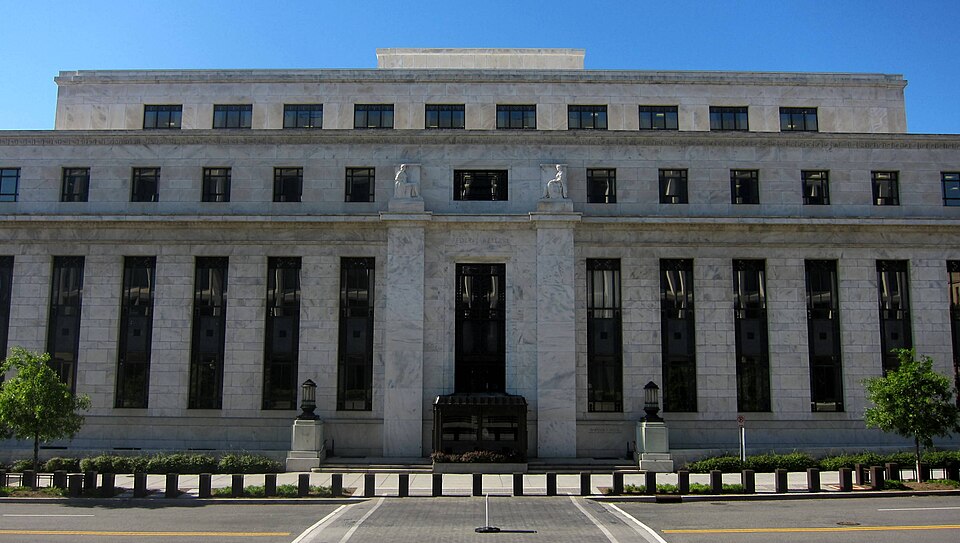

The Federal Reserve Board published the October 2026 Senior Loan Officer Opinion Survey on Bank Lending Practices on November 2, 2026. It covers changes in the standards, terms and demand for bank loans to businesses and households over the past three months, which generally corresponds to the third quarter of 20261. For households, the headline reads quiet: most card and auto lending policies were left basically unchanged, with a few specific tightening steps and a split in demand between credit cards and auto loans.
What the survey is and who answered
The survey asks senior loan officers at banks about their own lending, not about borrowers in general. Responses were received from 61 domestic banks and 18 U.S. branches and agencies of foreign banks. Respondent banks received the survey on September 21, 2026, and responses were due by October 5, 20261. Unless the Board says otherwise, its summary refers to the domestic banks.
The Board defines its wording precisely. For questions about standards or terms, the net percentage is the share of banks that reported tightening minus the share that reported easing1. For demand questions, it is the share reporting stronger demand minus the share reporting weaker demand. When the summary says something remained basically unchanged, the net percentage is between 0 and 5 percent1. That cutoff matters when reading the card and auto results below, where only a handful of banks moved either way.
Credit cards: standards steady, demand stronger
Over the third quarter, banks reported having left lending standards and most queried terms basically unchanged for credit card loans, auto loans and other consumer loans1. The table for the credit card standards question shows how few banks moved. Of 50 banks answering, 3 tightened standards somewhat, 46 left them basically unchanged and 1 eased somewhat, and 11 respondents said they do not originate credit card loans to individuals or households2. On the Board’s definition that is a net 4 percent tightening, inside the basically unchanged band.
There were exceptions. Banks reported tightening the extent to which loans are granted to borrowers not meeting credit scoring thresholds for credit card loans and other consumer loans, and tightening credit limits on credit card accounts1. On demand, banks reported stronger demand for credit card loans1. In the table, 7 of 49 banks reported moderately stronger demand, 40 reported about the same and 2 reported moderately weaker demand2, which works out to a net 10 percent stronger.
A year of change in who gets approved
The October survey included special questions that looked back a full year. They asked about the likelihood of approving credit card applications across borrower risk categories and about the factors behind changes in demand for credit card loans1. The Board’s summary says banks were more likely to approve applications from super-prime and prime borrowers and less likely to approve applications from subprime borrowers, while the likelihood for near-prime borrowers was basically unchanged1.
The table gives the counts and the credit score ranges used in the question. The question gave example FICO ranges: super-prime scores at or above 780, prime 720 to 779, near-prime 620 to 719 and subprime 580 to 6192. For super-prime borrowers, 11 banks said they were more likely to approve, 37 said about as likely, none said less likely, and 9 do not originate cards to these borrowers2. For subprime borrowers, 30 of 56 banks do not originate credit card loans to them; of the rest, 3 were more likely to approve, 17 about as likely and 6 less likely2. That is a reminder that many of the banks in the panel simply are not in that part of the market.
On why demand for card loans strengthened over the year, banks most frequently cited changes in customers’ spending needs in response to price changes for goods and services they face1. The table lists several factors separately. For the factor of spending needs tied to the outlook for economic activity, 11 of 50 banks said it strengthened demand and 5 said it weakened demand2.
Auto loans: demand weaker
Auto lending read differently. Banks reported weaker demand for auto loans during the third quarter1, while tightening the minimum required credit score for auto loans1. The standards question itself was close to flat: of 48 banks answering, 2 tightened somewhat, 43 left standards basically unchanged, 2 eased somewhat and 1 eased considerably, and 13 do not originate auto loans to individuals or households2.
The demand table has the larger spread. Of 48 banks, 3 reported moderately stronger demand for auto loans, 36 reported about the same and 9 reported moderately weaker demand2, roughly a net 13 percent weaker. Demand for other consumer loans, the Board adds, remained basically unchanged1.
Mortgages, businesses and the rest of the report
The household section also covers home loans. Banks left standards basically unchanged, on net, for most types of residential mortgage loans, except qualified mortgage (QM) jumbo and non-QM jumbo mortgages, for which they eased standards, and subprime mortgages, for which they tightened1. The summary adds that standards for home equity lines of credit were also basically unchanged, and banks reported weaker demand, on balance, across all residential real estate loan categories and unchanged demand for home equity lines of credit1.
On the business side, standards for commercial and industrial loans to large and middle-market firms were basically unchanged, while standards tightened for loans to small firms1. For commercial real estate, banks reported having tightened standards, on net, for all categories, and weaker demand for all categories1. A separate set of special questions covered loans to nondepository financial institutions, and banks reported having tightened standards, on net, for all queried types of those loans1. For commercial and industrial loans, the most frequently cited reasons for tighter standards were a less favorable or more uncertain economic outlook and a worsening of industry-specific problems1.
A survey with a long history
The Federal Reserve originally initiated a survey on bank lending practices in 1964 with a respondent panel of 120 banks, 22 questions and a reporting frequency of every 3 months3. The Board’s own description says the panel, questions and frequency have changed with conditions since. The survey has typically been conducted four times a year since 19923, and aggregated survey results from 1997 to present are available to the public on the Board’s website3.
The Board explains how it is used: the respondents’ answers provide information that is critical to the Federal Reserve System’s monitoring of bank lending practices and credit markets3. Since 2012, the Federal Reserve has tried to maintain a panel of 80 domestically chartered commercial banks3. As of March 31, 2023, the panel of domestic respondents contained 73 banks, 37 of which had assets of $50 billion or more, and the panel banks’ assets of $15.1 trillion made up about 74 percent of the $20.5 trillion in total assets of all domestically chartered institutions3. Survey submissions are voluntary3, and the release comes generally on the first Monday following FOMC meetings for the standard quarterly surveys3, which fits a Monday, November 2 release after the Committee’s October 27 and 28 meeting4.
Reading the numbers
This is a survey of lenders’ opinions about changes, so it does not report how many loans were made, what balances stand at, or what interest rates borrowers pay. A bank answering that standards were unchanged is saying its policy did not move over the quarter, not that credit is easy or hard to get. The card and auto counts above are also small, 50 and 48 banks, so a change of two or three answers shifts a percentage by four to six points.
Trivia
- In what year did the Federal Reserve first initiate a survey on bank lending practices, and how many banks were on its original panel? 1964, with a respondent panel of 120 banks3.
- On what date were the October 2026 survey results published, and when were responses due? Published November 2, 20261; responses were due October 5, 20261.
- On the Board’s definition, how large can a net percentage be and still count as basically unchanged? Between 0 and 5 percent1.
- Of the 50 banks answering the credit card standards question, how many tightened standards somewhat? 3 banks, with 46 unchanged and 1 easing somewhat2.
- Did banks report stronger or weaker demand for auto loans in the third quarter of 2026? Weaker, while demand for credit card loans was stronger1.
Sources
- Board of Governors of the Federal Reserve System, The October 2026 Senior Loan Officer Opinion Survey on Bank Lending Practices (November 2, 2026). Accessed November 4, 2026.
- Board of Governors of the Federal Reserve System, Senior Loan Officer Opinion Survey, October 2026, Table 1 (November 2, 2026). Accessed November 4, 2026.
- Board of Governors of the Federal Reserve System, About the Senior Loan Officer Opinion Survey on Bank Lending Practices. Accessed November 4, 2026.
- Board of Governors of the Federal Reserve System, FOMC Meeting calendars and information. Accessed November 4, 2026.