Birds and Mammals Below 50 Can Recover, ZSL and Monash Study Finds
Key Points
- The study evaluated "all 147 bird and mammal species that have been below 50 individuals in the wild" at any point since 1950, of which 141 had enough elapsed time to assess an outcome.
- The abstract says "Most species subject to direct conservation recovered to at least 100 individuals."
- Of the 51 species that received direct conservation action, "61 per cent recovered to at least 100 individuals," according to Monash University.
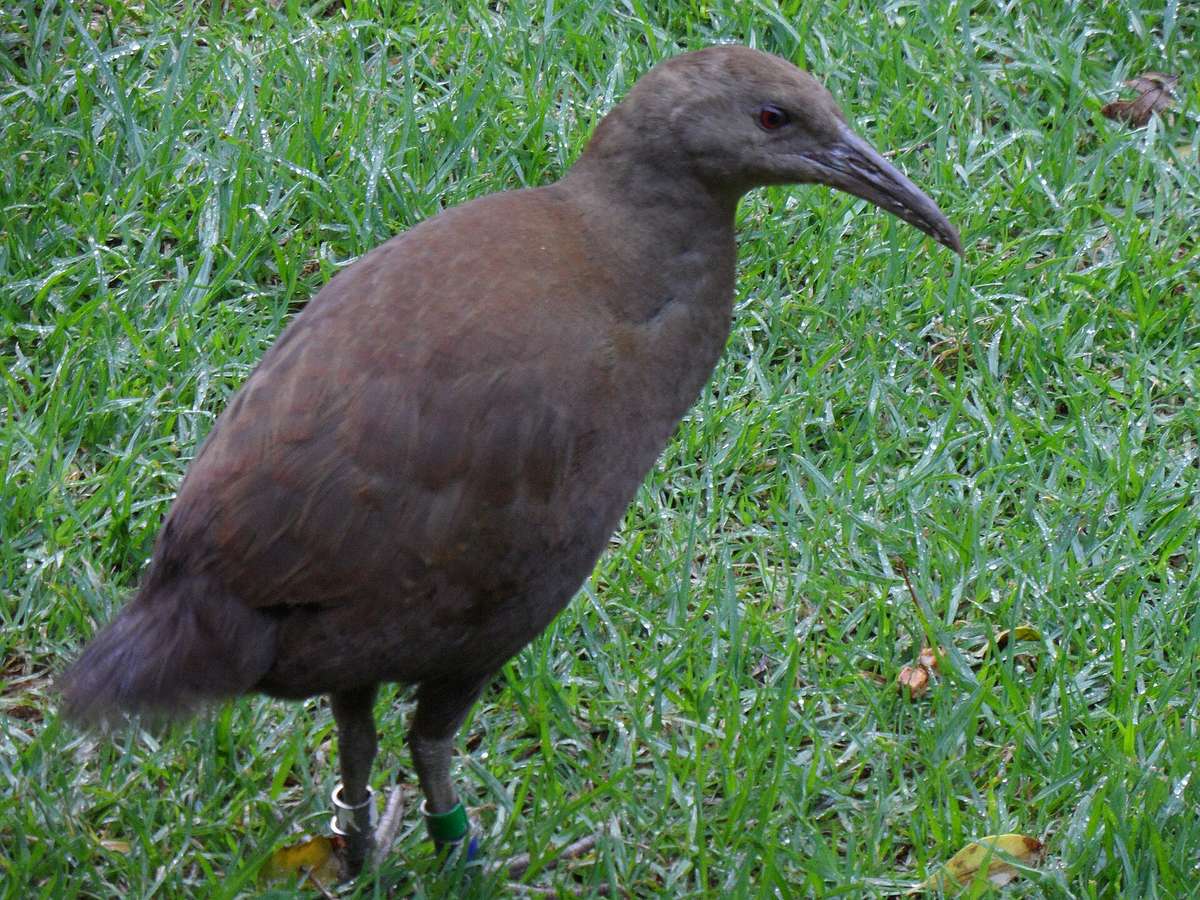
- The Lord Howe woodhen "rebounded from just 23 birds in the late 1970s to more than 1600 today," the Monash release says.

A bird or mammal reduced to fewer than 50 animals in the wild has long been treated as a likely loss. A new study in Proceedings of the Royal Society B, published on 4 November 2026, looks at every such case since 1950 and finds that the outlook depends heavily on what people do next. The paper, titled Inevitable fates? The recovery potential of small populations, is by Donal Smith, John G. Ewen, Rohan H. Clarke, Zarah Ann Wessels and Samuel T. Turvey, of Monash University's School of Biological Sciences and the Institute of Zoology of the Zoological Society of London1 (ZSL).
Monash University announced the results in a press release on 4 November2. Its headline: "Small populations, big potential: New research overturns extinction assumptions."
What the researchers counted
The authors describe their work as an observational study. According to the paper's abstract, they evaluated all 147 bird and mammal species that have been below 50 individuals in the wild1 at any point since 1950. Of those, 141 had enough time behind them for an outcome to be assessed. For each species the team recorded the history of conservation action, if there was any, and used a statistical model (Bayesian multi-level logistic regression) to test how that action was associated with where the population ended up.
The abstract's main finding is that "Most species subject to direct conservation recovered to at least 100 individuals." The highest modelled chances of recovery went to species that received a combination of two kinds of help: actions to limit the external drivers of decline, and actions that directly manipulate the population itself.
The Monash release puts figures on that split. Of the 51 species that received direct conservation action2, "such as invasive predator control, habitat restoration, captive breeding or translocations, 61 per cent recovered to at least 100 individuals." Among species that received no direct support, the release says, 37 per cent went extinct "and only two per cent" recovered to at least 100 individuals.
The study is observational, so these figures show an association between action and outcome, not cause and effect. The abstract explains why the full count matters: success stories alone could not show how representative they were "without a broader examination encompassing all actions and outcomes."
Why fewer than 50 has looked hopeless
Small populations carry well known risks. One is inbreeding. Repeated mating between relatives lowers genetic variety, and inbreeding causes a decrease in the reproductive fitness3 of a population because of that loss. Another is chance. In small groups, "selection is less effective, and the relative importance of genetic drift is higher," because harmful gene variants can become common, and even fixed in a population, by chance. Random swings in births, deaths and sex ratios matter more too: "The smaller the population, the greater the probability that fluctuations will lead to extinction." Year to year changes in conditions such as rainfall or temperature also hit small populations harder.
"For decades, conservation decisions have been influenced by the idea that once a population drops below a certain threshold, recovery is severely inhibited by smallness itself due to genetic or demographic factors," Dr Donal Smith of Monash said in the release2. "Our work shows that population size alone shouldn't determine whether we give up on a species."
His co-author, Professor Rohan Clarke, did not dismiss the genetic concern. "While genetic risks are real, our history shows that human intervention works," he said.
The number 50 on the Red List
The threshold in the study lines up with one of the formal tests the International Union for Conservation of Nature (IUCN) uses. Its Red List, founded in 19645, is an inventory of the conservation status and extinction risk of species around the world. A species can be listed as Critically Endangered on any one of five criteria. Criterion D, for very small populations, applies when the population size is estimated to number fewer than 50 mature individuals4.
So the species in this study sat, at their low point, in the territory the Red List treats as the highest risk short of extinction in the wild.
A small island bird among the recoveries
Combining threat mitigation with direct population management "yielded the highest rates of success," it says, driving recoveries in iconic species such as Australia's Lord Howe woodhen2, "which rebounded from just 23 birds in the late 1970s to more than 1600 today."
The woodhen is a flightless bird found only on Lord Howe Island6, Australia, and is classed as Endangered by the IUCN. Its recovery combined removing introduced animals (feral cats were eradicated from the island between 1976 and 1982, and pigs between 1979 and 1985) with a captive breeding programme from 1980 to 1984 that released 81 birds into the wild. According to its Wikipedia entry, the population grew to roughly 200 birds by 1985 and then stayed small but stable from 1988 to 2019.
What it means for conservation choices
Money for conservation is limited, and the idea of conservation triage holds that it should go where it is most likely to work, which can mean stepping back from species judged too far gone. The authors write that their findings serve as an empirically grounded counterpoint1 "to advocates of abandonment of such species under a conservation triage framework."
"Abandoning critically endangered species because their numbers look too low is a mistake," Clarke said in the Monash release2. Smith described the pattern the record showed: "When we actively tackle the external pressures driving their decline and directly support their numbers, small populations show a striking capability to recover."
Across every bird and mammal known to have dropped below 50 wild individuals since 1950, the abstract concludes that the results indicate "a striking potential for recovery even in critically small populations."1
Trivia
- What is the scientific name of the Lord Howe woodhen? Hypotaenidia sylvestris6, described by Sclater in 1870; it was formerly placed in the genus Gallirallus.
- On which two Lord Howe Island peaks were the last woodhen breeding pairs confined? Mount Gower and Mount Lidgbird6.
- What happened to the wild Lord Howe woodhen population during the island's 2019 poison baiting for rodents? Woodhens were taken into captivity while the island was baited6, and 208 were released from captive management10 in 2019.
- What was the name of the last fertile female black robin, when the species was down to five birds in 1980? Old Blue7. The species was saved by Don Merton and his Wildlife Service team.
- What technique did black robin conservationists use with the Chatham Island tomtit? Cross fostering7: black robin eggs were placed in tomtit nests, the tomtits raised the first brood and the robins laid again.
- Which conservationist is credited with pioneering efforts to save the Mauritius kestrel, whose wild numbers hit an all-time low in 1974? Carl G. Jones8.
- What was the code name of the last wild California condor, captured on Easter Sunday 1987? AC-99.
- About how wide is the wingspan of a California condor? About 3.0 m (9.8 ft)9, the widest of any North American bird.
Sources
- Donal Smith, John G. Ewen, Rohan H. Clarke, Zarah Ann Wessels and Samuel T. Turvey, Inevitable fates? The recovery potential of small populations, Proceedings of the Royal Society B 293 (2082), 4 November 2026, doi:10.1098/rspb.2026.2436 (Crossref record with abstract). Accessed November 5, 2026.
- Monash University, Small populations, big potential: New research overturns extinction assumptions, EurekAlert!, 4 November 2026. Accessed November 5, 2026.
- Small population size, Wikipedia. Accessed November 5, 2026.
- Critically endangered, Wikipedia. Accessed November 5, 2026.
- IUCN Red List, Wikipedia. Accessed November 5, 2026.
- Lord Howe woodhen, Wikipedia. Accessed November 5, 2026.
- Black robin, Wikipedia. Accessed November 5, 2026.
- Mauritius kestrel, Wikipedia. Accessed November 5, 2026.
- California condor, Wikipedia. Accessed November 5, 2026.
- NSW Department of Climate Change, Energy, the Environment and Water, Back from the brink: Lord Howe woodhen population surges, NSW Government. Accessed November 5, 2026.