South Korean Economy Grows 1% in Third Quarter, Led by Chips
Key Points
- The Bank of Korea said real GDP “increased by 1.0 percent in the third quarter of 2026 compared to the previous quarter”, and by 3.4 percent on the year.
- In August the bank had forecast 0.3% growth for the quarter.
- Exports rose 2.3 percent and facilities investment 4.1 percent, led by semiconductors and chipmaking equipment, while private consumption fell 0.2 percent.
- Real gross domestic income rose 3.4% on the quarter and 18.8% on the year.
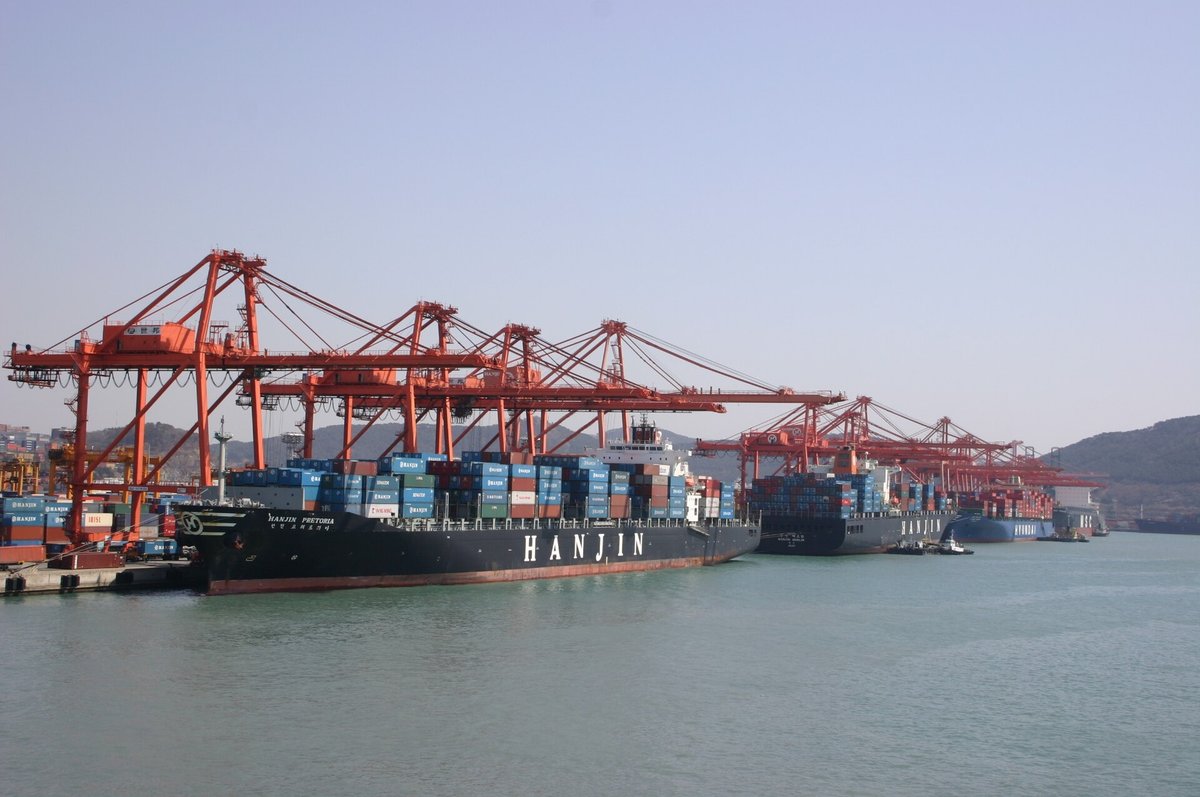

South Korea's economy grew faster over the summer than its central bank expected. On 27 October 2026 the Bank of Korea said real gross domestic product “increased by 1.0 percent in the third quarter of 2026 compared to the previous quarter”1, and by 3.4 percent from the same quarter a year earlier. In August the bank had forecast 0.3% growth for the quarter3, and economists in a Reuters poll had expected a median 0.7%. The result was more than three times7 the bank's own forecast. Rounded to two decimal places, growth was 0.97 percent6.
Chips did much of the work. Exports rose 2.3 percent, mainly on semiconductors and on machinery and electrical equipment2, and facilities investment, which is what companies spend on machinery and equipment, rose 4.1 percent, led by semiconductor manufacturing equipment. Households moved the other way. Private consumption fell 0.2 percent.
What an advance estimate is
The 1.0 percent is a first reading. The Bank of Korea compiles South Korea's national accounts and publishes “advance” and “preliminary” quarterly estimates2, followed by three annual sets of figures. The advance estimate comes out within 28 days of the end of a quarter and gives the first look at real GDP growth by industry and by type of spending. The preliminary estimate follows within 70 days with more detail, such as values at current prices and gross national income.
GDP and GDI in plain terms
The bank's national income statistics “estimate total economic activity in Korea”2, covering the production and spending of households, companies and the government. GDP is the headline measure of that activity. The word real means prices are held constant, so a rise in real GDP11 reflects more goods and services being produced rather than higher prices.
Gross domestic income looks at the same economy from the side of what its output can buy. Real GDI “increases when the price of imports goes down or when the price of exports goes up”11, while real GDP is not affected by those price changes. In the third quarter real GDI rose 3.4% on the quarter and 18.8% on the year1. It had already risen 8.7 percent in the first quarter and 3.7 percent in the second2, quarter on quarter.
How the quarter compares
The economy has picked up through 2026. The bank's tables show real GDP shrank 0.1 percent in the fourth quarter of 20252, then grew 1.8 percent in the first quarter of 2026, 0.6 percent in the second and 1.0 percent in the third. On a year on year basis growth ran at 3.8, 3.7 and 3.4 percent in those three quarters, after 1.1 percent for the whole of 2025 and 2.2 percent for 2024. Lee Dong-won, director general of the bank's economic statistics department, said “The cumulative growth rate through Q3 is 3.6% year-on-year”6, according to Money Today's English translation.
By industry, manufacturing grew 2.0 percent on the quarter2, centered on computer, electronic and optical products and on machinery, and 7.0 percent on the year. Construction also grew 2.0 percent as civil engineering increased, and agriculture, forestry and fishing grew 5.9 percent on better crop yields and fishing. Services grew only 0.2 percent after 1.0 percent in the second quarter.
Why chips matter so much
This year has been an unusually strong one for South Korean chip sales abroad. In September the country's exports reached a record US$120.9 billion8, up 83.5 percent from a year earlier, and chip exports more than tripled to US$60.3 billion, about half the total, according to the Ministry of Trade, Industry and Resources as reported by Yonhap. Exports for the year to September passed US$800 billion.
Lee said “about half of economic growth is being driven by semiconductors”3, Reuters reported. The Korea Times reported that computers and electronics, including semiconductors, accounted for about 60 percent4 of year on year growth. Companies are also spending to make more chips. Facilities investment was up 9.4 percent2 on the year, and imports rose 2.4 percent on the quarter as purchases of crude oil and of semiconductor manufacturing equipment increased.
Where households stand
Consumer spending was the weak spot. The bank said private consumption fell because spending on goods (e.g., vehicles, household appliances) and services2 such as financial and food services both decreased. It was the largest quarterly drop since the first quarter of 2022, when consumption fell 1.0%6. The Herald Business reported that the bank put the decline mainly down to “a drop in financial services tied to the stock market correction”7 and to delivery delays from strikes at carmakers. Lee said “Had these one-off factors not occurred, private consumption is estimated to have grown 0.4 percent”7, according to The Herald Business's translated report.
Government spending filled part of the gap. Government consumption rose 1.9 percent2 on higher spending on goods and health care benefits. The Herald Business reported that government spending added 0.8 percentage points7 to quarterly growth and the private sector 0.2 points. Sentiment cooled. The bank's composite consumer sentiment index fell 1.2 points to 105.4 in October5, and Lee said “Private consumption has not shown a particularly strong recovery so far”5, the Korea Times reported.
What the bank has said about the year
The bank's August forecast for 2026 as a whole was 3.3 percent4, and a revised forecast is due in November. Lee said the amount by which the third quarter beat its forecast “could act as a factor raising the annual growth rate by 0.35 percentage points”6. According to the Korea Times, he said that if the fourth quarter shows no growth at all, annual growth would come to 3.6 percent, and that reaching 4 percent would take fourth quarter growth of about 1.4 percent or more4. A 4 percent year would be the fastest since 20214. Separately, the Ministry of Finance and Economy said per capita gross national income “is expected to rise to the $40,000 range”4 in US dollars this year.
The figures also feed into interest rate decisions. When the bank held its Base Rate at 3.00% on 22 October, it said “it would not be too late to further assess these through incoming data, such as Q3 GDP and October inflation data”9. The Monetary Policy Board's last scheduled meeting of the year is on 26 November10.
Trivia
- In which year did South Korea become the third country to develop 64K DRAM memory, and which two countries came first? In 198312, after the United States and Japan.
- Which kind of memory did South Korea commercialize as a world first in 2013? 3D V-NAND flash memory12.
- Under what name was the chipmaker SK Hynix founded in 1983? Hyundai Electronics13, which rebranded as Hynix Semiconductor in 2001.
- How much did SK pay for Hynix, and when? US$3 billion, in February 201213, after which the company took the name SK Hynix.
- When did real GDI last grow faster on the year than its third quarter 2026 pace? In the fourth quarter of 19776, when it grew 19.0%, according to Money Today.
- In which year did South Korean per capita gross national income first pass US$30,000? In 20144.
- Real GDP in the Bank of Korea tables is measured at chained prices of which reference year? 20202.
Sources
- Bank of Korea, Real Gross Domestic Product: Third Quarter of 2026 (Advance Estimate), 27 October 2026. Accessed October 29, 2026.
- Bank of Korea, Real Gross Domestic Product: Third Quarter of 2026 (Advance Estimate), press release (PDF), 27 October 2026. Accessed October 29, 2026.
- Jihoon Lee, South Korea Q3 GDP beats forecasts as AI chip boom boosts exports, investments, Reuters via WSAU, 26 October 2026. Accessed October 29, 2026.
- Lee Hyo-jin, Chip exports drive Korea's Q3 growth to 1%, triple BOK forecast, Korea Times, 27 October 2026. Accessed October 29, 2026.
- Lee Hyo-jin, Chip boom fails to lift spending as private consumption falls, Korea Times, 27 October 2026. Accessed October 29, 2026.
- Choi Minkyoung, Korea's Q3 GDP grows 1%, with 3.7% annual growth in sight on chip boom, Money Today, 27 October 2026. Accessed October 29, 2026.
- Kim Byeo-ree, Semiconductors, government spending lift growth, but private consumption falls for first time in 4 years, The Herald Business, 27 October 2026. Accessed October 29, 2026.
- Yonhap, Korea's September exports hit record $120.9 bil. on robust chip sales, Korea Times, 1 October 2026. Accessed October 29, 2026.
- Bank of Korea, Monetary Policy Decision & Opening Remarks to the Press Conference (October 22, 2026), 22 October 2026. Accessed October 29, 2026.
- Bank of Korea, Meeting Dates. Accessed October 29, 2026.
- Gross domestic income, Wikipedia. Accessed October 29, 2026.
- Semiconductor industry in South Korea, Wikipedia. Accessed October 29, 2026.
- SK Hynix, Wikipedia. Accessed October 29, 2026.