The Stanford Prison Experiment and Its 2019 Critics
Key Points
- According to the experiment's website, the Stanford Prison Experiment ran for six days in August 1971 with 24 college students divided by a coin flip into guards and prisoners, after being planned for two weeks.
- A 2019 American Psychologist paper by Thibault Le Texier, based on archive material and interviews with 15 participants, says the data further question the study's scientific merit.
- A second 2019 American Psychologist paper, by Haslam, Reicher and Van Bavel, reports from the archive that the experimenters directly encouraged the guards to act tough, and describes this as consistent with identity leadership, rather than guards conforming to a role of their own accord.
- Zimbardo's response on the experiment's website, which answers criticisms from 2018, asserts that none of the criticisms present substantial evidence that alters the main conclusion about situational forces.

As of October 29, 2026, the official Stanford Prison Experiment website carries a note that Netflix released a reality show called The New Stanford Prison Experiment on October 21, 20262. The note describes the show as an independent entertainment production, not affiliated with Philip G. Zimbardo (listed there as 1933 to 2024), the principal researcher of the 1971 experiment, or with his estate2.
One of the papers below calls the 1971 experiment one of psychology's most famous studies4, and its scientific standing has been argued over in print. This article lays out what was done and what the sources say about it: the experiment's own website and two 2019 papers in American Psychologist.
What the experiment was
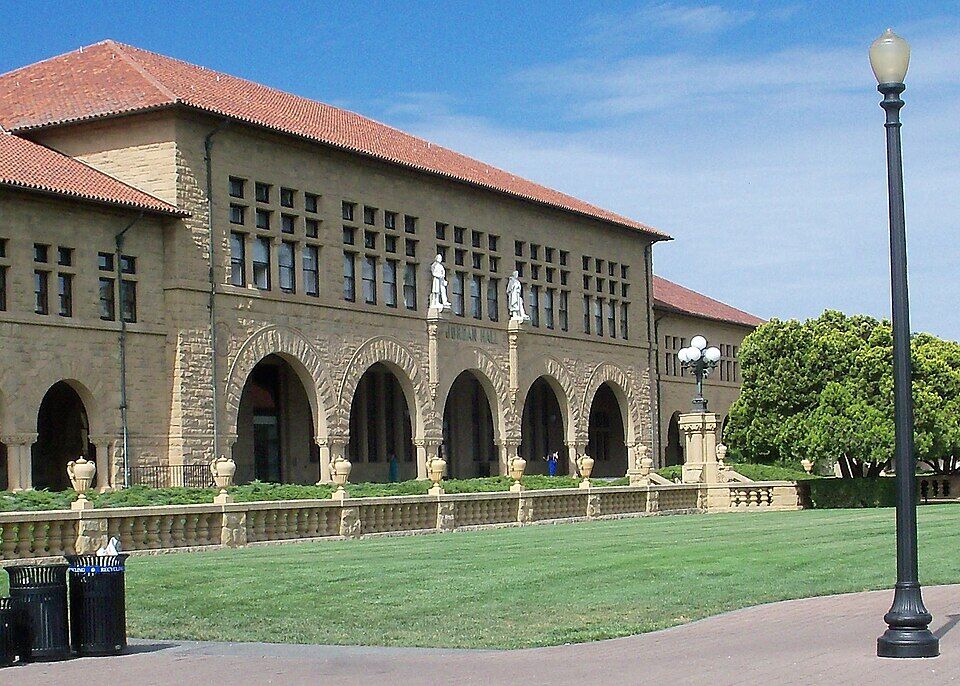
According to Zimbardo's response on the website, the experiment ran at Stanford University over six days in August 1971. It was an exploratory investigation of how far situational forces could change the behavior of participants3. The website says more than 70 applicants answered a newspaper ad and were screened with interviews and personality tests, that 24 college students were left, and that they were divided by a flip of the coin into guards and prisoners1. It says the prison was built by boarding up each end of a corridor in the basement of Stanford's psychology department building, and one of its photos is captioned "Prison Yard in Jordan Hall"1.
The website says the study was planned to last two weeks and had to be ended after only six days because of what the situation was doing to the college students who took part2. In Zimbardo's words on that page, the guards became sadistic and the prisoners became depressed and showed signs of extreme stress2.
Le Texier's 2019 archive paper
Thibault Le Texier published "Debunking the Stanford Prison Experiment" in American Psychologist in 20194. It is a single-author paper based on an investigation of the experiment's archives and interviews with 15 of the participants4. Its abstract says these data are supportive of earlier criticisms, such as the presence of demand characteristics, and add new ones4. The new criticisms it lists are biased and incomplete collection of data, the extent to which the experiment drew on a prison experiment devised and conducted by students in one of Zimbardo's classes three months earlier, the fact that the guards received precise instructions regarding the treatment of the prisoners, the fact that the guards were not told they were subjects, and the fact that participants were almost never completely immersed by the situation4.
The abstract concludes that the data further question the study's scientific merit, and says a majority of textbook authors have ignored the criticisms in their discussions of it4. Those are the author's conclusions from his own reading of the archive. This description rests on the paper's published abstract.
Haslam, Reicher and Van Bavel on identity leadership
Another 2019 paper in American Psychologist, by S. Alexander Haslam, Stephen D. Reicher and Jay J. Van Bavel, is titled "Rethinking the nature of cruelty: The role of identity leadership in the Stanford Prison Experiment"5. Its abstract describes the long-standing reading of the experiment as showing that assigning people to a toxic role will, on its own, bring out a capacity to treat others with cruelty5. The authors say that identity leadership principles predict something different, that roles are unlikely to elicit cruelty unless leaders encourage potential perpetrators to identify with what is presented as a noble ingroup cause5.
After examining material in the experiment's archive, the authors write that they present comprehensive evidence that, rather than guards conforming to role of their own accord, the experimenters directly encouraged them to adopt roles and act tough5. Both papers appeared in the same issue of the journal (volume 74, issue 7) and both drew on the experiment's archive, so they are not independent re-runs of the experiment.
Zimbardo's website response
Zimbardo's response on the experiment's website answers criticisms from 2018, including Le Texier's book-length critique, which it calls History of a Lie3. It asserts that none of the criticisms present substantial evidence that alters the experiment's main conclusion, about how systemic and situational forces can influence individual behavior in negative or positive directions3. It also says the core message is not that a simulation of prison life is the same as the real thing, but a cautionary tale about the power of social roles and external pressures3.
On the instructions to guards, the response says the guards were told they could not hit prisoners but could create feelings of boredom, frustration and fear, that no formal or detailed instructions about how to be an effective guard were given, and that a staff member did ask one guard to be a "tough guard" in the sense of being firm and in the action3. It says the team never instructed guards to use brutality and banned physical force3. On the 2002 BBC television prison program, in which, the response says, the guards showed little cruelty, the response argues it was not a valid replication because participants knew they were being filmed and the researchers, Haslam and Reicher, intervened frequently3. It also says that more than 40 boxes of observational data and 12 hours of video are in the archives of Stanford University and Akron University's Museum of Psychology3.
The 2020 comment and reply
In April 2020, American Psychologist printed a comment by Philip G. Zimbardo and Craig Haney on the two 2019 papers. Its abstract says the authors value intellectually engaged alternative perspectives but reject those that are ad hominem, misleading, inaccurate and unscientific6. A reply by Stephen D. Reicher, Jay J. Van Bavel and S. Alexander Haslam says in its abstract that the archive makes it possible to debate the precise nature and causes of events, and that the authors encourage students, teachers and researchers to engage with the material themselves7.
Where this leaves the experiment
The experiment's website presents it as a cautionary tale about situational power. The two 2019 papers, one built on archive material and interviews, the other on archive material alone, report that the guards received instructions or encouragement from the experimenters, and one of them says the data question the study's scientific merit. The website response, which answers criticisms from 2018, disputes that those criticisms change the main conclusion, and in April 2020 the journal printed a comment by Zimbardo and Haney and a reply by Reicher, Van Bavel and Haslam (see below). This article reports what each source says and does not settle the question.
Trivia
- For how many days did the 1971 Stanford Prison Experiment run, according to its website, before it was ended? Six days, although it had been planned for two weeks2.
- How many college students did the experiment's website say were left in the sample? 241.
- According to the experiment's website, how were the participants divided into guards and prisoners? By a flip of the coin, with half randomly assigned to each role1.
- In which journal did both the Le Texier paper and the Haslam, Reicher and Van Bavel paper appear in 2019? American Psychologist, volume 74, issue 74.
- According to Le Texier's abstract, how long before the Stanford experiment had students in one of Zimbardo's classes devised and conducted a prison experiment? Three months4.
Sources
- Zimbardo PG. Setting Up. The Story, Stanford Prison Experiment website (prisonexp.org), page 2 of 8. Accessed October 29, 2026.
- Zimbardo PG. Stanford Prison Experiment website home page (prisonexp.org), including its note on the Netflix show. Accessed October 29, 2026.
- Zimbardo PG. Philip Zimbardo's Response to Recent Criticisms of the Stanford Prison Experiment, Stanford Prison Experiment website. Accessed October 29, 2026.
- Le Texier T. Debunking the Stanford Prison Experiment. American Psychologist, 74(7), 2019 (PubMed 31380664). Accessed October 29, 2026.
- Haslam SA, Reicher SD, Van Bavel JJ. Rethinking the nature of cruelty: The role of identity leadership in the Stanford Prison Experiment. American Psychologist, 74(7), 2019 (PubMed 31380665). Accessed October 29, 2026.
- Zimbardo PG, Haney C. Continuing to acknowledge the power of dehumanizing environments: Comment on Haslam et al. (2019) and Le Texier (2019). American Psychologist, 75(3), 2020 (PubMed 32250143). Accessed October 29, 2026.
- Reicher SD, Van Bavel JJ, Haslam SA. Debate around leadership in the Stanford Prison Experiment: Reply to Zimbardo and Haney (2020) and Chan et al. (2020). American Psychologist, 75(3), 2020 (PubMed 32250145). Accessed October 29, 2026.