NASA's Swift Observatory Ends Its Mission After Nearly 22 Years
Key Points
- NASA says its Neil Gehrels Swift Observatory has ended its science mission, with a final observation on October 20, 2026.
- NASA says atmospheric drag at an altitude below 171 miles (275 kilometers) keeps the telescopes from steadily staring at targets, and re-entry is expected in the next few weeks.
- NASA says Swift, designed for a two-year primary mission, was productive for more than 10 times as long and contributed to about 7,000 published papers.
- NASA says its public archive spans about 12 terabytes, and that it is exploring ways to respond rapidly to cosmic events without Swift.
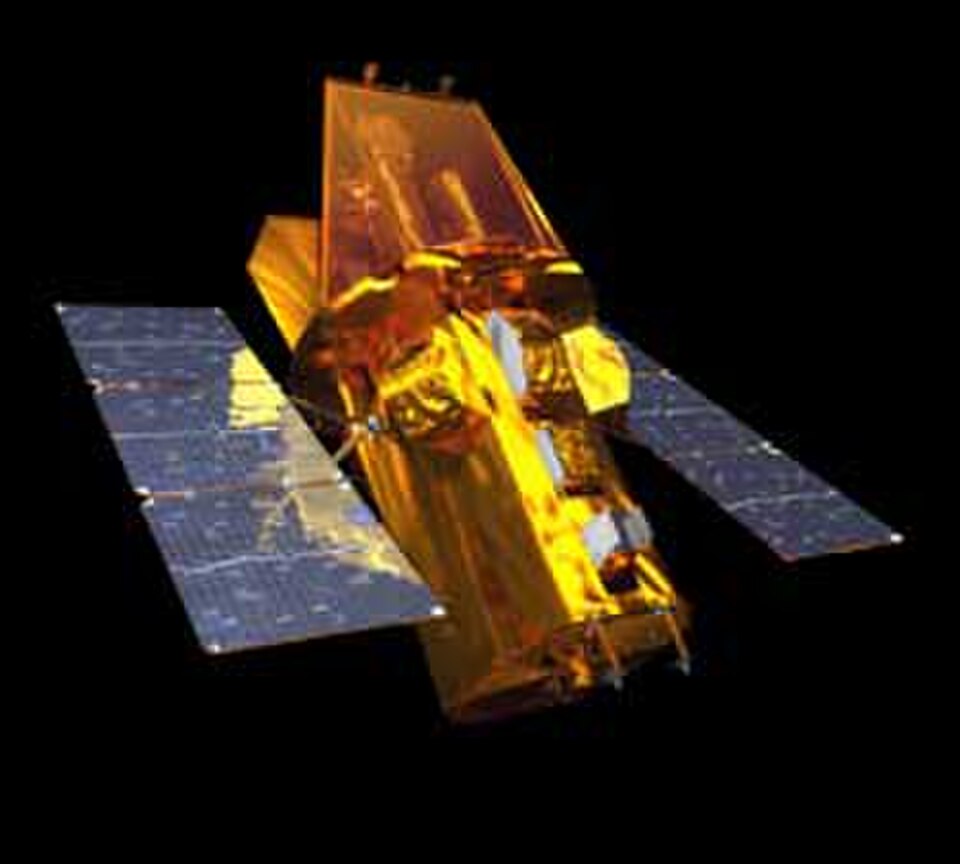

NASA says its Neil Gehrels Swift Observatory has ended its science mission, with the spacecraft now orbiting less than 171 miles (275 kilometers) above Earth1. NASA gives October 20 as the date of Swift's final observation and says re-entry is expected in the next few weeks1. Here is what NASA's announcement, published October 23, 2026 and updated October 26, says about what the satellite did, as of October 30, 2026.
Why the science stopped
NASA says the greater atmospheric drag at that height prevents the satellite's telescopes from steadily gazing at their astronomical targets1. The mission launched into orbit on November 20, 2004, and went to work the following month1.
Built to be fast
Principal investigator S. Bradley Cenko is quoted as saying Swift was designed to detect and locate gamma-ray bursts, tell other observatories where they were, and then swing its telescopes around to image the burst locations before their afterglows faded, which typically took about a minute1. NASA says Swift carried co-aligned optical and ultraviolet and X-ray telescopes, and was led by its first principal investigator, Neil Gehrels1.
NASA says Swift's planning system let astronomers request target-of-opportunity observations that could be commanded from the ground in as little as a few minutes, and could schedule up to 75 independent targets a day1.
A burst of 0.03 seconds
NASA says short gamma-ray bursts reach peak brightness in less than two seconds, and that until Swift it had been impossible to locate them quickly and precisely enough to observe their afterglows1. In May 2005, it says, Swift caught a burst that lasted just 0.03 seconds and turned fast enough to detect 11 X-ray photons, the first short burst with a detected afterglow1. NASA says those observations validated long-standing models showing short bursts likely come from mergers of two neutron stars, objects with the mass of the Sun crushed to the size of a city1.
The numbers NASA gives
- Designed for a two-year primary mission, Swift was productive for more than 10 times as long, in the words of NASA astrophysics division director Shawn Domagal-Goldman1.
- NASA says Swift observed more than 2,000 gamma-ray bursts and studied more than 1,400 supernova explosions1.
- NASA says Swift data contributed to about 7,000 published scientific papers1.
- The public archive holds nearly 22 years of brightness measurements, more than 1.5 million images from the ultraviolet and optical telescope and more besides; the full dataset is about 12 terabytes, which NASA compares to about 600 high-definition movies1.
What comes next
NASA says it will continue to prioritize new options for reacting rapidly to cosmic events, using current missions to help fill the gap in the meantime1. Domagal-Goldman is quoted as saying NASA is exploring its ability to use and augment its existing space telescopes, from fast-to-orbit commercial capabilities to new missions1. The announcement gives no date for the re-entry beyond "the next few weeks".
Trivia
- On what date did Swift make its final observation? October 20, 20261.
- In what year did Swift launch? 2004, on November 201.
- How long did a typical Swift response to a burst take, according to its principal investigator? About a minute1.
- How long did the short burst Swift caught in May 2005 last? 0.03 seconds1.
- About how many published papers used Swift data? About 7,0001.
Sources
- NASA's Swift Mission Ends, Leaves Behind Scientific Bonanza, NASA Science, published October 23, 2026 (updated October 26, 2026). Accessed October 30, 2026.
- File:Swift spacecraft.jpg, Wikimedia Commons. Accessed October 30, 2026.