UN Report Finds 252 Million Hectares Under Restoration Worldwide
Key Points
- A UN report launched on October 29, 2026 at COP17 in Yerevan found 252 million hectares across 149 countries are being restored, creating more than one million green jobs.
- Restoration of land ecosystems has reached nearly half of the 2030 target, while freshwater, marine and coastal restoration is far more limited.
- Annual restoration finance needs to rise more than fourfold, from US$64 billion to US$296 billion by 2030, the report says.
- FAO Director-General Qu Dongyu said "restoration works," while the report says the world "remains off track" for its 2030 targets.
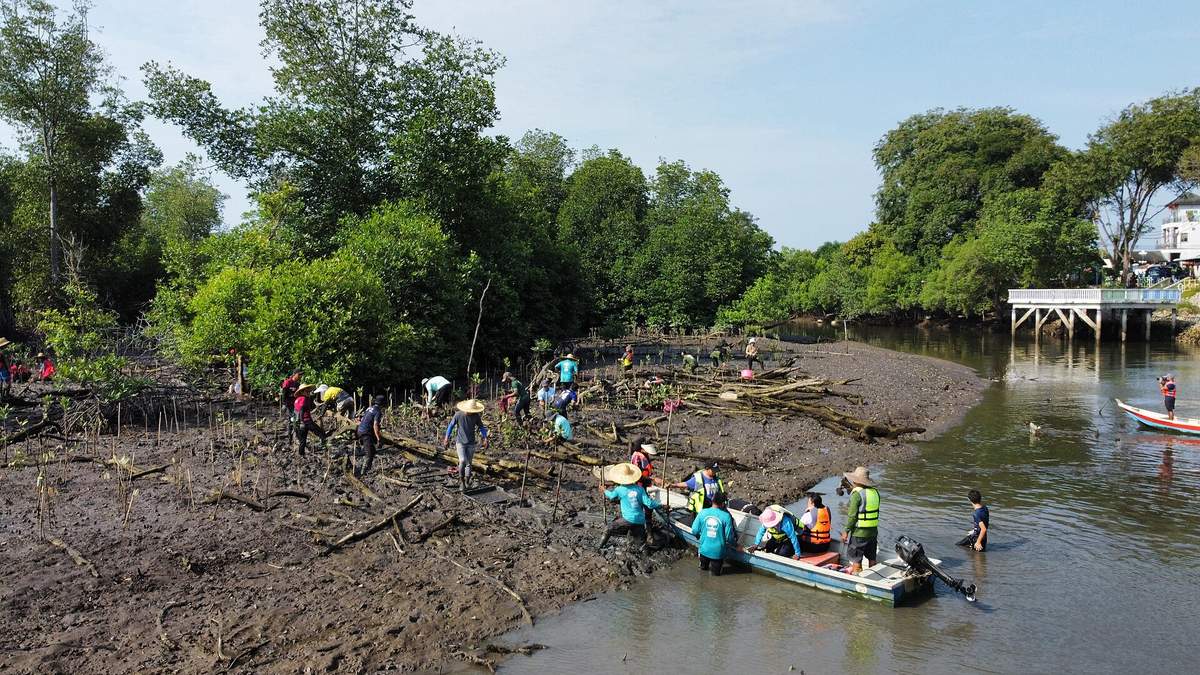

On Thursday, October 29, 2026, three UN bodies put a number on how much of the planet is being repaired. A report launched at the UN Biodiversity Conference (COP17) in Yerevan, Armenia, found that 252 million hectares across 149 countries are being restored1, creating more than one million green jobs, which the UN Environment Programme (UNEP) calls the largest documented global restoration effort to date. The same report says the world is still off track for its 2030 goals, and that the money going into restoration each year has to more than quadruple.
The report, titled Nature's comeback: Scaling ecosystem restoration for people and planet, was co-published by the Food and Agriculture Organization of the United Nations (FAO), UNEP and the Secretariat of the Convention on Biological Diversity (CBD). UNEP describes it as the first comprehensive global assessment of restoration progress3, published at the midpoint of the UN Decade on Ecosystem Restoration.
What the Decade is
The UN General Assembly declared 2021 to 2030 the UN Decade on Ecosystem Restoration, and UNEP and FAO lead it. Its stated aim is to "halt the degradation of ecosystems, and restore them to achieve global goals"5. The Decade's partnership network has grown to more than 300 organizations1 across all regions since it began, according to the October 29 press release.
Restoration covers more ground than tree planting. The Decade defines it as "assisting in the recovery of ecosystems that have been degraded or destroyed"4, and says it can happen by actively planting or by removing pressures so that nature can recover on its own. It can apply to forests, farmland, cities, wetlands and oceans, and the Decade notes that a full return to an original state is not always possible or desirable, since land may still be needed for farming or infrastructure.
"Under restoration" also has a specific meaning in the global target the report measures against. Target 2 of the Kunming-Montreal Global Biodiversity Framework asks countries to ensure that by 2030 at least 30 per cent of degraded land, inland water, coastal and marine ecosystems "are under effective restoration"6. The CBD's explanation of the target says it does not require those areas to be fully restored by then, because restoration is a long process; it requires that effective restoration work has started, with enough resources and monitoring over time.
How big 252 million hectares is
A hectare is 10,000 square metres, so 252 million hectares works out to about 2.52 million square kilometres. UN News described it as an area of land and sea roughly the size of Kazakhstan2. Separately, countries have promised to restore around one billion hectares, under pledges that include the Paris Agreement and the Bonn Challenge. The press release calls that an area larger than China1.
Most of the documented area is in Asia. Asia accounts for 192.2 million hectares1, followed by Africa with 36.3 million, Europe with 9.1 million, North and Central America with 5.8 million, South America with 5.4 million and Oceania with 3.2 million. China reports the largest terrestrial area under restoration, 127.4 million hectares, and Mongolia and Kazakhstan also document large areas. UNEP says these differences do not rank how well regions are doing; they reflect the scale of activity, the size of each region and how much monitoring and reporting each can manage.
Where the report sees gaps
Progress on land is furthest along. Restoration of terrestrial ecosystems has reached nearly half the global target1 of having 30 per cent of degraded land ecosystems under restoration by 2030. Water is a different story. Only 11 million hectares of freshwater ecosystems in 62 countries, and 5.7 million hectares of marine and coastal ecosystems in 46 countries, are documented as under restoration, even though those ecosystems are degrading at the fastest rates. The report cautions that limited reporting for aquatic restoration may mean those figures are underestimates. There are signs of movement: the share of Parties to the Convention on Wetlands reporting wetland restoration or rehabilitation programmes11 has risen from 8 per cent to 54 per cent since 2022.
The report's summary puts the overall verdict plainly: the world "remains off track to meet global targets and national commitments by 2030"3. It also says lasting results depend on people, secure tenure and the leadership of Indigenous Peoples, and closes on the point that thirty per cent by 2030 is "a milestone, not the end of the journey."
The money
Annual restoration finance needs to rise more than fourfold, from US$64 billion to US$296 billion by 20301. The largest estimated annual needs are in agroforestry (US$87 billion), restorative reforestation (US$52 billion), peatland restoration (US$44 billion) and seagrass restoration (US$28 billion). The press release estimates that this level of investment could generate up to 32 million new jobs worldwide by 2030. The report argues that the second half of the Decade should move beyond individual projects towards "restoration economies" that can sustain ecological recovery and livelihoods at scale.
What the agency heads said
"Today, we are witnessing the makings of one of the largest movements for nature in recorded history," said Inger Andersen, Executive Director of UNEP, in the press release1. "Yet, at the halfway point of the UN Decade on Ecosystem Restoration, we are still not restoring nature at the scale or speed required."
"Five years into the UN Decade, the message is clear: restoration works," said FAO Director-General Qu Dongyu, in the same release1. "The challenges are to make restoration an integral part of the sustainable management of land, water and natural resources, and to have a coherent transformation of agrifood systems."
Astrid Schomaker, Executive Secretary of the CBD Secretariat, pointed at what restoration cannot fix on its own. "We cannot expect to fix nature with one hand while we destroy it with the other one,"1 she said. "Governments must address the drivers of ecosystem degradation and invest in monitoring mechanisms to ensure the durability of the restoration movement to date."
Why it matters
The report, citing a 2020 study in Nature, says restoring 15 per cent of the world's converted land11, in the places that study identified as priority areas, could capture an amount equal to 30 per cent of the rise in atmospheric carbon dioxide since the Industrial Revolution and help avoid 60 per cent of expected species extinctions. The Decade's own materials estimate that restoring 350 million hectares of degraded land and water ecosystems by 2030 could generate US$9 trillion in ecosystem services4, and that the economic benefits exceed nine times the cost of the investment.
The launch event in Yerevan also named five initiatives in China, Colombia, Ethiopia, Italy and the United States1 as UN World Restoration Flagships, a title the Decade gives to large-scale, long-term restoration efforts.
Trivia
- How many countries proposed the UN Decade on Ecosystem Restoration before the General Assembly declared it? Over 70 countries5. The General Assembly resolution is A/RES/73/284.
- Which country hosted World Environment Day 2021, the day that marked the formal launch of the Decade? Pakistan8, with the launch event held in Islamabad.
- According to UNEP's 2021 report Becoming #GenerationRestoration, how many people are affected by ecosystem degradation? An estimated 3.2 billion people8, or 40 per cent of the world's population.
- Who launched the Bonn Challenge, and in what year? The Government of Germany and IUCN, in 20117. Its goal is 350 million hectares in restoration by 2030.
- How long is Africa's Great Green Wall planned to be? 8,000 kilometres10, across 22 African countries, according to the UNCCD. The African Union launched it in 2007.
- Where and when were the first 10 World Restoration Flagships named? At the COP15 biodiversity conference in Montreal on December 13, 20229. Together they aimed to restore more than 68 million hectares.
- Which antelope rebounded from about 50,000 in 2006 to 1.3 million in 2022, in the range of Kazakhstan's Altyn Dala Conservation Initiative? The saiga9. The IUCN moved it from Critically Endangered to Near Threatened12 in 2023.
Sources
- UNEP, Nature is making a comeback, but the world must move faster to meet restoration targets: UN Report (press release), 29 October 2026. Accessed October 30, 2026.
- UN News, Nature is making a comeback, now restoration funding must quadruple, 29 October 2026. Accessed October 30, 2026.
- FAO, UNEP and Secretariat of the Convention on Biological Diversity, Restoration Progress Report: Nature's comeback, Scaling ecosystem restoration for people and planet, UNEP Knowledge Repository, 2026. Accessed October 30, 2026.
- UN Decade on Ecosystem Restoration, What is ecosystem restoration?. Accessed October 30, 2026.
- UN Decade on Ecosystem Restoration, About the UN Decade. Accessed October 30, 2026.
- Convention on Biological Diversity, Kunming-Montreal Global Biodiversity Framework, Target 2: Restore 30% of all Degraded Ecosystems. Accessed October 30, 2026.
- Bonn Challenge, About. Accessed October 30, 2026.
- UNEP, World Environment Day: millions rally behind movement to restore Earth, 7 June 2021. Accessed October 30, 2026.
- UNEP, UN recognizes 10 pioneering initiatives that are restoring the natural world (press release), 13 December 2022. Accessed October 30, 2026.
- UNCCD, Great Green Wall Initiative. Accessed October 30, 2026.
- FAO, UNEP and Secretariat of the Convention on Biological Diversity, Restoration progress report: Nature's comeback, Rome, 2026. Accessed October 30, 2026.
- IUCN, Freshwater fish highlight escalating climate impacts on species: IUCN Red List (press release), 11 December 2023. Accessed October 30, 2026.