UN Report Counts 252 Million Hectares Under Restoration Worldwide
Key Points
- A UN report released at COP17 in Yerevan counts about 252 million hectares under restoration across 149 countries and credits that work with more than one million green jobs.
- Restoration on land covers 232 million hectares, while freshwater ecosystems have 11 million hectares and marine and coastal ecosystems 5.7 million hectares under restoration.
- Annual restoration finance would need to rise from US$64 billion to US$296 billion by 2030.
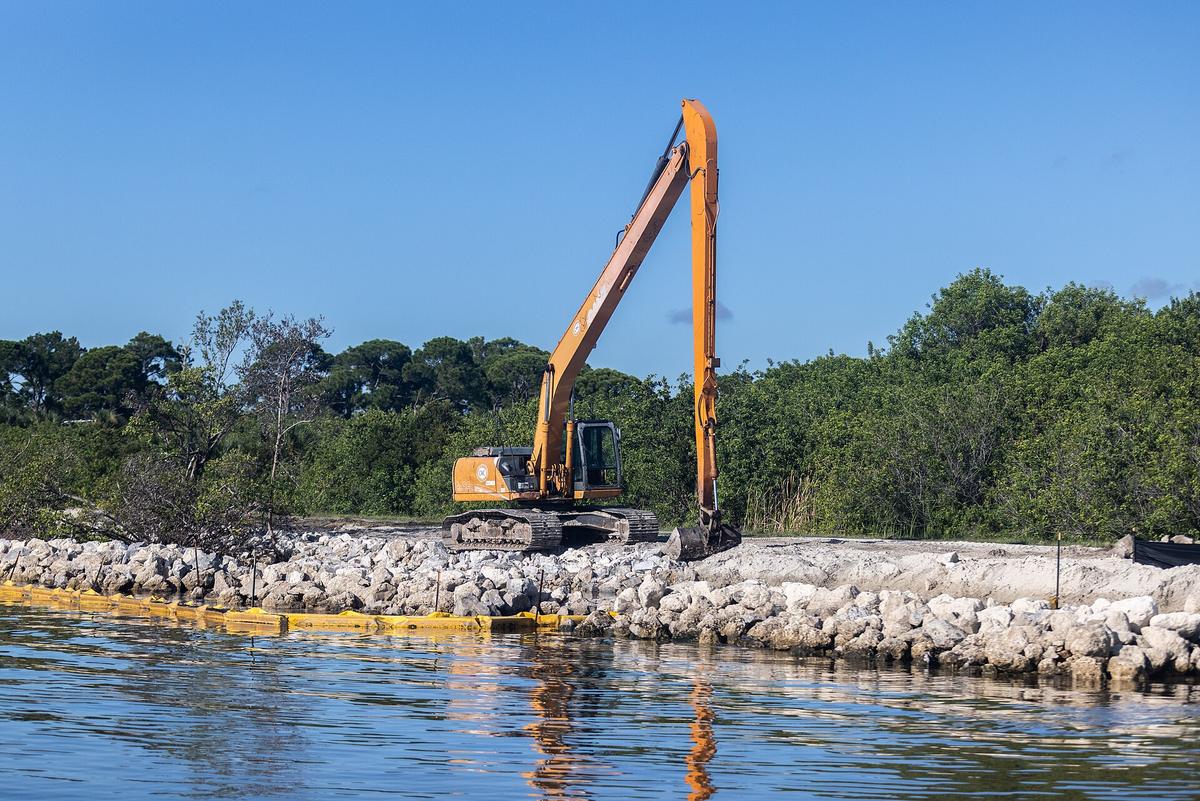

A UN report released on 29 October 2026 at the UN Biodiversity Conference, COP17, in Yerevan, Armenia2, documents the largest global restoration effort to date and finds the world still behind its 2030 goal. Titled "Nature's comeback: Scaling ecosystem restoration for people and planet," it counts about 252 million hectares under restoration across 149 countries1 and credits that work with more than one million green jobs.
The report was co-published by the Food and Agriculture Organization (FAO), the UN Environment Programme (UNEP) and the Secretariat of the Convention on Biological Diversity (CBD). It is the first comprehensive global assessment of progress1 toward two commitments: restoring around one billion hectares, and the Kunming-Montreal Global Biodiversity Framework target of having at least 30% of degraded ecosystems under effective restoration by 2030. It arrives midway through the UN Decade on Ecosystem Restoration.
How far along the world is
Health Policy Watch notes that 252 million hectares is an area larger than Algeria2. Its report on the launch puts the 2030 benchmark at about 738 million hectares, which leaves the documented total at 34% of the way there, and says the pace of restoration would need to roughly triple over the next four years to close the gap.
The figures come from government-endorsed submissions through global reporting processes1 and from restoration initiatives that report to FAO's Framework for Ecosystem Restoration Monitoring (FERM).
Asia leads the count
Asia reports by far the largest area. The regional totals in the report1 are:
- Asia: 192.2 million hectares
- Africa: 36.3 million hectares
- Europe: 9.1 million hectares
- North and Central America: 5.8 million hectares
- South America: 5.4 million hectares
- Oceania: 3.2 million hectares
The report cautions that these numbers reflect how much restoration is under way, how much land a region has and how well it can monitor, not relative performance1. China reports the largest area of land under restoration, 127.4 million hectares. Health Policy Watch adds that this is about half the global total2, and that Mongolia (12.2 million hectares) and Kazakhstan (8.1 million hectares) come next.
Land is ahead, rivers and seas lag
According to Health Policy Watch, restoration on land covers 232 million hectares, about half of the terrestrial 2030 target2. Freshwater ecosystems have 11 million hectares under restoration in 62 countries, 4.5% of their target, and marine and coastal ecosystems have 5.7 million hectares in 46 countries, 23% of theirs.
The launch release says freshwater and marine ecosystems are degrading fastest and have seen the least progress1, while warning that limited reporting may mean aquatic restoration is undercounted. There are signs of movement: since 2022, the share of Parties to the convention reporting wetland restoration programmes has risen from 8% to 54%.
Gaps in reporting run through the whole count. Half of the countries that filed their seventh national report to the CBD gave no quantitative restoration data2, and together they cover about 3 billion hectares. The CBD's own progress review records 193 million hectares rather than 252 million. "So we're also not capturing all of the incredible efforts that are happening on the ground," Yelena Finegold of FAO, the report's lead author, told Health Policy Watch.
What restoration buys
The release cites estimates that restoring 15% of global priority areas could store 30% of the CO2-equivalent emissions produced since the Industrial Revolution1 and help avoid 60% of species extinctions. Five projects, in China, Colombia, Ethiopia, Italy and the United States, were recognised as UN World Restoration Flagships at the launch, and the partnership network behind the Decade has grown to more than 300 organizations.
"Today, we are witnessing the makings of one of the largest movements for nature in recorded history," UNEP Executive Director Inger Andersen said in the launch release1. FAO Director-General QU Dongyu put it more briefly: "Five years into the UN Decade, the message is clear: restoration works."
The money question
Annual restoration finance would need to rise from US$64 billion to US$296 billion by 20301, more than four times the current level, and the release estimates that the extra spending could create up to 32 million new jobs worldwide by 2030. The largest estimated needs are:
- Agroforestry: US$87 billion
- Restorative reforestation: US$52 billion
- Peatland restoration: US$44 billion
- Seagrass restoration: US$28 billion
Most of the money so far is public. Health Policy Watch reports that public budgets provided 73% of restoration funding2, that official development finance aimed at restoration reached only $1.2 billion, and that private investors added about $17 billion. Against that, finance that damages nature totals $7.3 trillion, more than 30 times the investment in nature-based solutions. CBD Executive Secretary Astrid Schomaker compared the imbalance to paying 30 people to tear down a house for every one hired to rebuild it, and said in the release: "We cannot expect to fix nature with one hand while we destroy it with the other one."1
The Decade and Target 2
The UN Decade on Ecosystem Restoration runs from 2021 to 2030. It was proclaimed by the UN General Assembly, is led by UNEP and FAO, and aims to halt the degradation of ecosystems and restore them5 in support of livelihoods, climate action and efforts to stop biodiversity loss.
Target 2 of the Kunming-Montreal framework asks countries to ensure that by 2030 at least 30 per cent of areas of degraded terrestrial, inland water, and coastal and marine ecosystems are under effective restoration3. Because restoration takes many years, the CBD explains that the target asks for effective restoration to be under way by 2030 rather than finished, and that it must be properly funded and monitored and never used to justify further degradation.
The new report looks past 2030 as well. It says restoration has to last long enough to recover ecosystem integrity and biodiversity1, that secure land tenure and respect for the rights and knowledge of Indigenous Peoples are essential, and that the world should move from individual projects toward "restoration economies" that sustain ecological recovery, livelihoods and long-term value.
Trivia
- How many goals for 2050 and targets for 2030 does the Kunming-Montreal Global Biodiversity Framework contain? 4 goals for 2050 and 23 targets for 20304.
- At which meeting of the Conference of the Parties was the framework adopted, and in what month and year? COP 15, in December 20224.
- More than how many countries proposed the UN Decade on Ecosystem Restoration? Over 705.
- The Decade ends in 2030, which is also the deadline for what set of UN goals? The Sustainable Development Goals5.
- About what share of the world's reef areas did the 2024 to 2025 coral bleaching event, the most extensive on record, affect? About 84%2.
- How much faster than forests are wetlands disappearing, according to Health Policy Watch's report on the launch? Three times faster2.
- Degraded peatlands hold up to what share of the world's soil carbon, according to Health Policy Watch's report on the launch? Up to a third2.
- Which river dolphin does the launch release list among species that have recovered? The Ganges River dolphin1.
Sources
- UN Environment Programme, Nature is making a comeback, but the world must move faster to meet restoration targets: report, press release, as republished by Eco-Business. Accessed November 10, 2026.
- Stefan Anderson, World Must Triple Nature Restoration to Meet 2030 Goal, UN Report Tells Biodiversity Summit, Health Policy Watch, 29 October 2026. Accessed November 10, 2026.
- Secretariat of the Convention on Biological Diversity, Target 2: Restore 30% of all Degraded Ecosystems, Kunming-Montreal Global Biodiversity Framework. Accessed November 10, 2026.
- Secretariat of the Convention on Biological Diversity, Kunming-Montreal Global Biodiversity Framework. Accessed November 10, 2026.
- UN Decade on Ecosystem Restoration, About the UN Decade. Accessed November 10, 2026.