UNESCO Council Proposes 11 New Global Geoparks for a 2027 Decision
Key Points
- The UNESCO Global Geoparks Council, meeting in Paris from 2 to 4 November 2026, proposed 11 new UNESCO Global Geoparks for endorsement by UNESCO's Executive Board at its spring 2027 session.
- UNESCO says that if all 11 are endorsed, Cuba, Ethiopia and Namibia would get their first UNESCO Global Geoparks and the current network of 241 sites in 51 countries would grow by 11.
- The Council also awarded green cards to 60 existing Global Geoparks and approved four boundary requests.

UNESCO's list of Global Geoparks could grow by 11 next spring. At its 11th statutory meeting, held from 2 to 4 November 2026 at UNESCO Headquarters in Paris1, the UNESCO Global Geoparks Council proposed forwarding 11 new sites to UNESCO's Executive Board for endorsement at its spring 2027 session. They are recommendations, not designations, and the Executive Board makes the final call. UNESCO says that if all 11 are endorsed, its current network of 241 UNESCO Global Geoparks in 51 countries1 will grow by 11 sites, which would make 252.
The proposed sites, as UNESCO lists them, are Bojonegoro (Indonesia), Cabox (Canada), Central Ethiopia Rift Valley (Ethiopia), Charnwood Forest (United Kingdom), Cross Channel (Transmanche) in France and the United Kingdom, Khon Kaen (Thailand), La Hague (France), Nama-!Garib (Namibia), Niagara (Canada), Pillanmapu (Chile) and Viñales (Cuba). Together they would bring the first UNESCO Global Geoparks in Cuba, Ethiopia and Namibia1, and Viñales would be the first from a Small Island Developing State.
What else the Council decided
The Council examined 81 dossiers1 at the meeting, covering new applications, previously deferred applications, requests to change a geopark's boundaries and revalidations, and it elected its Bureau, which is renewed every two years. It awarded green cards to 60 existing Global Geoparks1 after reviewing their revalidation reports, and approved four boundary requests: an extension of more than 10% for Oeste in Portugal and smaller extensions for Granada in Spain, Harz Braunschweiger Land Ostfalen in Germany and Hațeg Country in Romania.
In the Council's published results table2, Niagara and Khon Kaen are listed as previously deferred applications that the Council has now recommended. Four new applications were deferred: Aral (Kazakhstan), Ranah Minang Silokek (Indonesia), Mount Apo (the Philippines) and Baringo County Great Rift Valley (Kenya). One revalidation, Bohemian Paradise in Czechia, is marked with a red card, which UNESCO says results in loss of status1. The figure of 252, which is 241 plus 11, does not subtract it.
What a Global Geopark is
UNESCO describes Global Geoparks as single, unified geographical areas3 with geological heritage of international importance. World Heritage sites "promote the conservation of natural and cultural sites of outstanding universal value"3, while geoparks are recognised for protecting geodiversity through active work with the people who live there. Where a geopark overlaps a World Heritage site or a biosphere reserve, it has to show what its own status adds.
To qualify, an area needs four basics3: geological heritage of international value, a legally recognised management body with a management plan, visibility such as a website and maps, and membership of the Global Geoparks Network. The label is held for four years at a time3. At revalidation two evaluators visit. A green card renews the status for four more years, a yellow card gives the management body two years to fix problems, and a red card follows if it still falls short after those two years.
Geoparks sit inside UNESCO's International Geoscience and Geoparks Programme4, alongside the International Geoscience Programme, a worldwide network of geoscientists. UNESCO's 38th General Conference endorsed the UNESCO Global Geoparks programme on 17 November 20155.
The 11 proposed sites
- Bojonegoro, Indonesia. One of its main geosites is Wonocolo, known as Indonesia's "Little Texas"9, where the Kawengan Anticline can be seen and oil wells are managed by the local community. Other geosites include Kayangan Api, Banyu Kuning, Watu Gandul and Gunung Watu.
- Cabox, Canada. The geopark surrounds the Bay of Islands in western Newfoundland10 and, by the geopark's account, holds three of the four massifs of the Bay of Islands Ophiolite Complex, a complete section of ancient ocean plate running from the upper mantle to ocean floor sediment.
- Central Ethiopia Rift Valley, Ethiopia. If endorsed, it would be Ethiopia's first and join the three existing UNESCO Global Geoparks in Africa1. In May 2025 Ethiopia's tourism state minister, Sileshi Girma, said geopark development was a nascent sector in the country11, according to the Ethiopian News Agency.
- Charnwood Forest, United Kingdom. Its promoters call it the home of Precambrian palaeontology12. A discovery there in the 1950s changed the view of how life on Earth evolved, and the site credits the fossil Charnia with pushing life back into the Precambrian. The bid was submitted in November 2025, with an evaluation visit scheduled for summer 2026.
- Cross Channel (Transmanche), France and United Kingdom. A joint bid by the Kent Downs in England and the Parc naturel régional des Caps et Marais d'Opale in France, it links chalk cliffs and downland that were once one ridge and lists 45 geosites across France, England and the Channel13. Its backers say it could be the first UNESCO Global Geopark to span the sea.
- Khon Kaen, Thailand. The bid covers Wiang Kao and Phu Wiang districts14 and centres on dinosaur discoveries; it would be Thailand's third UNESCO Global Geopark, after Satun (2018) and Khorat (2023). Excavations in the Phu Wiang area have turned up vertebrae, teeth and footprints, mainly from Early Cretaceous sandstone15, and the sauropod Phuwiangosaurus sirindhornae is named after Princess Maha Chakri Sirindhorn.
- La Hague, France. At the tip of the Cotentin Peninsula in Normandy, the area has Precambrian granite and gneiss cliffs16, and what are described as France's oldest rocks are found on its coast at Jobourg.
- Nama-!Garib, Namibia. Set in southern Namibia17, it was described by The Economist (Namibia) in November 2026 as Southern Africa's first aspiring UNESCO Global Geopark, ahead of a public talk by the head of the Orange River-Karoo Conservation Area.
- Niagara, Canada. The geopark's own pitch runs from the cliffs of the Niagara Escarpment to Niagara Falls18. UNESCO evaluators from Ireland and Denmark toured its geosites in 202419.
- Pillanmapu, Chile. Promoted by the Universidad Católica del Maule, its name means land of pillanes20, ancestral spirits in Mapuche culture, and the project as presented in 2022 covered six communes: Romeral, Curicó, Molina, San Clemente, Linares and Colbún.
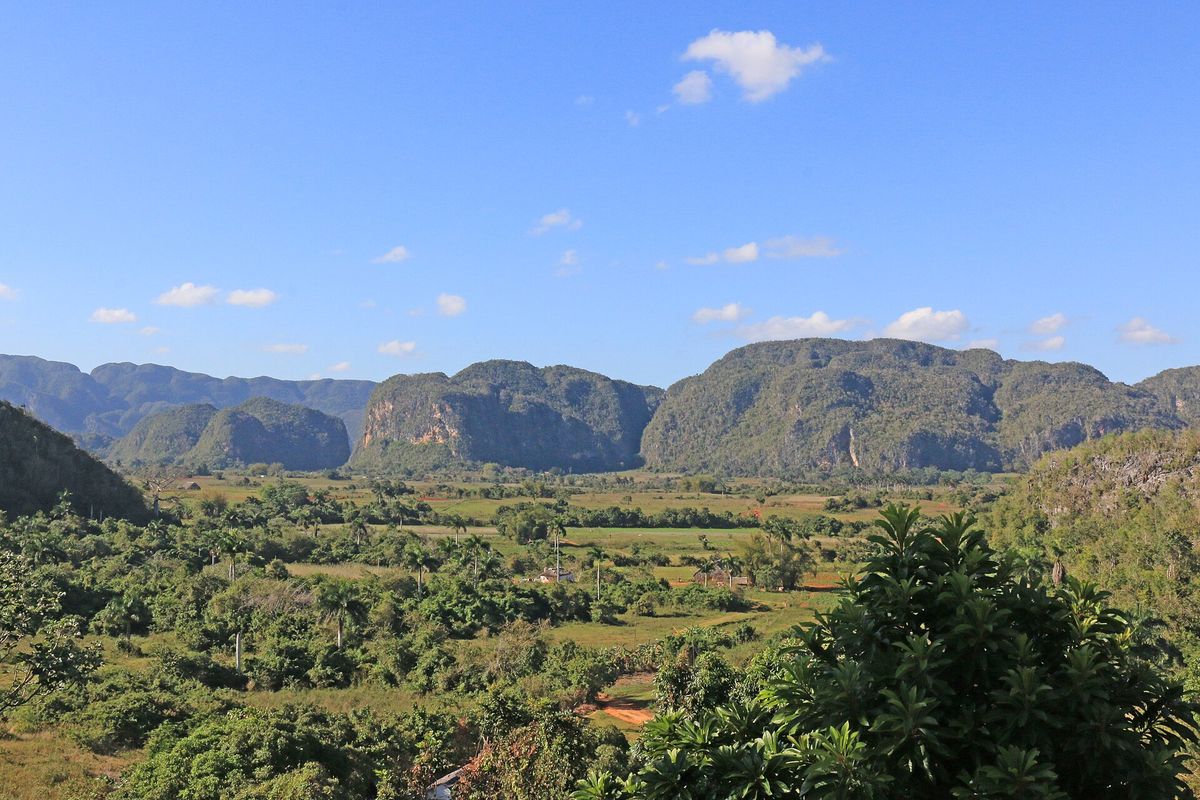
- Viñales, Cuba. Known for its limestone mountain formations, the valley became Cuba's first national geopark in 202121. Some 57 geosites have been identified in Viñales National Park, 10 of them of international interest, and UNESCO listed the valley as a World Heritage Site in 1999.
How this year compares
Eleven proposals is a slightly smaller intake than recent years. In April 2026 UNESCO named 12 new Global Geoparks6, which brought the network to its current 241 sites in 51 countries, covering over 882,000 square kilometres. A year earlier, in April 2025, it named 16, for a total of 229 in 50 countries7.
The list UNESCO updated in May 2026 of new applications to be considered in 20268 named 14 aspiring geoparks, plus four boundary requests.
Trivia
- In what year was the Global Geoparks Network founded? In 20043, more than a decade before the UNESCO label existed.
- How many territories became UNESCO Global Geoparks on the day the label was created? 1205.
- How many UNESCO Global Geoparks does China host? 51, spread across 24 provincial-level regions22 including Hong Kong, after two were added in April 2026.
- Which country gained its first UNESCO Global Geopark in 2025 with Mt Paektu? The Democratic People's Republic of Korea7. Saudi Arabia gained its first two, North Riyadh and Salma, the same year.
- Which Charnwood Forest fossil is described as the earliest known predatory animal? Auroralumina12.
- What 1976 find is regarded as the first dinosaur discovery in Thailand? A piece of bone a geologist found on a streambed15 in the Phu Wiang area, later identified as part of a sauropod femur.
- Which 2026 geopark is the first on the island of Ireland to include a Gaeltacht area? Joyce Country and Western Lakes6.
- Which country got its first UNESCO Global Geopark in April 2026? Tunisia, with Dahar6.
Sources
- UNESCO, UNESCO Global Geoparks Council proposes 11 new sites, 6 November 2026 (updated 9 November 2026). Accessed November 11, 2026.
- UNESCO Global Geoparks Council, Results, 11th Session of the UNESCO Global Geoparks Council (PDF), November 2026. Accessed November 11, 2026.
- UNESCO, UNESCO Global Geoparks: About (last updated 20 August 2026). Accessed November 11, 2026.
- UNESCO, International Geoscience and Geoparks Programme. Accessed November 11, 2026.
- Global Geoparks Network, UNESCO Global Geoparks: 2015 to 2025, 10th Anniversary. Accessed November 11, 2026.
- UNESCO, UNESCO names 12 new Global Geoparks, 22 April 2026. Accessed November 11, 2026.
- UNESCO, UNESCO names 16 new Global Geoparks, 17 April 2025. Accessed November 11, 2026.
- UNESCO, UNESCO Global Geoparks applications (last updated 15 May 2026). Accessed November 11, 2026.
- Firdarainy Nuril Izzah, Kabar Baik! Bojonegoro Lolos Geopark UNESCO, 5 Geopark Raih Kartu Hijau, Good News From Indonesia, 7 November 2026. Accessed November 11, 2026.
- Cabox Aspiring UNESCO Global Geopark, Geology. Accessed November 11, 2026.
- Ethiopian News Agency, Ethiopia Pushes for UNESCO Global Geopark Status for Its Geo-Heritage Sites, 15 May 2025. Accessed November 11, 2026.
- Charnwood Forest Geopark, UNESCO. Accessed November 11, 2026.
- Kent Downs, Cross-Channel UNESCO Global Geopark bid announcement, kentdowns.org.uk, November 2025. Accessed November 11, 2026.
- Mohammad Reiza, Thailand's UNESCO geoparks open new paths for conservation and community tourism, SEAsia, 9 November 2026. Accessed November 11, 2026.
- Wikipedia, Phu Wiang Dinosaur Museum. Accessed November 11, 2026.
- Wikipedia, Cap de la Hague. Accessed November 11, 2026.
- The Economist (Namibia), Public lecture to highlight Southern Africa's first aspiring Geopark, 4 November 2026. Accessed November 11, 2026.
- Niagara Geopark, home page. Accessed November 11, 2026.
- Niagara Peninsula Conservation Authority, A journey with UNESCO evaluators, 23 July 2024. Accessed November 11, 2026.
- El Maule Informa, Geoparque Pillanmapu project presentation, 5 December 2022. Accessed November 11, 2026.
- CiberCuba, Cuba is seeking its first UNESCO Global Geopark in Viñales, 13 May 2025. Accessed November 11, 2026.
- CGTN, China adds two UNESCO global geoparks, taking total to 51, 15 April 2026. Accessed November 11, 2026.