The End of the US Penny: Why the Mint Stopped, Plus Trivia
Key Points
- The U.S. Mint ended penny production at the Philadelphia Mint on November 12, 2025. Treasury puts the cost of making one at 3.69 cents.
- Treasury says pennies remain legal tender and keep their value, and its non-binding guidance lets businesses round cash totals to the nearest five cents when penny change is not available.
- Congress cleared the Common Cents Act on September 28, 2026, and AP reported that Trump was expected to sign it.
- Canada struck its last penny on May 4, 2012 and stopped distributing pennies to financial institutions on February 4, 2013.
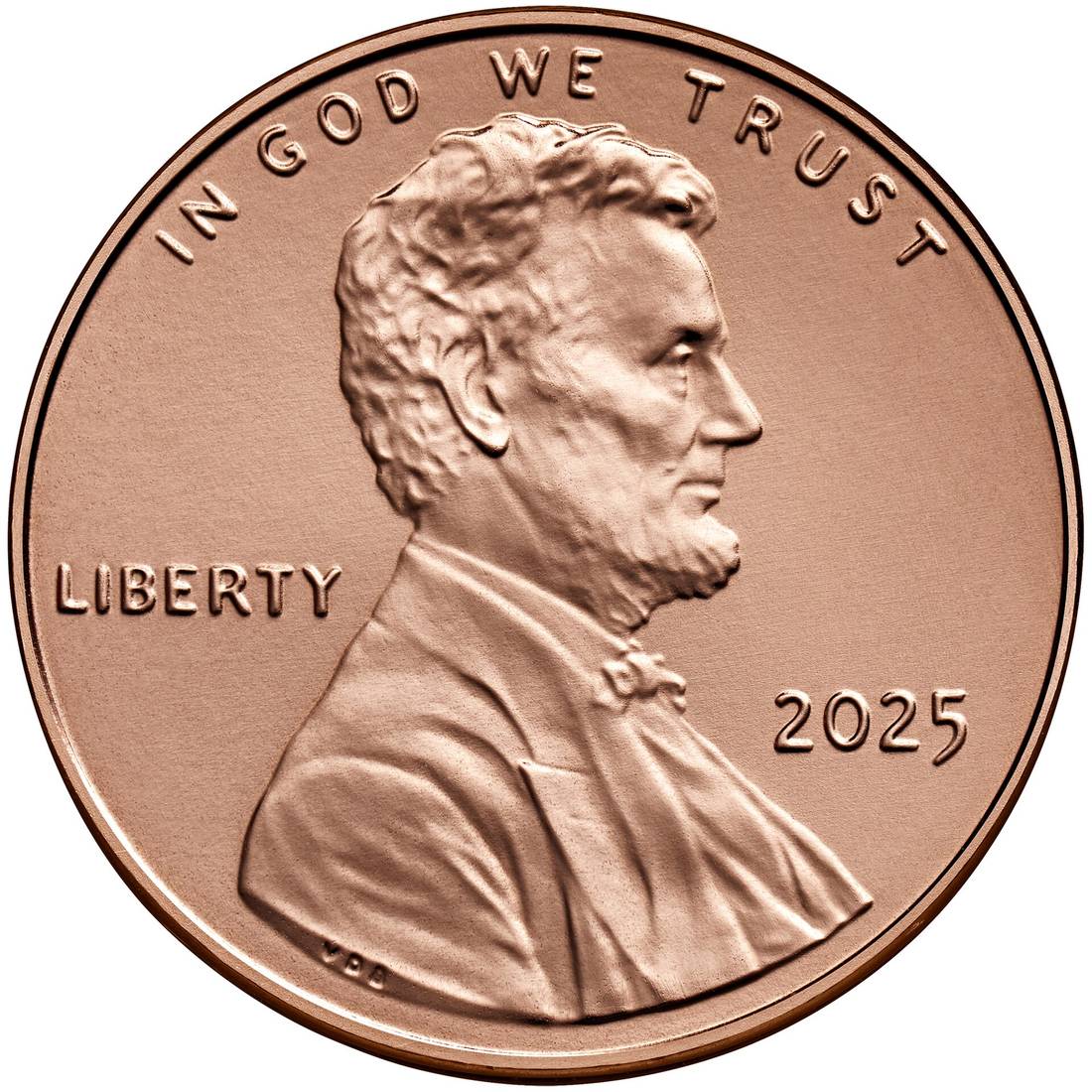

The U.S. Mint ended production of the penny1 on Wednesday, November 12, 2025. At the Philadelphia Mint, where the country's smallest coins had been made since 17931, U.S. Treasurer Brandon Beach pressed the button for the final strike after saying, "God bless America, and we're going to save the taxpayers $56 million."1
Why the Mint stopped
Treasury says the total cost of producing one penny rose from 1.3 cents to 3.69 cents2 over the past 10 years, a figure that counts materials, facilities and overhead. The Mint projects an immediate annual savings of $56 million in reduced material costs2 from stopping. The Mint still made 3.2 billion pennies in 20243.
President Donald Trump wrote in an online post in February 2025, "For far too long the United States has minted pennies which literally cost us more than 2 cents."1 He added, "This is so wasteful!"1 Federal law lets the Treasury Secretary mint pennies in amounts necessary to meet the needs of the United States2, and Treasury says it used that authority to better steward taxpayer dollars2. The Mint said it would stop when its supply of blanks was exhausted7, and the final strike came in November.
A shortage of a coin nobody wanted
Treasury counts roughly 114 billion pennies2 still in existence, yet supplies ran low1 even before the last strike. The National Conference of State Legislatures put it plainly: "Many of the supposedly circulating pennies are in jars, wishing wells, garbage dumps, under couches or, increasingly, being held for posterity."7 By December 2025 many Federal Reserve distribution terminals said they could not fill penny orders7.
Stores improvised. Some rounded prices down1 so shoppers would not be shortchanged, others pleaded for exact change, and a few handed out prizes such as a free drink in exchange for a pile of pennies1. Some banks rationed their supply. The Fed then said it would resume accepting pennies9 from banks and credit unions at its commercial coin locations on January 14, 2026. By late September, an American Bankers Association official said the calls from struggling banks had "really trailed off."5
Rounding to the nearest nickel
Treasury published its guidance on December 23, 2025, and labeled it non-binding2. When penny change is not available, it says, businesses may round the final amount of a cash transaction to the nearest five-cent increment2. Card, debit and check payments should keep being priced and processed to the exact cent2, and rounding should happen only after taxes and fees are added.
The method most often recommended is symmetrical rounding. Totals ending in 1, 2, 6 or 7 cents round down to the nearest nickel7, and totals ending in 3, 4, 8 or 9 cents round up. Treasury expects cash totals to be rounded down just as often as they will be rounded up2, so prices overall should not move.
The catch was the law. CBS MoneyWatch reported in July 2026 that establishments were "vulnerable to litigation if they fail to provide customers with exact change, even when they round up in a patron's favor."11 Some states and localities have laws prohibiting the practice4, and charging cash customers a different price from card customers is barred by a number of federal, state and local laws5.
States moved first. By the count of the National Conference of State Legislatures in May 2026, eight had enacted penny bills (Alabama, Arizona, Idaho, Indiana, New Mexico, Oregon, Virginia and Washington8), and more than a dozen others had bills in committee. California followed when Governor Gavin Newsom signed Assembly Bill 1793, which requires cash totals to be rounded to the nearest five cents10 beginning July 1, 2027, and prohibits merchants from overcharging consumers through cash rounding10.
Congress catches up
The federal answer is the Common Cents Act. The House passed H.R. 1016712 on September 14, 2026, and the Senate passed it without objection4 late Monday3, September 28, clearing it for the President. The bill directs the government not to make pennies, lets stores round transactions up or down to the nearest 5 cents3, and still allows one-cent coins for sale as numismatic items4. It would also let the Mint give the nickel an inner layer of zinc3 and require Treasury to notify Congress before discontinuing any other circulating coin12. Once signed, its rules would override any state or local laws6 that set a different rounding method or banned rounding.
AP reported that Trump is expected to sign the bill3. As of an October 14, 2026 alert from the accounting firm Aprio, the bill had passed Congress6, and Aprio described rounding as optional for now6.
The pennies already out there
Treasury says the penny will remain legal tender2 and that pennies retain their nominal value in perpetuity2. People can keep depositing them at banks, though some banks may want large amounts rolled or wrapped2 first, and Treasury has asked the public to spend the pennies they have on hand to keep the supply moving.
Two centuries in one cent
The Philadelphia Mint began making cents a year after Congress passed the Coinage Act1 of 1792. Abraham Lincoln arrived in 1909, replacing the Indian Head cent13 for the centennial of his birth, and his profile has stayed on the front ever since, the longest produced13 design on any circulating American coin.
The metal changed more than the face did. In 1943 the Mint struck cents in zinc-coated steel14 because copper was needed for ammunition and other war equipment. The steel coins were often mistaken for dimes14, tripped the slug magnets in vending machines and rusted at the edges, and from 1944 the Mint went back to a copper alloy that used salvaged brass shell casings14. In 1982 the composition changed again because the copper in a cent started to rise above one cent13 in value. Since then the coin has been copper-plated zinc, 97.5 percent zinc13, at 2.5 grams against 3.11 grams for the older copper cent.
Canada went first
Canada ended its penny more than a decade earlier. Finance Minister Jim Flaherty and Parliamentary Secretary Shelly Glover struck the last one at the Royal Canadian Mint's Winnipeg facility on May 4, 201216, and the Mint ceased distribution of pennies to financial institutions on February 4, 201315. Ottawa cited the rising cost of production, pennies piling up in homes, environmental concerns and handling costs, and estimated savings of C$11 million a year15.
The two governments' guidance is close. Both say only the final cash total should be rounded, and both leave card and check payments at the exact amount. Canada's 2012 questions even include one on foreign currencies, government cheques, gift cards and split payments15, and Treasury's list asks the same question2.
Trivia
- Which three U.S. coins did one act of Congress abolish on September 26, 1890? The three-cent nickel, the gold dollar and the three-dollar piece17. The last three-cent pieces had been struck in 1889.
- How many copper cents did the new Philadelphia Mint distribute in March 1793? 11,17813, in the first set of circulating U.S. coins.
- Which year is missing from the run of dated U.S. cents? 181513. A War of 1812 embargo cut off copper planchets from the United Kingdom, and the Mint ran out in October 1814.
- Whose initials caused a fuss on the first Lincoln cents? Designer Victor David Brenner13, whose "VDB" was removed from the reverse in 1909 and returned, in tiny letters under Lincoln's shoulder, in 1918.
- What metal did the Mint test for the cent in 1974? Aluminum13. More than 1.5 million samples were struck before the idea was rejected.
- What mark was on the cents auctioned in 232 commemorative sets after circulating production ended? An omega (Ω) privy mark13, on zinc cents from Philadelphia and Denver. Each set also held a 24-karat gold cent.
- How much does it cost to make a nickel? Nearly 14 cents1, AP reported in November 2025.
- Where did Canada's last penny go? To the Currency Museum of the Bank of Canada16 in Ottawa.
Sources
- Mary Claire Dale, US Mint in Philadelphia presses final pennies as the 1-cent coin gets canceled, Associated Press via 6abc (WPVI), November 12, 2025. Accessed October 20, 2026.
- U.S. Department of the Treasury, Penny Production Cessation FAQs, December 23, 2025. Accessed October 20, 2026.
- Senate votes to end production of the penny after 234 years. Here is what happens next, Associated Press via Hawaii News Now, September 29, 2026. Accessed October 20, 2026.
- Nexstar, Common Cents Act would impact pennies, nickels and cash transactions. It may soon become law, The Hill, September 29, 2026. Accessed October 20, 2026.
- Claire Williams and Nathan Place, Senate sends penny bill supported by banks to Trump's desk, American Banker, September 29, 2026. Accessed October 20, 2026.
- Aprio, Tax Alert: Common Cents Act Passes Congress, Sets Cash Rounding Rules, October 14, 2026 (reprinted by Condley and Company). Accessed October 20, 2026.
- Joe Livingston, With Demise of the Penny, States Prepare for Change, National Conference of State Legislatures, December 11, 2025. Accessed October 20, 2026.
- Joe Livingston, Freshly Minted State Laws Ease Transition Away From the Penny, National Conference of State Legislatures, May 5, 2026. Accessed October 20, 2026.
- Fed to resume penny deposits next week, ABA Banking Journal, January 8, 2026. Accessed October 20, 2026.
- Office of Assemblymember Christopher M. Ward, Governor Signs the California Common Cents Act, September 30, 2026. Accessed October 20, 2026.
- Megan Cerullo, The Common Cents Act is closer to becoming law. What would it mean for businesses and consumers?, CBS News, July 15, 2026. Accessed October 20, 2026.
- Office of Congresswoman Lisa McClain, House Passes Chairwoman McClain's Common Cents Act to End Wasteful Penny Production, September 14, 2026. Accessed October 20, 2026.
- Penny (United States coin), Wikipedia. Accessed October 20, 2026.
- 1943 steel cent, Wikipedia. Accessed October 20, 2026.
- Department of Finance Canada, Budget 2012, Frequently Asked Questions: Businesses (archived). Accessed October 20, 2026.
- Government of Canada, Minister of Finance Strikes Last Penny to Enter Circulation in Canada, news release, Winnipeg, May 4, 2012. Accessed October 20, 2026.
- Three-cent nickel, Wikipedia. Accessed October 20, 2026.