Why We Like Being Scared: The Psychology of Haunted Houses and Horror
Key Points
- In a 2020 haunted house field study led by researchers at Aarhus University, enjoyment and fear had an inverted-U-shaped relationship, so the most fun sat in the middle.
- In a 2019 study of 262 adults at an extreme haunted attraction, reported mood improved, particularly for those who felt tired, bored or stressed beforehand.
- In a survey of 310 people recruited in April 2020, fans of horror films reported lower psychological distress during the pandemic, though not more positive resilience, and the authors call it a correlational study.
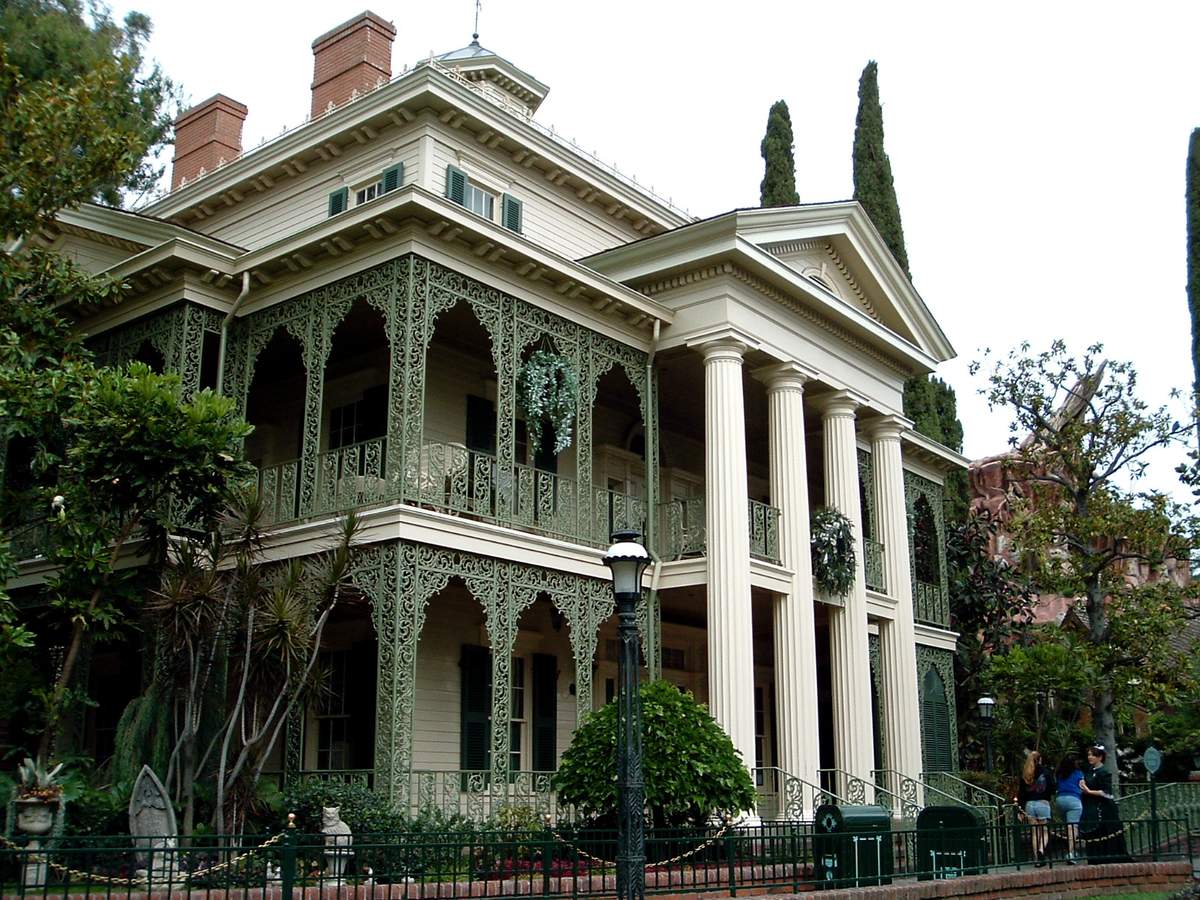

Halloween is the one season when being frightened is the point. In the National Retail Federation's survey published September 22, 2026, watching scary movies (42%)9 ranks among the top ways consumers mark the holiday, level with carving pumpkins and decorating. Researchers have started putting heart rate monitors2 on people in haunted houses to learn what the fun is made of.
What a scare does to the body
Harvard Health describes how, when someone meets a danger, the eyes or ears send the information to the amygdala, an area of the brain that contributes to emotional processing1. When the amygdala perceives danger, it signals the hypothalamus, which is a bit like a command center1 and switches on the sympathetic nervous system. The adrenal glands then pump out the hormone epinephrine (also known as adrenaline)1. The heart beats faster, breathing quickens, and sight, hearing and the other senses sharpen.
The amygdala and hypothalamus start the cascade even before the brain's visual centers have had a chance to fully process what is happening1, which is why people can jump out of the path of a car before they think about it. A second system acts as the brake. Harvard Health describes the parasympathetic nervous system as promoting the "rest and digest" response that calms the body down after the danger has passed1.
The sweet spot
A team led by researchers at Aarhus University in Denmark took the question of why people pay for fear to a haunted house. In a field study published in Psychological Science in 2020, Marc Malmdorf Andersen and Mathias Clasen of Aarhus, Coltan Scrivner of the University of Chicago and colleagues fitted visitors between the ages of 12 and 57 years (N = 110)2 with heart rate monitors, filmed them at peak scare points and asked them how frightened they felt and how much they enjoyed it.
Enjoyment and fear did not rise together in a straight line. The two had an inverted-U-shaped relationship2 across the repeated ratings, so the most fun sat in the middle. The authors describe a sweet spot2 for participants in which enjoyment is maximized2. The heart rate data told a similar story. Feeling frightened rose in a straight line with large-scale swings in heart rate, while enjoyment had the same inverted-U shape against small-scale swings, which the team reads as arousal that is "just right"2.
The paper's theoretical framing explains why the middle wins. Too little uncertainty would render an experience boring and unmotivating2, and too much would make it chaotic, unmasterable, and displeasurable2. The study ran in a single evening2 with whoever volunteered, and when visitors summarized the whole attraction in one overall rating, the sweet spot pattern did not seem to be present2.
Safe enough to lean in
The same paper describes recreational fear as offering low-cost, risk-free experience with fear and related negative emotions2. At the Basement, an adults-only horror experience5 at ScareHouse near Pittsburgh where Margee Kerr, a researcher in the Department of Sociology at the University of Pittsburgh3, ran research, participants signed a waiver and got a safe word to use if they become too scared5 to finish. Kerr's team compared the appeal to that of thrilling sports4, the British Psychological Society's Research Digest reports, saying that "Within the context of safety and control, guests allow themselves to 'lean in' to the fear-inducing experience and reach higher levels of psychological and undefended physiological arousal than in day-to-day experiences."4
Feeling better on the way out
The Pittsburgh results appeared in Emotion in 2019. Kerr, Siegle and Orsini surveyed 262 adults3 who had already bought tickets to an "extreme" haunted attraction, before and after they went through, and recorded brain activity with EEG in a subsample of 100. Participants' reported mood improved, particularly for those that reported feeling tired, bored, or stressed prior to the experience3. Among people whose mood lifted, neural reactivity to a set of tasks went down afterward.
Research Digest's write-up adds that fewer people reported feeling anxious after the Basement visit than before4, and fewer felt tired. The digest reads this as a kind of recalibration of the emotions4, an account it says appeared to be supported by the readings4 of brain activity. The researchers caution that their findings are exploratory4, and, by the digest's account, they said the findings certainly need replicating4. A before and after survey of ticket buyers at one attraction cannot show that the scare caused the change, or that it would help anyone else.
Practice for the real thing
A different idea holds that frightening fiction works like a rehearsal. Scrivner, Clasen and two colleagues surveyed 3106 people recruited in April 2020, about a month after COVID-19 was declared a global pandemic6. Horror fans did not score higher on the paper's measure of positive resilience, but horror fandom was significantly associated with lower psychological distress6. Fans of what the authors called "prepper" genres (alien invasion, apocalyptic and zombie films) were significantly more prepared for the pandemic6 and experienced fewer negative disruptions in their life during the pandemic6. Their explanation is that "Horror fiction allows people to safely and frequently experience fear, which is typically experienced in the presence of real danger."6
The authors call their paper "still a correlational study"6, and say further research is needed to determine the exact nature of the causality6. People who already cope well might simply be the ones who enjoy horror.
Scared together, and what comes next
The Aarhus group has also looked at company. In a later field study in Emotion (published online in July 2025), Andersen and colleagues fitted groups of visitors (N = 347, aged 18 to 63 years)7 with heart rate monitors. Visitors' heart rates fell into step with one another, greater synchrony went with higher reported arousal, and socially close dyads exhibited higher HR synchrony7 than less close pairs.
Researchers including members of the Aarhus lab went further and drew blood. A study in Brain, Behavior, and Immunity (January 2025) followed 113 participants8 through an intense haunted house in Vejle, Denmark, where the average visit ran 50 min and 51 s8 and the mean heart rate was 111.1 beats per minute. The main measure, the share of people with low-grade inflammation, showed no proportional difference8 between the event and three days later. Only the exploratory analyses pointed to lower immune cell counts across the group, and lower levels of the inflammation marker CRP among the 22 participants8 who had low-grade inflammation at the event.
The science of fun fear is young, built on fewer than a thousand haunted house visitors and a lot of self-report. What it suggests so far is that the scare people seek out is a measured one, in a setting they chose and can leave, and that the most enjoyment sits in the middle2 of the fear scale rather than at the extreme.
Trivia
When did Disneyland's Haunted Mansion open, and how many ghosts supposedly live there?
It opened on August 9, 196910, and it is supposedly the home of 999 ghosts10.
What was unusual about the Haunted Mansion among major Disney attractions?
It was the first major Disney attraction to open without the direct supervision of Walt Disney11, who reviewed early concepts but never saw the finished show.
Why did the Haunted Mansion end up as a ride and not a walk-through?
Planners realized a walk-through would have traffic flow problems, and the Omnimover vehicles, here called Doom Buggies10, solved it.
Why did Eastern State Penitentiary in Philadelphia first hold a Halloween event?
To raise money. Its first Halloween fundraiser, in 199112, raised money for a daytime tour program and was a forerunner of Terror Behind the Walls.
What did people in 19th century Ireland carve into Halloween lanterns?
Folklore archives at University College Dublin record lanterns made usually with a turnip but sometimes a large potato13, according to Clodagh Doyle, an assistant keeper in the National Museum of Ireland's Irish Folklife Division.
How many rooms did the Danish haunted house in the 2020 sweet spot study have?
Visitors at Dystopia Haunted House went through 42 thematically connected rooms2 in groups of three to six.
What is the most popular planned Halloween costume for pets in 2026?
A pumpkin, at 11.6%9 in the National Retail Federation's survey, ahead of a hot dog and a ghost.
Sources
- Harvard Health Publishing, Understanding the stress response, April 3, 2024, reviewed by Howard E. LeWine, MD. Accessed October 20, 2026.
- Andersen, M. M., Schjoedt, U., Price, H., Rosas, F. E., Scrivner, C., and Clasen, M. (2020). Playing with fear: A field study in recreational horror. Psychological Science, 31(12), 1497 to 1510. PMC full text. Accessed October 20, 2026.
- Kerr, M., Siegle, G. J., and Orsini, J. (2019). Voluntary arousing negative experiences (VANE): Why we like to be scared. Emotion, 19(4), 682 to 698. PubMed record. Accessed October 20, 2026.
- Christian Jarrett, Deliberately scaring ourselves can calm the brain, leading to a "recalibration" of our emotions, British Psychological Society Research Digest, October 31, 2018. Accessed October 20, 2026.
- Pitt researchers are examining why fear can be fun, Pittwire, University of Pittsburgh, October 27, 2017. Accessed October 20, 2026.
- Scrivner, C., Johnson, J. A., Kjeldgaard-Christiansen, J., and Clasen, M. (2021). Pandemic practice: Horror fans and morbidly curious individuals are more psychologically resilient during the COVID-19 pandemic. Personality and Individual Differences, 168, 110397. PMC full text. Accessed October 20, 2026.
- Andersen, M. M., Rosas, F. E., Schjoedt, U., Mediano, P. A. M., Price, H., Konvalinka, I., and Clasen, M. (2026). Scared together: Heart rate synchrony and social closeness in a high-intensity horror setting. Emotion, 26(1), 25 to 36. PubMed record. Accessed October 20, 2026.
- Bønnelykke-Behrndtz, M. L., Clasen, M., Benckendorff, J. N. E., Kristjansen, K. A., Høyer, L., Mensel, C., Nanthan, K., and Andersen, M. M. (2025). Unraveling the effect of recreational fear on inflammation: A prospective cohort field study. Brain, Behavior, and Immunity, 123, 1042 to 1051. PubMed record. Accessed October 20, 2026.
- National Retail Federation, NRF Halloween Survey Shows Consumer Spending Expected to Reach $13.5 Billion, press release, September 22, 2026. Accessed October 20, 2026.
- D23, Haunted Mansion, Disney A to Z. Accessed October 20, 2026.
- Michael Ramirez, Today in Disney History: Haunted Mansion Opening Date at Disneyland in 1969, Disney Parks Blog. Accessed October 20, 2026.
- Hannah Chinn, History behind the walls: How Philadelphia's most famous haunted house began, WHYY, October 31, 2019. Accessed October 20, 2026.
- Sarah Mac Donald, Catholic News Service, Irish folklife expert says Halloween traditions began in Ireland, America Magazine, October 19, 2017. Accessed October 20, 2026.