The Zeigarnik Effect Since 1927, From the Waiter Story to Replication
Key Points
- Bluma Zeigarnik described the effect in a 1927 thesis supervised by Kurt Lewin at the University of Berlin, and across her four main experiments the ratio of interrupted to completed tasks recalled was close to 2.0.
- The waiter story comes in at least two versions, one in a 1957 history of experimental psychology and one from Donald MacKinnon, who was at the gathering.
- A 2025 meta-analysis of 59 publications found a ratio of 0.99 for recall of interrupted against completed tasks, but a resumption rate of 67 percent, well above chance.
- In a 2011 paper by Masicampo and Baumeister, making a specific plan for an unfinished goal eliminated the intrusive thoughts and other effects the goal had caused.
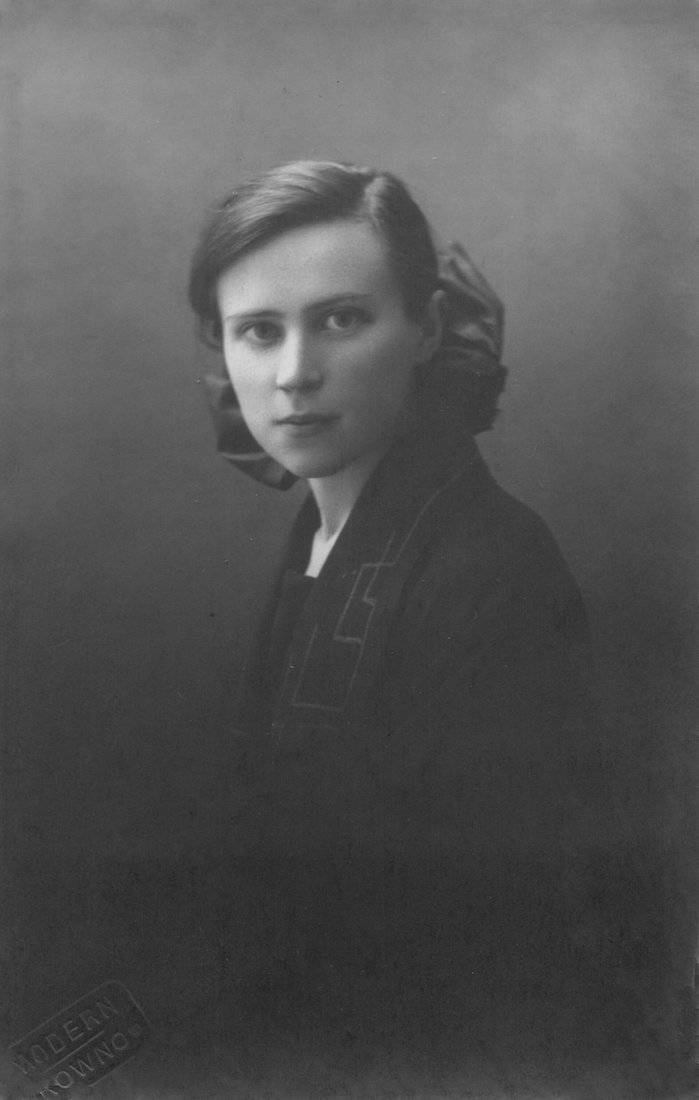

Bluma Zeigarnik's 1927 study has been widely cited for the finding that interrupted tasks are better remembered than completed ones3. She described the effect in a thesis written under the supervision of Kurt Lewin at the University of Berlin, and received her doctorate in 19275. Nearly a century later, half of the theory behind it holds up. A 2025 meta-analysis found no memory advantage for unfinished tasks, but it did find a general tendency to go back and resume them2.
The waiter in the story
The origin story credits Lewin with an observation about a waiter's memory, and Zeigarnik's dissertation connected that observation to Lewin's field theory1. In a 2020 review of the history, the psychologist Colin MacLeod noted that the story has often been told, and that the tellings differ1.
In the version in E. G. Boring's 1957 book A History of Experimental Psychology, Lewin and friends were in a Berlin restaurant. Lewin asked what he owed, was told at once and paid, and the conversation went on. When Lewin later asked how much had been paid, the waiter no longer knew1.
A second version comes from Donald MacKinnon, who was at the gathering, quoted in Alfred Marrow's 1969 biography of Lewin, The Practical Theorist. In it the waiter had kept exact track of what each person ordered, and when asked to write the check again, he was indignant. "I don't know any longer what you ordered," he said. "You paid your bill."1 Boring's account turns on the total of the bill, and MacKinnon's on the individual orders1.
What the 1927 experiments did
In her first experiment, 32 adults worked through 22 tasks, such as winding thread, folding paper and multiplication. Half the tasks were interrupted at the moment the participant seemed most engrossed, and the others were finished1. Afterward, participants were asked to list the tasks they could remember, in free recall3.
Across her four main experiments, about 80 percent of participants recalled the interrupted tasks best, and the ratio of interrupted to completed tasks recalled hovered close to 2.01. A 1991 paper by Colleen Seifert and Andrea Patalano summarized the result as unfinished tasks being 90 percent more likely to be recalled than finished ones3. Zeigarnik also reported that "ambitious" participants showed a larger advantage for interrupted tasks1.
The theory behind it was Lewin's. Forming an intention creates an inner tension, a quasi-need, that persists until the intention is fulfilled, so an interrupted task keeps its tension and should be easier to recall and more likely to be resumed2. Maria Ovsiankina reported in 1928 that participants tended to resume interrupted tasks unprompted when given the chance2.
The replication record
MacLeod points to reviews by Butterfield in 1964 and van Bergen in 1968 that found many failed replications, and van Bergen argued the effect should be discarded1. His own verdict is that the effect appears to hinge on individual differences and, at worst, is simply not replicable, and that it is rarely cited in modern textbooks1.
In their own experiments, Seifert and Patalano, at the University of Michigan, tested the idea with word problems. When participants were interrupted on half the problems after a short interval, completed problems were remembered better, though less time had been spent on the interrupted ones3. When time was held constant and participants could abandon problems they could not solve, the original result reappeared, but the authors suggested the boost may have come from a self-made impasse in solving the problem rather than from interruption as such3.
The 2025 meta-analysis by Romain Ghibellini and Beat Meier pooled 59 publications, 38 on the Zeigarnik effect, 20 on the Ovsiankina effect and one on both. Across 38 publications, the ratio of mean interrupted to mean completed tasks recalled was 0.99, and interrupted tasks made up 49.43 percent of tasks recalled across 14 (49.16 percent without Zeigarnik's own study)2. Going back to unfinished tasks was another matter: participants resumed them 67.00 percent of the time across 21 publications, well above the 50 percent expected by chance2.
The authors also found that Zeigarnik's own ratio measure is heavily swayed by single extreme values and outliers, and that her values are inflated2. They suggest the effect may depend on conditions that were more common in early research, such as the authority of the experimenter and how absorbed participants were in the tasks, and they note that phones, email and multitasking make sustained involvement harder to achieve now2.
Unfinished goals and plans
A 2011 paper by E. J. Masicampo and Roy Baumeister tested a cousin of the idea, that unfulfilled goals stay active in the mind, by measuring intrusive thoughts rather than memory. Across several studies, unfinished goals produced intrusive thoughts during an unrelated reading task and made goal-related words more accessible4. Letting participants make a specific plan for the goal eliminated those effects, and the authors concluded that once a plan is made, the drive toward the goal is suspended until the planned time4.
What holds and what does not
The pull to return to an interrupted task, the Ovsiankina effect, looks like a general tendency, while the Zeigarnik effect lacks universal validity2. The better memory for unfinished work shows up under some conditions and reverses under others3.
Trivia
- In which town was Bluma Zeigarnik born? Prienai, in what is now Lithuania5.
- With which psychologist did Zeigarnik work closely after moving to Moscow in 1931? Lev Vygotsky5.
- Which award was Zeigarnik given in 1983? The Kurt Lewin Memorial Award5.
- Which Gestalt psychologist directed the Psychological Institute in Berlin where Zeigarnik did her dissertation research? Wolfgang Köhler1.
- Besides arithmetic and puzzles, which two hands-on tasks did Seifert and Patalano list from Zeigarnik's experiment? Building cardboard boxes and making clay figures3.
- In the 2011 plan study, on what kind of unrelated task did unfinished goals hurt performance? An anagram task4.
- In which journal did Zeigarnik publish her 1927 paper? Psychologische Forschung1.
Sources
- Colin M. MacLeod, Zeigarnik and von Restorff: The memory effects and the stories behind them, Memory & Cognition, 48, 1073-1088, 2020. Accessed November 6, 2026.
- Romain Ghibellini and Beat Meier, Interruption, recall and resumption: a meta-analysis of the Zeigarnik and Ovsiankina effects, Humanities and Social Sciences Communications, 12, article 962, July 1, 2025. Accessed November 6, 2026.
- Colleen M. Seifert and Andrea L. Patalano, Memory for Incomplete Tasks: A Re-examination of the Zeigarnik Effect, Proceedings of the Annual Meeting of the Cognitive Science Society, 13, 1991. Accessed November 6, 2026.
- E. J. Masicampo and Roy F. Baumeister, Consider it done! Plan making can eliminate the cognitive effects of unfulfilled goals, Journal of Personality and Social Psychology, 101(4), 667-683, 2011 (abstract record). Accessed November 6, 2026.
- Bluma Zeigarnik, Wikipedia. Accessed November 6, 2026.