Alaska Day: The 1867 Flag Ceremony at Sitka That Ended Russian America
Key Points
- On October 18, 1867, the Russian flag was lowered and the American flag raised on Castle Hill in Sitka, completing the transfer of Alaska.
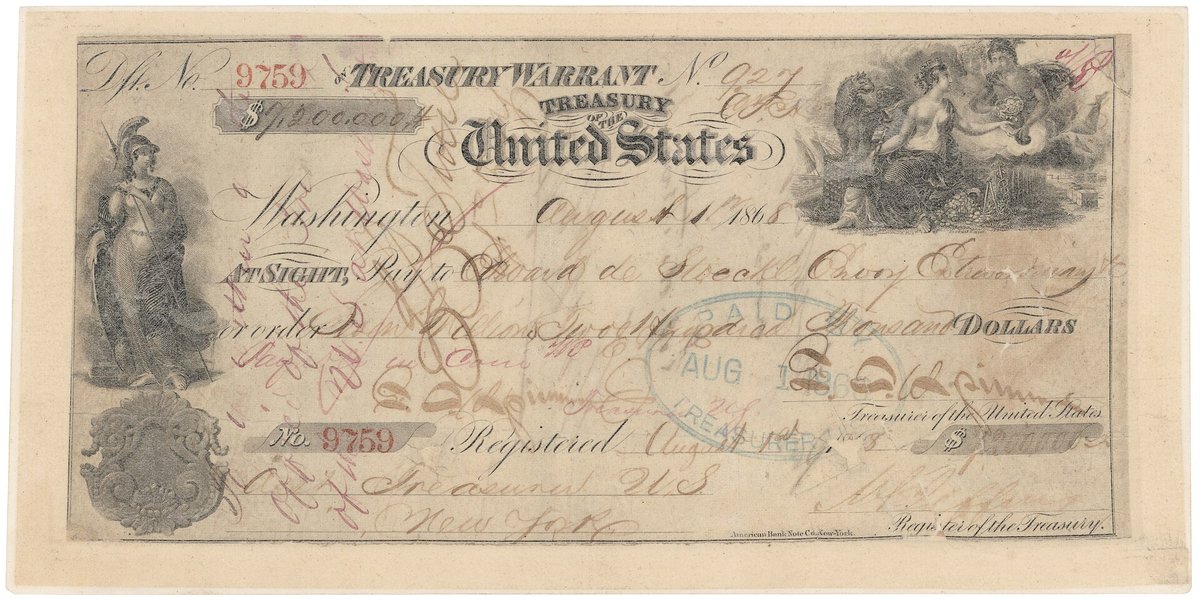
- Seward and Stoeckl signed the treaty on March 30, 1867, for $7.2 million, and the Treasury issued the check on August 1, 1868.
- A scholar cited by historian Steve Haycox found that 44 of 48 major 1867 newspapers supported the purchase or were mute on the subject.
- Alaska became the 49th state on January 3, 1959, and Sitka marks Alaska Day with a parade, a ball and a costumed reenactment on Castle Hill.

On the afternoon of October 18, 1867, two men met near the foot of a flagstaff in front of the Governor's House on Castle Hill in Sitka. Brigadier General Lovell H. Rousseau represented the United States, and Alexei Pestchouroff was the commissioner of the Tsar. The Russian flag was lowered, the American flag was raised, and a brief exchange of statements completed the transfer4 of a territory the National Park Service's landmark file describes as as large as Sweden, Finland, and Denmark combined4. Alaska marks the date as Alaska Day, and Sunday, October 18, 2026, is the 159th anniversary.
Why Russia sold
The State Department's Office of the Historian notes that St. Petersburg lacked the financial resources to support major settlements or a military presence1 along the Pacific coast, and that permanent Russian settlers in Alaska never numbered more than four hundred1. Defeat in the Crimean War cut Russian interest further. Russia offered to sell in 1859, believing the United States would off-set the designs1 of its biggest Pacific rival, Great Britain, and the National Archives adds that Russia feared that Alaska was vulnerable3 to capture by Britain or another power.
The American Civil War stalled the talks. Afterward, Secretary of State William H. Seward and the Russian minister in Washington, Edouard de Stoeckl, worked through the night7 and signed a treaty on March 30, 1867, setting the price at $7.2 million1. The treaty itself was written in English and French2 and called for payment in gold2. By the National Archives' arithmetic, the country paid less than 2 cents an acre2 for nearly 600,000 square miles.
The Senate said yes, and the House took its time
The Senate approved the treaty on April 9, 18671, and the recorded final vote was 37 to 25. President Andrew Johnson ratified it on May 28, and it was publicly proclaimed on June 20, 18673. The treaty gave the United States ten months after the exchange of the ratifications2 to pay.
Paying was harder, since the House had to appropriate the money. Congress was making war on President Andrew Johnson5 over Reconstruction, and House Republicans, intent on embarrassing President Johnson7, refused to fund the purchase while he faced impeachment in 1868. The House finally voted the money in July 18687, and the Treasury issued a check for the full amount on August 1, 18683, made payable to Edouard de Stoeckl2. Talk of bribery followed. The House investigated in December 1868 and heard from lobbyists and journalists, and its Committee on Public Expenditures reached a final conclusion that was "barren of affirmative or satisfactorily negative results."15 The historian Steve Haycox wrote that the evidence of paid votes is slim, and inconclusive5.
A flag ceremony on Castle Hill
The formal handover did not wait for the money. Rousseau sailed from New York on August 31, crossed Panama, picked up troops and supplies in San Francisco, and arrived in Sitka on October 187, the same day as the ceremony. Alaska's governor, in a 2020 proclamation, describes 250 United States Army troops9 marching to the Governor's House on Castle Hill, where the American flag replaced the Russian one. Detachments of American and Russian troops were drawn up on the parapet4 beside the building.
The landmark file records that the Kiksadi clan of the Tlingit had four principal houses4 on the hill, which Russian forces took in 1804 and which became the seat of Russian government in Alaska.
The people who were not asked
No Alaska Native nation had a seat at the table. Kristy Griffin, curator at the Sitka History Museum, wrote that neither country included Alaska Natives in the Treaty of Cession negotiations8. The treaty offered citizenship rights to inhabitants who stayed, with the exception of uncivilized native tribes2. Visit Sitka puts the Tlingit view plainly. Their land was transferred from one colonial power to the next without their consent10, and Alaska Natives were not recognized as American citizens until 1924.
They were present all the same. Rousseau reported that some Indians were present8, and a correspondent for the Daily Alta California saw Tlingit people in canoes watching from the harbor. That reporter wrote, "Of the nature of the event they had a partial knowledge, and were disposed to regard it unfavorably."8
How much of a folly was it?
The National Archives says opponents persisted in calling it "Seward's Folly" or "Seward's Icebox" until 18962.
Yet Haycox cites a scholar who checked 48 major papers from 1867 and found that 44 of them either supported the purchase or were mute5 on the subject. Even the most widely circulated opposition paper, Horace Greeley's New York Tribune, tempered its antagonism5 as the Senate vote neared. The jokes of 1867 ran to names like "Walrussia"7, and the Anchorage historian David Reamer counts "Seward's Folly" among the phrases that proliferated6 in that year's satire, which was not the same as real opposition. Reamer blames the folly story on bad historians, beginning with the first serious history of Alaska, by Hubert Howe Bancroft, which said the land "was believed to be almost valueless"6, and notes that Thomas A. Bailey published the first formal rebuttal in a 1934 journal article6.
From district to territory to state
For three decades after the purchase, the Office of the Historian writes, Alaska was governed under military, naval, or Treasury rule or, at times, no visible rule at all1, until a civil government was set up in 1884. A discovery near the Klondike River in Canada's Yukon set off a race that sent 100,000 hopeful miners13 toward Alaska and the Yukon, and through the fall and winter of 1897 to 1898 ships poured gold seekers into Skagway and nearby Dyea13. By August 1898 many stampeders had started for home, and the next year a strike at Nome, Alaska13 pulled still more miners out of the Klondike.
Congress passed the Second Organic Act in 1912, creating the Territory of Alaska and the Territorial Legislature12. Statehood took decades more. President Eisenhower signed the statehood bill, H.R. 7999, on July 7, 195814, and on January 3, 1959, he signed the proclamation admitting Alaska as the 49th state14.
Alaska Day now
October 18 is an Alaska state holiday10, and Alaska's News Source reports it is a paid holiday for state employees11; in Sitka many businesses close and public schools let students out early. Hal Spackman of the Sitka Historical Society told the station the observance has likely been around since 191711, when it was first declared an official holiday.
Sitka turns it into a week. Events begin a week before the day itself10, with a parade down Lincoln Street, lectures and exhibits, and an Alaska Day Ball where guests wear Victorian gowns. On the anniversary, residents stage a costumed reenactment of the Transfer Ceremony10 on top of Castle Hill, and an annual Reconciliation Ceremony offers a space where both Natives and non-Natives gather to mourn, reflect, and celebrate10 the resilience of the Tlingit people.
Trivia
How much did Seward offer to add to the price so the cession would be free of company claims?
Two hundred thousand dollars3, in a March 23, 1867 message to Stoeckl that called the clause an ultimatum.
What went wrong as the Russian flag came down at Sitka?
According to Rousseau's report to Seward, it caught in the ropes on the flagstaff, the soldier lowering it tore off the border by which it was attached16, and it fell on the bayonets of the Russian soldiers.
What became of the Governor's House on Castle Hill?
It housed Army headquarters for the Military District of Alaska until 1877 and was destroyed by fire on March 17, 18944.
Where was the first 49 star flag in Alaska raised?
On Castle Hill in 1959, at a ceremony the National Park Service describes as unofficial and secret17.
What was the first act of the Alaska Territorial Legislature?
It gave women the right to vote, seven years before the Nineteenth Amendment12 was ratified.
How did four Nome legislators start their trip to the first territorial session in 1913?
They hitched up their dog teams and headed for Valdez12 on January 7, then took a steamship to Juneau.
Roughly how many pack animals died on the White Pass trail during the Klondike rush?
More than 3,00013, and many of their bones still lie in Dead Horse Gulch.
Sources
- Office of the Historian, Purchase of Alaska, 1867, Milestones in the History of U.S. Foreign Relations, U.S. Department of State. Accessed October 18, 2026.
- National Archives, Check for the Purchase of Alaska (1868), Milestone Documents. Accessed October 18, 2026.
- Jim Zeender, Original Alaska Purchase Documents travel to the Anchorage Museum, Pieces of History, National Archives, March 27, 2017. Accessed October 18, 2026.
- William S. Hanable, Alaska Division of Parks, American Flag Raising Site (Baranov Castle; Castle Hill), National Register of Historic Places Inventory Nomination Form, National Park Service, April 4, 1975. Accessed October 18, 2026.
- Steve Haycox, Myths about Alaska purchase have a long reach, Anchorage Daily News, February 23, 2017. Accessed October 18, 2026.
- David Reamer, Seward's Folly is a myth. Spread the word., Anchorage Daily News, January 12, 2025. Accessed October 18, 2026.
- Jesse Greenspan, Why the Purchase of Alaska Was Far From Folly, History.com, March 30, 2017, updated January 31, 2025. Accessed October 18, 2026.
- Kristy Griffin, Treaty of Cession: the Tlingit knew, Juneau Empire, June 27, 2017. Accessed October 18, 2026.
- Office of the Governor, State of Alaska, Alaska Day proclamation, October 18, 2020. Accessed October 18, 2026.
- Maike Prewett, Alaska Day: Where History Comes Alive, Visit Sitka. Accessed October 18, 2026.
- Annual Alaska Day event commemorates 157th anniversary of land transfer from Russia to U.S. in Sitka, Alaska's News Source (KTUU), October 18, 2024. Accessed October 18, 2026.
- Alaska State Legislature, The Territorial Legislature, 100 Years of Alaska's Legislature. Accessed October 18, 2026.
- National Park Service, What Was the Klondike Gold Rush?, Klondike Gold Rush National Historical Park. Accessed October 18, 2026.
- Dwight D. Eisenhower Presidential Library, Alaska Statehood, Online Documents. Accessed October 18, 2026.
- Milton O. Gustafson, "Seward's Bargain: The Alaska Purchase from Russia," Prologue, National Archives, Winter 1994. Accessed October 18, 2026.
- Brigadier General Rousseau to Mr. Seward, December 5, 1867, Papers Relating to Foreign Affairs, 1868, Part I, Office of the Historian. Accessed October 18, 2026.
- National Park Service, Baranof Castle State Historic Site. Accessed October 18, 2026.