The Attack on Blair House, November 1, 1950
Key Points
- On November 1, 1950, Oscar Collazo and Griselio Torresola attacked Blair House, where President Truman was living during the White House renovation. Truman was not hurt.
- White House policeman Leslie Coffelt and Torresola were killed, and two other policemen and Collazo were wounded, according to the Truman Library.
- The Truman Library and the National Archives differ on a few details, such as who shot whom, how Coffelt is labeled and how Birdzell was wounded.
- Collazo was convicted in 1951 and sentenced to death, Truman commuted it in 1952, and President Carter freed him in 1979.
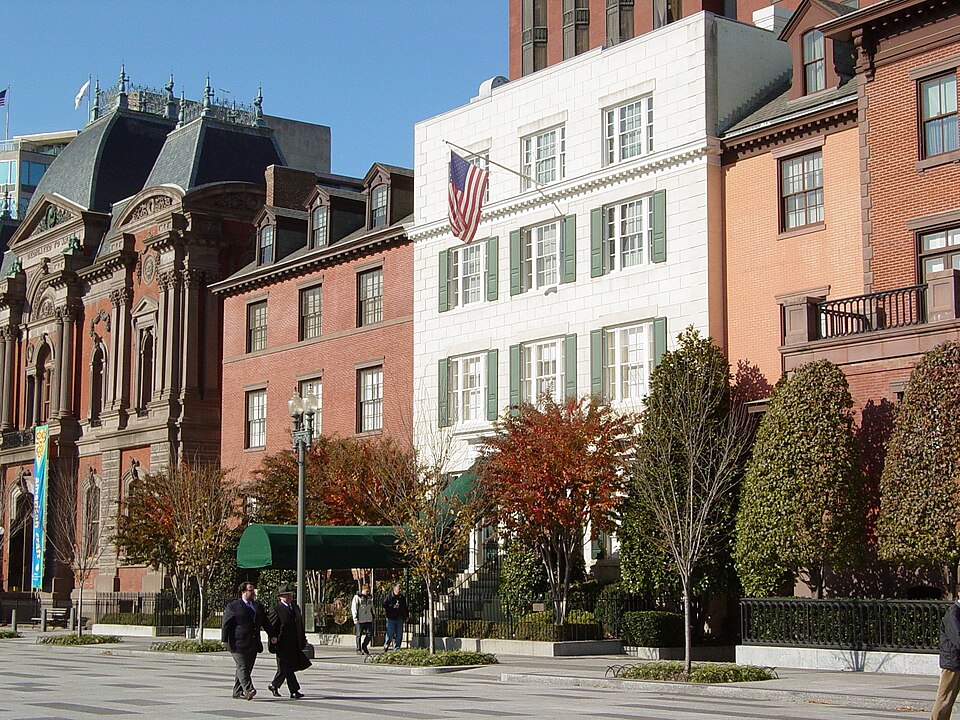

On November 1, 1950, two Puerto Rican nationalists tried to reach President Harry Truman at Blair House in Washington, where he was living while the White House was rebuilt. The Truman Library's records say the shooting that followed killed White House policeman Leslie Coffelt and one of the attackers, Griselio Torresola2, and wounded two other policemen and the second attacker, Oscar Collazo. Sunday, November 1, 2026, is 76 years later.
Why Truman was at Blair House
The National Archives says that for almost two years the Trumans had been living in Blair House, traditionally the President's guest house for official visitors, while the White House underwent a major renovation1. The Archives account has Truman crossing Jackson Place for lunch with Bess Truman, then going to his second-floor suite at about 2 p.m. for his customary afternoon nap1.
The two men had traveled the day before. The Archives says Collazo and Torresola boarded a train to Washington from the Bronx1 with two pistols, and that both belonged to the New York chapter of the Puerto Rican Nationalist Party, founded in 1922. It says the party's president, Pedro Albizu Campos, orchestrated a series of armed uprisings1 in six Puerto Rican towns on October 30, 1950, and that the two are believed to have decided1 to act after hearing of reprisals in Torresola's home town of Jayuya on October 31. The Archives account adds that they spent the morning of November 1 sightseeing at the Capitol, then took a cab to the White House, though Truman was not living there.
Less than a minute
The Archives describes four men outside the front door, behind two guard booths. Collazo went for Officer Donald Birdzell first, and because of his inexperience with firearms, the pistol snapped noisily1 on the first pull of the trigger and fired on the second, hitting Birdzell's right knee. Agents came out of the house and shot Collazo as he climbed the steps. Meanwhile Torresola, by the Archives' account, hit Coffelt with three bullets in the torso1 on the eastern edge of the building. The Archives account says the whole exchange lasted for less than one minute1, the longest gun battle in Secret Service history.
Truman looked out of his second-floor window. The Archives says agents shouted for him to “get down”1, which he did. The same account says the wounded Coffelt still raised his pistol and killed Torresola. The Truman Library's diagram of the scene, dated November 2, 1950, places Torresola falling over a hedge beside the entrance to the Lee House4, the adjoining building, and Collazo at the foot of the Blair House steps.
Where the sources differ
The Truman Library and the National Archives agree on the outline of the day but differ on a few details. The Library's diagram caption credits Secret Service agent Floyd Boring with shooting Collazo, where the Archives account says only that Secret Service members did. The Archives calls Coffelt the first and only member of the Secret Service to die protecting a President from an assassination attempt, while the Library describes him as a member of the White House Police7. The Archives mentions a bullet in Birdzell's right knee from Collazo's gun. A Library photo caption says he was shot in both legs6, and that Private Joseph Downs was hit in the chest, abdomen and thigh.
Truman's own words
At his news conference on November 2, 1950, a reporter noted that journalists had not been in front of Blair House the day before. Truman answered, in the transcript the Library holds, “I was never in danger3.” He added that what he hated about it was that the young men involved became casualties, one of them killed, and two of them badly wounded3. The same transcript has him answering a question about Puerto Rico. He said that the people of Puerto Rico should have the right to determine for themselves3 their political relationship to the United States, a view he said had not changed.
After the shooting
The Library's photo collection shows the President and Bess Truman at Coffelt's funeral at Arlington National Cemetery. The Archives dates that photograph to November 4, 19501. Truman also decorated the surviving policemen and the agents Boring and Vincent Mroz, according to a Library photograph, and on May 21, 1952, he spoke at Blair House at the dedication of a memorial plaque honoring Coffelt7, presented by the National Sojourners, a Masonic organization.
Collazo was indicted on four counts. His trial opened in federal court in Washington on February 26, 19512, and the jury found him guilty on all counts on March 7. He was sentenced to death. Truman commuted the sentence to life in 1952, and the Archives shows a telegram dated July 24, 19521 ordering the Governor of Puerto Rico to carry it out. President Jimmy Carter freed Collazo in 1979, and the Library says he died in Puerto Rico in 19942.
Trivia
- Why was Truman living at Blair House in 1950? The White House was being renovated1.
- Which officer died defending the house? Leslie Coffelt, a White House policeman2.
- On what date did Collazo's trial begin? February 26, 19512.
- Which President freed Collazo from prison? Jimmy Carter, in 19792.
- What did Truman say at his November 2, 1950 news conference about the danger he was in? That he was never in danger3.
Sources
- Eric Rhodes, “The Plot to Kill President Truman,” Pieces of History, National Archives, November 1, 2015. Accessed November 1, 2026.
- Records of the District Courts of the United States: Transcript of Trial in the Case of United States vs. Oscar Collazo (Record Group 21), Harry S. Truman Library. Accessed November 1, 2026.
- The President's News Conference, November 2, 1950, Public Papers of the Presidents, Harry S. Truman Library. Accessed November 1, 2026.
- Diagram of assassination attempt on President Truman at Blair House, photograph 77-3614, Harry S. Truman Library. Accessed November 1, 2026.
- White House Policeman Leslie Coffelt, photograph 65-2176, Harry S. Truman Library. Accessed November 1, 2026.
- Presidential assassination attempts, photograph collection, Harry S. Truman Library. Accessed November 1, 2026.
- President Truman's Remarks at the Dedication of a Memorial Plaque Honoring Pvt. Leslie Coffelt, sound recording SR60-24, Harry S. Truman Library. Accessed November 1, 2026.