Galileo and the Vatican, 1992: What John Paul II Said and Left Out
Key Points
- On October 31, 1992, John Paul II closed the work of the Galileo Commission, set up in 1981, in an address to the Pontifical Academy of Sciences, 359 years after Galileo's 1633 conviction.
- The pope spoke of a "tragic mutual incomprehension," and said the theologians of the time erred by thinking that knowledge of the physical world was imposed by the literal sense of Scripture.
- The words for rehabilitation, pardon and apology do not appear in the Italian text, and Coyne points out that neither 1992 speech mentions the Holy Office, the Inquisition, the Index, Paul V or Urban VIII.
- George Coyne, who sat on the commission, lists four conclusions in the speeches that he calls inadequate, including claims about Galileo and proof and about Bellarmine.
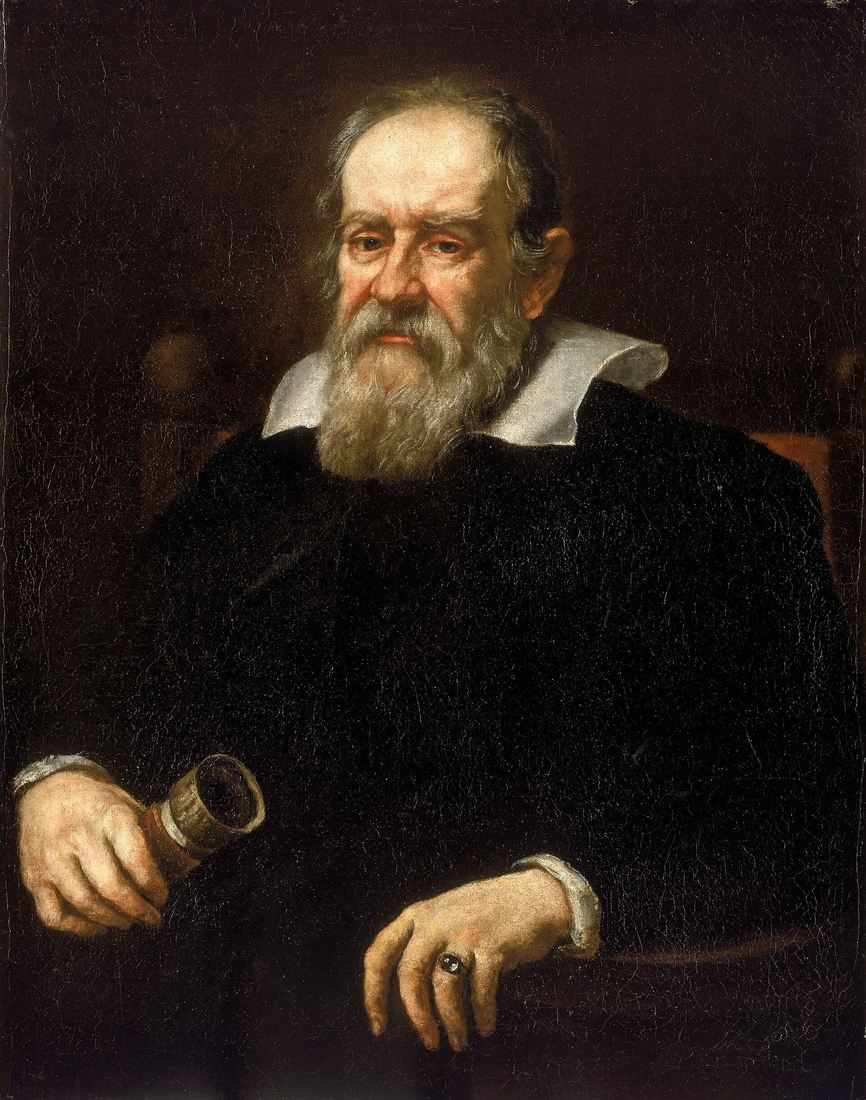

On October 31, 1992, John Paul II gave an address to the Pontifical Academy of Sciences that brought to a close the work of the Galileo Commission, a body set up in his name in 19812. Galileo had been convicted of vehement suspicion of heresy in June 16334, so the speech came 359 years after that verdict. Saturday, October 31, 2026, is the 34th anniversary of the address.
1616: the warning
The Stanford Encyclopedia of Philosophy says that in 1616 Galileo was called to an audience with Cardinal Robert Bellarmine and admonished not to teach or defend Copernican theory4. Copernicus's book was placed on the Index of Prohibited Books as "suspended until corrected," and an internal commission of the Inquisition had found the theory heretical, a finding that was not made public4. A possible formal injunction ordering Galileo not to hold, teach or defend the theory in any way, orally or in writing, may or may not have been issued4.
George Coyne, a Jesuit astrophysicist who directed the Vatican Observatory, writes that the Congregation of the Index declared the earth's motion "false and altogether contrary to Scripture" in 16162.
1633: the trial
Galileo's Dialogue finished printing in Florence by February 1632; shortly afterward the Inquisition banned its sale and ordered him to Rome for trial4. In June 1633 he was convicted, and a sentence of imprisonment was commuted to perpetual house arrest, served first in Siena and, from December 1633, at his villa in Arcetri, where he died early in 16424. The Associated Press account of the 1992 speech recalled that church authorities forced him to say he "abjured, cursed and detested" his beliefs3.
The commission
On November 10, 1979, at an address marking the centenary of Albert Einstein's birth, John Paul II spoke of Galileo's sufferings "at the hands of men and organisms of the Church" and hoped scholars would look at the case again2. Coyne, who sat on the commission himself, dates it to a letter of July 3, 1981 from Cardinal Agostino Casaroli, the Secretary of State (the date the pope also gave), with sections for exegesis, culture, science and history, and says there was no public announcement2.
By Coyne's account the commission met seven times, the first on October 9, 1981 and the last on November 22, 19832. In May 1990 Cardinal Paul Poupard was asked to coordinate the final stages, and on July 13, 1990 he wrote to the members declaring the work concluded2. Coyne also notes that no philosopher or historian of science was among the members, though some contributors to its publications were2.
What the pope said
On the day, Poupard presented a final report and the pope followed with the closing address2. The report, as Coyne quotes it, said Galileo's judges believed "quite wrongly" that adopting the Copernican view would undermine Catholic tradition, and called this a "subjective error of judgment"2.
The AP reported that the pope spoke of a "tragic mutual incomprehension" and of the church's "supposed rejection of scientific progress"3. In the Italian text, that incomprehension is something that has been read as the reflection of a fundamental opposition between science and faith1. He said the theologians of the time erred, in defending the centrality of the earth, by thinking that knowledge of the physical world's structure was in some way imposed by the literal sense of Scripture1. In the Vatican's Italian text he says that, paradoxically, Galileo, a sincere believer, showed himself more perceptive on this point than his theologian adversaries1.
The address also asks whether the case had long been closed and the errors recognized, and answers that this is certainly true1. It describes the Galileo case since the Enlightenment as "a sort of myth" in which the image made of the events was far removed from reality2. And, citing Cardinal Poupard, it says the 1633 sentence was not irreformable and that the debate was closed in 1820 with the imprimatur given to a book by Canon Settele1.
What it did not say
The words for rehabilitation, pardon and apology do not appear in the Italian text1. Astronomy magazine said in 2025 that there was no re-trial or pardon6. Coyne points out that the "theologians" blamed in both 1992 speeches are never identified, and that neither mentions the Holy Office, the Roman Inquisition or the Congregation of the Index, the 1616 injunction, the 1633 abjuration, or Popes Paul V and Urban VIII2.
The reaction in 1992
The AP story from Vatican City opened by saying the pope had formally proclaimed that the Church erred in condemning Galileo3. It quoted Giorgio Salvini, president of the Academy of the Lincei, calling the speech "not only about a rehabilitation, but about a recognition of errors and of guilt"3. Christian History magazine wrote in 2002 that major newspapers read the speech as an exoneration of Galileo, that the pope had admitted the error only indirectly, and that "John Paul's apology did not satisfy everyone"5.
What is still disputed
Coyne opens by setting the 1992 speech beside a declaration he dates to "just 350 years before," in which Urban VIII said Galileo had made himself guilty of an "opinion very false and very erroneous and which had given scandal to the whole Christian world"2.
Coyne lists four conclusions in the two speeches that he calls inadequate: that Galileo failed to see Copernicanism as only a hypothesis he could not prove, that theologians could not read Scripture correctly, that Bellarmine saw what was really at stake, and that the Church accepted Copernicanism once proofs arrived2. He writes that historians and philosophers of science would regard those points as inadequate "almost unanimously"2.
On Scripture, Coyne argues that the distinction between the text and its interpretation had been well established since Augustine, so a failure to see it cannot explain what happened2. On Bellarmine, he says both speeches quote the cardinal's letter to Foscarini on what to do if a true demonstration appeared, but leave out the next sentence, in which Bellarmine said he would not believe such a demonstration existed until it was shown to him2. He also notes that the imprimatur Settele received in 1822, under Pius VII, concerned the teaching of Copernicanism and did not mention Galileo or the 1633 sentence2. The pope's address dates that closing to 18201.
Coyne's summary is that there appears to have been a retreat within the Church between its posture of 1979 and the one that closed the commission in 19922.
Trivia
- Which cardinal, a former Archbishop of Toulouse, was named to head the Galileo Commission in 1981? Cardinal Gabriel-Marie Garrone2.
- In which Rome church was Galileo made to kneel while his condemnation was read on June 22, 1633? Santa Maria sopra Minerva4.
- In what year was Galileo re-interred? 17374.
- Until what year did the works of Copernicus and Galileo stay on the Index of Forbidden Books? 18352.
- According to the commission's final report, which pope had the Holy Office grant an imprimatur in 1741 to the first edition of Galileo's complete works? Benedict XIV2.
- Who served as secretary of the Galileo Commission and recorded the minutes of its meetings until 1983? Father Enrico di Rovasenda2.
Sources
- Discorso di Giovanni Paolo II ai partecipanti alla sessione plenaria della Pontificia Accademia delle Scienze, October 31, 1992, The Holy See (Italian text). Accessed October 29, 2026.
- George V. Coyne, S.J., The Church's Most Recent Attempt to Dispel the Galileo Myth, Vatican Observatory, also published in The Church and Galileo (University of Notre Dame Press, 2005). Accessed October 29, 2026.
- Daniel J. Wakin, Associated Press, Pope Proclaims Church's Errors In Condemning Galileo, The Seattle Times, November 1, 1992. Accessed October 29, 2026.
- Galileo Galilei, Stanford Encyclopedia of Philosophy (first published March 4, 2005, substantive revision December 17, 2025). Accessed October 29, 2026.
- Steven Gertz, Upon Further Review, Christian History, Issue 76, 2002. Accessed October 29, 2026.
- Elisa Neckar, Oct. 31, 1992: The pope addresses the Galileo affair, Astronomy, October 31, 2025. Accessed October 29, 2026.
- File:Justus Sustermans - Portrait of Galileo Galilei, 1636.jpg, Wikimedia Commons. Accessed October 29, 2026.