Harvard's Founding Vote, October 28, 1636: A College With No Name
Key Points
- Harvard dates its founding to October 28, 1636, when the General Court of Massachusetts Bay voted money toward "a schoale or colledge".
- The Court's record promised 400 pounds, half to be paid the next year and half when the work was finished, and left the building and site to a later Court.
- John Harvard died in September 1638 and left half his estate and his library, and the Court voted on March 13, 1639 to name the college for him. Harvard's own history page says he did not found it.
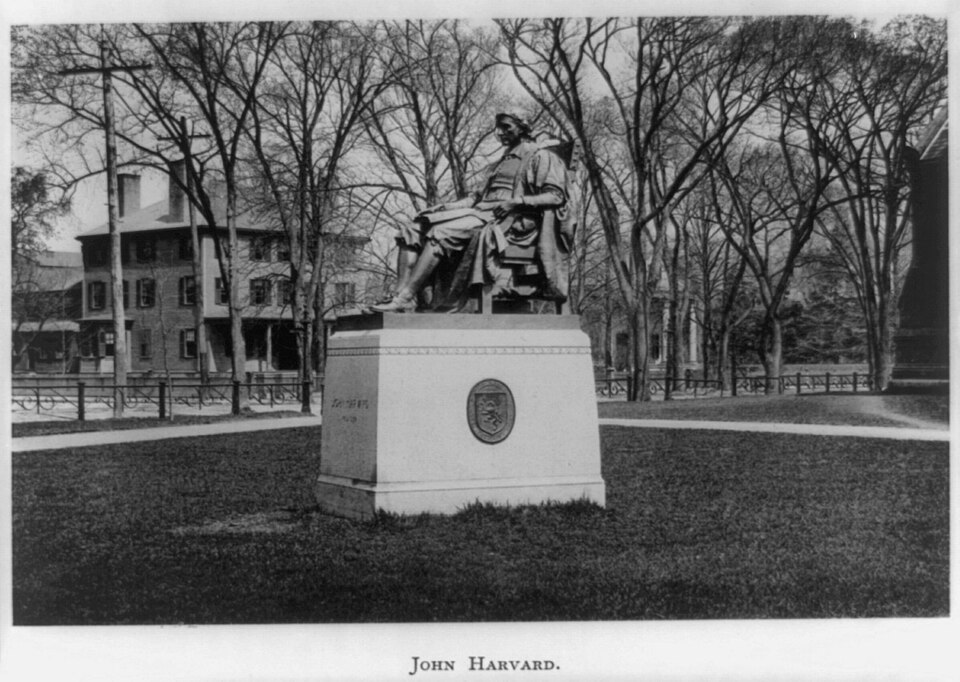

On October 28, 1636, the General Court of Massachusetts Bay agreed to give money toward “a schoale or colledge”2, in the words of its own record. Harvard dates its founding to that vote1. Wednesday, October 28, 2026, is the 390th anniversary, and the story behind it has a few surprises, including that the college had no name, no site and no building on the day it was founded.
The vote in the Court’s own words
The Court’s records were printed in 1853 as the first volume of the Records of the Governor and Company of the Massachusetts Bay, edited by Nathaniel B. Shurtleff, and the entry sits under the heading 28 October2. It records that the Court agreed to give 400 pounds toward a school or college, half to be paid the next year and half when the work was finished2, and that the next Court would appoint where and what building2. The amount is also given as four hundred pounds sterling3 in an EBSCO research summary of the founding by Warren M. Billings and Geralyn Strecker.
Harvard’s own history page says the university was officially founded by a vote by the Great and General Court of the Massachusetts Bay Colony1 and calls Harvard the first college in the American colonies1. In other words, the founding was a decision to spend money. There were no students yet and no site.
Why a college, and why Newetowne
The EBSCO summary quotes a tract of the period, New England’s First Fruits, in which the Puritans said they dreaded “to leave an illiterate Ministry to the Churches, when our present Ministers shall be in the Dust.”3 The summary says the Antinomian crisis around Anne Hutchinson delayed action until November 15, 16373, when, after debating whether to build in Salem, the Court ordered the college built at Newetowne. The Court’s record carries the order: “The colledg is ordered to bee at Newetowne.”2
The summary adds that the town was chosen partly for its resemblance to Oxford and Cambridge in England, and that Newetowne was renamed Cambridge on May 2, 16383. The record has the order itself: “Newetowne shall henceforward be called Cambrige.”2
A name that came later
The college was not named for a founder. Harvard’s history page puts it bluntly: “Despite popular opinion (and a certain statue) John Harvard did not found Harvard”1, although he was the first major benefactor1. According to the EBSCO summary, the young clergyman died on September 14, 1638, and left his library and half of his estate, about 800 pounds sterling3 to the new institution. Harvard’s page describes the gift as half of his estate and his library of more than 400 books1. The Harvard University Archives give the bequest as 329 titles totaling 400 volumes, plus half his estate, valued at £7794. The summary says his legacy did not make the college’s establishment possible3 but was remarkable for its time.
The Court voted to name the college for him on March 13, 16393, according to the summary. The Court’s record reads: “the colledge agreed vpon formerly to bee built at Cambridg shalbee called Harvard Colledge.”2
From a cow pasture to nine graduates
Teaching started before the name did. The EBSCO summary says that by June 1638 the professor engaged by the overseers, Nathaniel Eaton, had moved into a house in the midst of a cow pasture3. His tenure ended badly: when his cruelty reached the Court, he was fined and dismissed, and the college closed for nearly a full year3. On August 27, 16403, Henry Dunster, a graduate of Magdalene College, Cambridge, was invited to be the first president, and he began teaching that fall.
The first building, the “Old College,” was occupied in September 1642, in time for the commencement of the first nine graduates3. That was nearly six years after the vote.
Trivia
- What phrase did the Court’s 1636 record use for what it was funding? “A schoale or colledge”2.
- How many pounds did the Court agree to give, according to the EBSCO summary of the founding? Four hundred3.
- What was Newetowne renamed in 1638? Cambridge2 (spelled “Cambrige” in the record).
- Whom does Harvard’s history page call its first major benefactor, though not its founder? John Harvard1.
- On what date did the Court vote to name the college for him? March 13, 16393.
Sources
- The history of Harvard University, Harvard University. Accessed October 28, 2026.
- Records of the Governor and Company of the Massachusetts Bay in New England, Volume 1, edited by Nathaniel B. Shurtleff, Boston, 1853, Internet Archive. Accessed October 28, 2026.
- Establishment of Harvard College, Warren M. Billings and Geralyn Strecker, EBSCO Research Starters. Accessed October 28, 2026.
- What happened to the books that John Harvard donated to Harvard College?, Ask a Harvard Archivist, Harvard University Archives. Accessed October 28, 2026.