Nuremberg Trial Opens, November 20, 1945: Counting the Defendants
Key Points
- The International Military Tribunal opened its trial of Nazi leaders on November 20, 1945, in the Palace of Justice in Nuremberg (Courtroom 600, per the Jackson List), according to the Holocaust Encyclopedia and the Jackson List.
- Sources count the defendants differently: 24 were indicted, 22 were tried, 21 are described as in court, and 20 announced pleas of not guilty on November 21.
- German History in Documents and Images gives the whole trial’s span as November 14, 1945, to October 1, 1946, though the same page is titled as the formal opening on November 20, 1945; this article does not explain the November 14 date.
- The judges convicted 19 defendants and acquitted three on October 1, 1946, sentencing twelve to death.
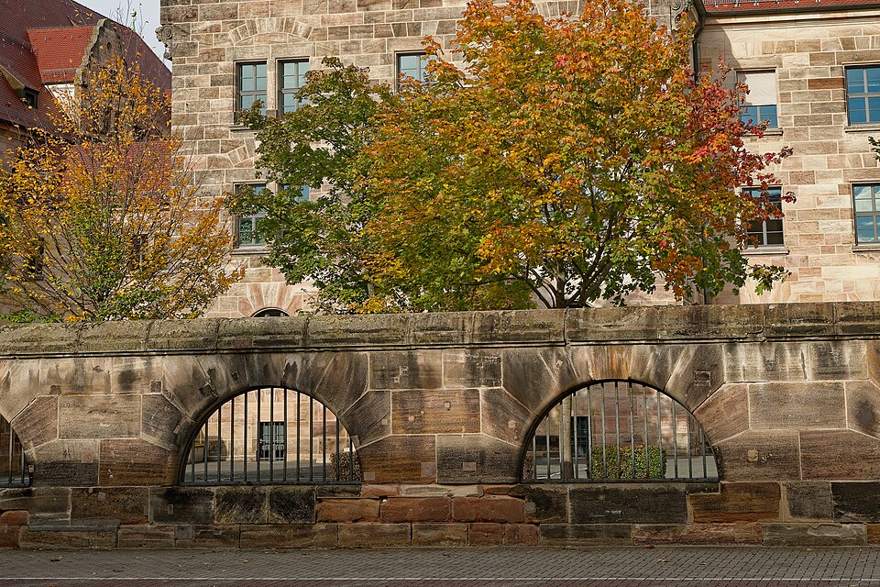

At 10:00 a.m. on Tuesday, November 20, 1945, Lord Geoffrey Lawrence, the president judge of the International Military Tribunal, opened the trial of the principal Nazi war criminals in Courtroom 600 of the Palace of Justice in Nuremberg4. The Tribunal had been created by the London Agreement and Charter, signed on August 8, 1945, by France, the Soviet Union, the United Kingdom and the United States1, and each of the four supplied one judge, one alternate judge and a prosecution team. The trial opened with prosecutors reading the indictment aloud.
The crowd and the lighting
More than 400 visitors attended each day, along with 325 correspondents from 23 countries, and a team of translators gave simultaneous translation in English, French, German and Russian1. The courtroom was lit so brightly for the filming of the trial that the accused were given dark glasses3.
How many defendants? It depends on the day and the count
The number attached to this trial changes with the source, and each figure answers a slightly different question.
- 24 indicted. On October 18, 1945, the chief prosecutors indicted 24 leading Nazi officials1.
- 22 tried. The Holocaust Encyclopedia says that in the end only 22 defendants stood trial, and it notes that the Tribunal excluded the industrialist Gustav Krupp, who was elderly and in failing health, in preliminary hearings1.
- 21 in the dock. The Holocaust Encyclopedia says that after Robert Ley killed himself on the eve of the trial only 21 defendants appeared in court, and that Martin Bormann, who could not be located, was tried in absentia1. The United States Holocaust Memorial Museum’s timeline entry describes a trial of 21 of the 24 indicted2, and a bpk photograph in the German History in Documents and Images collection shows 21 defendants3. The museum’s own totals do not add up cleanly, since Bormann was among the 22 tried but not in court.
- 20 pleas on November 21. The Jackson List, a Nuremberg history newsletter, reports that on November 21, 1945, twenty defendants announced pleas of not guilty, and that Ernst Kaltenbrunner was absent because of illness4.
Those numbers do not contradict each other so much as count different things: charged, tried, appearing in court, and answering at the plea. The photograph’s caption lists Kaltenbrunner among the 21, so the sources do not agree on who was present, and this page does not settle it.
When did it start?
One source gives a different start date for the trial as a whole. The Holocaust Encyclopedia says the trial began on November 20, 19451, and the Jackson List says it opened that day with prosecutors reading the indictment4. The German History in Documents and Images page gives the trial’s span as November 14, 1945, to October 1, 19463, which is six days earlier. The same page is titled as the formal opening on November 20, 1945. This article uses November 20 for the opening of the trial itself, and it does not know what the November 14 date marks.
A new word in the indictment
The indictment used the term genocide, which Raphael Lemkin, a Polish-Jewish international law expert, had introduced a year earlier1. The museum notes the word appears as a descriptive term, not a legal one2. According to the Jackson List, the French assistant prosecutor Pierre Mounier said the word aloud in court while reading part of Count Three on November 20, which it calls the first official public use of the word4.
November 21: no speeches, then Jackson
The Tribunal allowed no defendant to make a speech on November 21; the Soviet Union had agreed to begin the trial only on that condition, because its chief prosecutor, Roman Rudenko, had not yet arrived in Nuremberg4. Robert H. Jackson, the American chief of counsel, then gave his opening statement, 61 typescript pages that ran until late afternoon4. He began, “The privilege of opening the first trial in history for crimes against the peace of the world imposes a grave responsibility”1.
How it ended
The hearings ended on September 1, 1946, and the judges delivered their verdict on October 1, convicting 19 defendants and acquitting three1. Twelve were sentenced to death, and ten were hanged on October 16, 1946; Hermann Göring killed himself the night before, and Bormann, sentenced in absentia, was later shown to have died in Berlin in the final days of the war1. Of the convicted defendants who were not hanged, only Rudolf Hess spent the rest of his life in prison1.
Trivia
- In which courtroom did the trial take place? Courtroom 600 of the Palace of Justice in Nuremberg4.
- Which four countries each supplied one judge to the Tribunal? France, the Soviet Union, the United Kingdom and the United States1.
- Why were the defendants given dark glasses? The courtroom was very brightly lit for the filming of the trial3.
- Which defendant was tried in absentia? Martin Bormann, who could not be located1.
- Which defendant killed himself the night before the scheduled hangings in October 1946? Hermann Göring1.
Sources
- International Military Tribunal at Nuremberg, Holocaust Encyclopedia, United States Holocaust Memorial Museum. Accessed November 16, 2026.
- International Military Tribunal (timeline, 1942 to 1945), Holocaust Encyclopedia, United States Holocaust Memorial Museum. Accessed November 16, 2026.
- The Formal Opening of the Nuremberg Trial of the Major War Criminals (November 20, 1945), German History in Documents and Images. Accessed November 16, 2026.
- John Q. Barrett, Civilization Opens Its Case at Nuremberg (1945), The Jackson List, November 21, 2024. Accessed November 16, 2026.