The Gunfight at the O.K. Corral at 145: Thirty Seconds and a Legend
Key Points
- On October 26, 1881, in Tombstone, Arizona Territory, three Earp brothers and Doc Holliday faced the Clantons and McLaurys, and by most accounts the fight was over in about thirty seconds.
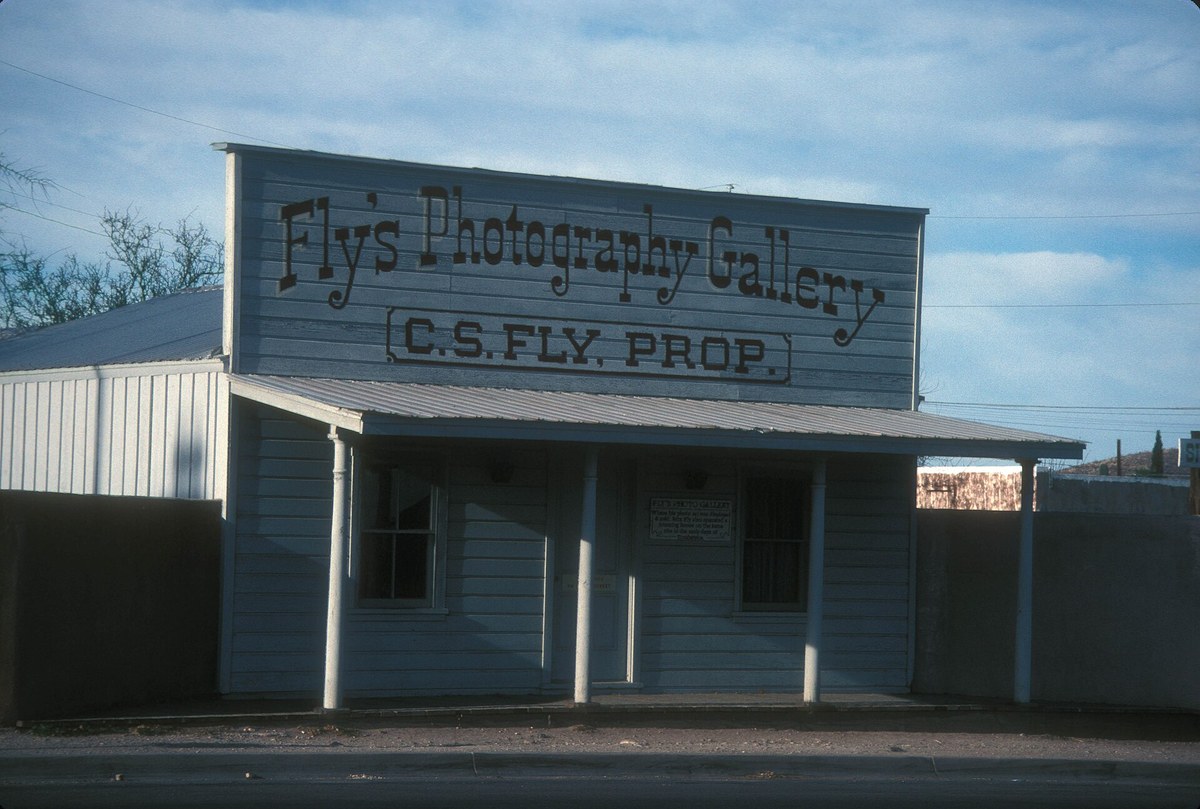
- The shooting took place in a narrow lot beside C. S. Fly’s photography studio on Fremont Street, not inside the O.K. Corral, and who fired first has never been settled.
- Billy Clanton and both McLaury brothers were killed, and on November 30, 1881, Judge Wells Spicer found the defendants fully justified.
- Virgil Earp was ambushed on December 28, 1881, Morgan Earp was shot and killed on March 18, 1882, and Wyatt answered with what became known as his Vendetta Ride.

On October 26, 18811, in Tombstone, Arizona Territory, three Earp brothers and Doc Holliday faced the Clantons and McLaurys, and by most accounts it was over in about thirty seconds2. Monday, October 26, 2026, is the 145th anniversary of the fight. Its name, and much of its legend, came later.
A feud in a boom town
Wyatt and Virgil Earp arrived in Tombstone on December 1, 18793, and Virgil became a deputy marshal. Johnny Behan, whom the Earps thought too lax about enforcing the law, became sheriff on February 10, 18813. National Geographic traces the feud to stolen mules, cattle rustling and a rivalry between Wyatt Earp and Behan4, with a new ordinance prohibiting the carrying of weapons in town4 adding to the strain. The men on the other side were known as the cowboys4, and History.com describes the Clantons and McLaurys as men who lived on a ranch outside of town and sidelined as cattle rustlers, thieves and murderers1.
The last day began badly. Ike Clanton and Tom McLaury rode into Tombstone with a wagonload of beef3 on October 25, and around 1:00 am3 on the 26th a drunk Clanton exchanged words with Holliday at the Alhambra Saloon3. Frank McLaury and Billy Clanton arrived in town3 that afternoon.
Thirty seconds on Fremont Street
The fight did not happen inside the corral. The O.K. Corral fronted Allen Street5, and the shooting took place in a narrow lot on the side of C. S. Fly’s photography studio on Fremont Street5, six doors west of the O.K. Corral’s rear entrance5. Douglas O. Linder, a law professor whose Famous Trials site collects the hearing record, calls it a vacant lot next to Fly’s Rooming House on Fremont Street6.
The exact time varies by account. HistoryNet’s summary gives 3:00 p.m.7, while the historian Lee A. Silva put it at about 2:45 p.m.7 On paper, the law was on one side. Virgil Earp was the chief of police of Tombstone8, Morgan was a special policeman in the pay of the city and wearing a badge8, and Wyatt was a sworn policeman8, according to the judge who later heard the case. Virgil had called on Wyatt and Holliday to assist him8 in disarming the cowboys.
Who fired first has never been settled. Wyatt said that when he saw Billy Clanton and Frank McLaury draw, “I drew my pistol”9, and that “The first two shots were fired by Billy Clanton and myself”9, adding, “We fired almost together.”9 Ike Clanton testified that “The first two shots were fired by Holliday and Morgan Earp”10 and described Billy Clanton’s hands as “thrown up about even with the level of his head.”10 National Geographic says no one knows who fired first4. Casey Tefertiller and Jeff Morey, writing in Wild West in 2001, noted that “The debate has raged on for 120 years as to who fired first”7 and concluded that Wyatt fired in response to Frank McLaury reaching for his gun.
The count of shots is an estimate too. A witness quoted in the Tombstone Daily Epitaph the next day described over thirty shots being fired11, and Silva estimated about 30 seconds and 30 shots7. When it ended, Billy Clanton and both McLaury brothers were dead, and Virgil, Morgan and Holliday were wounded1. The Epitaph reported Virgil shot through the calf of the right leg11 and Morgan shot through the shoulders11, while Holliday was hit upon the scabbard of his pistol11. Ike Clanton managed to escape into Fly’s house6, and Billy Claiborne, who said he was unarmed, also ran from the fight as soon as the shooting began5.
A hearing, an ambush and a ride
Ike Clanton filed murder charges3 against the Earps and Holliday on October 29, 1881. Judge Wells Spicer opened a preliminary hearing on October 313, and testimony ended on November 296. Along the way, Wyatt and Holliday were arrested and lodged in a jail on Sixth Street3. On November 30, 18818, Spicer found that the defendants were fully justified in committing these homicides8, though he called Virgil’s choice of helpers an injudicious and censurable act8.
The ruling settled nothing in town. On December 28, 18813, Virgil was ambushed, and buckshot left his arm virtually immobile for the rest of his life6. On March 18, 18823, Morgan was shot while playing pool, by a bullet fired through the window of a pool hall6, and he lived about another hour6.
Wyatt answered with what became known as his Vendetta Ride6. From March 20 to April 15, 188212, a federal posse led by Wyatt, by then a deputy U.S. marshal, searched southeast Cochise County, and it ultimately killed four men, starting with Stilwell12. Frank Stilwell died in Tucson12, and in Wyatt’s account Curly Bill Brocius was killed near Iron Springs6, though his grave has never been identified15. Wyatt then went to New Mexico6 and on to Colorado with Holliday, where Governor Frederick Pitkin denied6 Arizona’s request to extradite them. Wyatt Earp died in January 1929 at age 803.
What the movies added
The name itself is the first embellishment. Tefertiller and Morey write that the fight took the O.K. Corral name in later years7, and Stuart Lake’s 1931 book Wyatt Earp: Frontier Marshal gave it the chapter title “At the O.K. Corral.”5 The 1957 film Gunfight at the O.K. Corral, by Wikipedia’s account, cemented the incident and its erroneous location in popular consciousness5.
Lake’s book made Wyatt the hero and the cowboys the villains, and National Geographic says it raised Earp to near legend by simplifying the story4, while HistoryNet’s summary calls the book largely fictionalized7. Hollywood kept going, with a 1946 film5 starring Henry Fonda, the 1957 film with Burt Lancaster and Kirk Douglas5, Tombstone (1993)5 with Kurt Russell and Wyatt Earp (1994)5 with Kevin Costner. Lake and others, Wikipedia notes, wildly exaggerated Wyatt’s role5.
Tombstone today
The O.K. Corral is now a ticketed attraction at 326 East Allen Street13, with gunfight reenactments listed at 11 am, 1 pm and 3 pm13. For the anniversary week its site lists shows at 3 pm and 4 pm only13 from October 26 to 30. Visitors can also tour C.S. Fly’s Photography Gallery13.
The red brick Cochise County courthouse, built in 188214, became what Arizona State Parks calls Arizona’s first operational State Park14 in 1959. Part of the town is a historic district that has been designated a National Historic Landmark5, and the three men killed on Fremont Street are buried at Boot Hill5.
Trivia
- Who narrates the Tombstone Historama show next to the O.K. Corral? Vincent Price13.
- Where did Virgil Earp testify during the preliminary hearing? From his bedside at the Cosmopolitan Hotel3, on November 19, 1881.
- Which relative of the dead men came from Texas to join the prosecution? Will McLaury3, brother of Tom and Frank, on November 4, 1881.
- What was the first film to depict the gunfight? Law and Order5, released in 1932.
- Where did Doc Holliday die? In Glenwood Springs, Colorado3, of tuberculosis, on November 8, 1887, at age 36.
- About how many people joined the funeral procession for the three dead men? About 3005, with up to two thousand more watching from the sidewalks.
- Where was Florentino Cruz killed during the Vendetta Ride? Near Pete Spence’s woodcutting camp below the Dragoon Mountains12, on March 22, 1882.
Sources
- HISTORY.com Editors, Shootout at the O.K. Corral, HISTORY, November 24, 2009, updated October 23, 2026. Accessed October 24, 2026.
- Douglas O. Linder, The Earp Trial, Famous Trials, University of Missouri-Kansas City School of Law. Accessed October 24, 2026.
- Douglas O. Linder, The Earp Trial: A Chronology, Famous Trials, University of Missouri-Kansas City School of Law. Accessed October 24, 2026.
- Fernando Martín, What really happened at the gunfight at the O.K. Corral?, National Geographic, March 26, 2020. Accessed October 24, 2026.
- Gunfight at the O.K. Corral, Wikipedia. Accessed October 24, 2026.
- Douglas O. Linder, The Earp-Holliday Trial: An Account, Famous Trials, University of Missouri-Kansas City School of Law. Accessed October 24, 2026.
- Casey Tefertiller and Jeff Morey (Wild West, October 2001) and Lee A. Silva (Wild West, October 2006), O.K. Corral, HistoryNet. Accessed October 24, 2026.
- Wells Spicer, Decision after the Preliminary Hearing, November 30, 1881, reproduced by Famous Trials, University of Missouri-Kansas City School of Law. Accessed October 24, 2026.
- Douglas O. Linder, Wyatt Earp’s Statement to the Court, Famous Trials, UMKC School of Law. Accessed October 24, 2026.
- Douglas O. Linder, Testimony of Ike Clanton, Famous Trials, UMKC School of Law. Accessed October 24, 2026.
- Yesterday’s Tragedy, Tombstone Daily Epitaph, October 27, 1881, reproduced by Famous Trials, University of Missouri-Kansas City School of Law. Accessed October 24, 2026.
- Earp Vendetta Ride, Wikipedia. Accessed October 24, 2026.
- O.K. Corral, Tombstone, Arizona. Accessed October 24, 2026.
- Park History, Tombstone Courthouse State Historic Park, Arizona State Parks. Accessed October 24, 2026.
- Curly Bill Brocius, Wikipedia. Accessed October 24, 2026.