Congress Overrode Wilson to Make the Volstead Act Law in 1919
Key Points
- On October 28, 1919, the Senate voted 65 to 20 to override President Woodrow Wilson’s veto of the Volstead Act, after the House had voted to override on October 27.
- The act set the line for an intoxicating drink at one-half of one percent alcohol by volume or more, filling a term the Eighteenth Amendment left undefined.
- Wilson objected only to the part of the bill enforcing wartime prohibition, not to enforcing the amendment itself.
- The National Archives says the law banned making and selling alcohol but not drinking it, and allowed home manufacture and alcohol for medicinal and religious use.
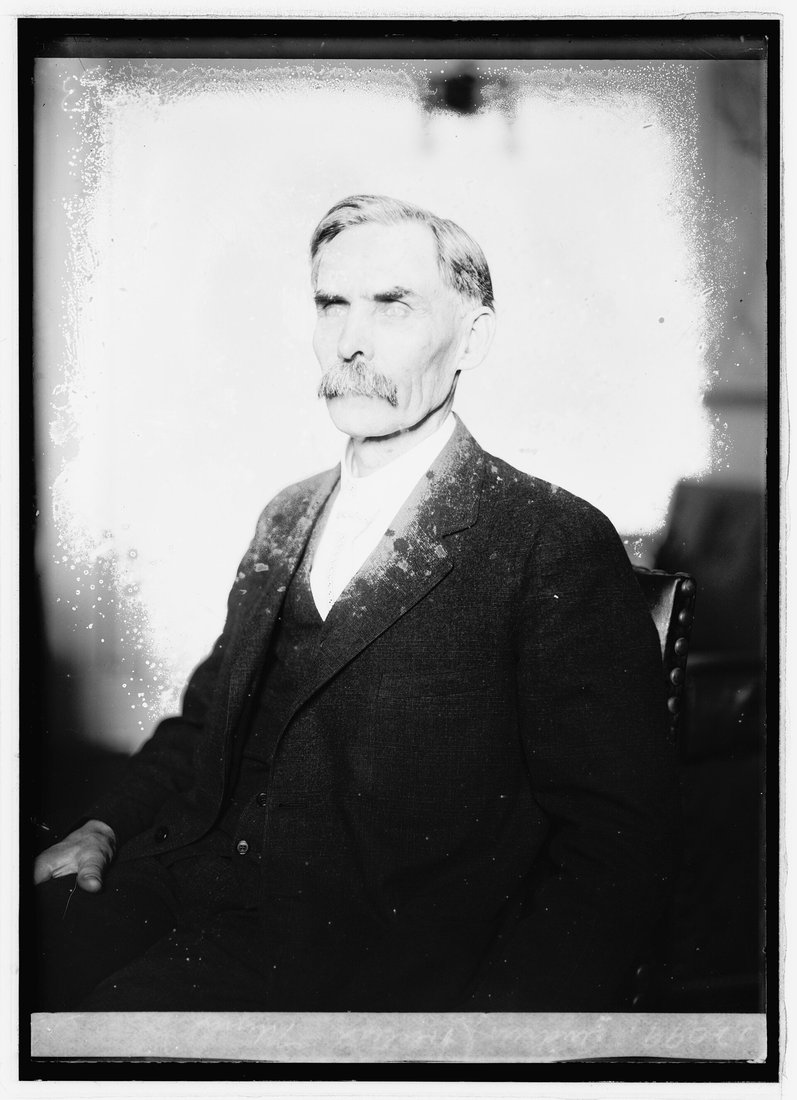

On October 28, 1919, the Senate voted 65 to 20 to override President Woodrow Wilson’s veto of the Volstead Act1. The House had voted to override the day before, and with that the United States entered the Prohibition era1. That House vote came on October 27, 19194, the same date Wilson put on his veto message2. The signed copy of the law sits in the National Archives among the Enrolled Acts and Resolutions of Congress7, dated October 28, 1919.
The gap in the Eighteenth Amendment
Congress passed the Eighteenth Amendment on December 18, 19176, and it was ratified on January 16, 1919. Its first section prohibited “the manufacture, sale, or transportation of intoxicating liquors”6 for beverage purposes, starting one year after ratification. Its second gave Congress and the states concurrent power to enforce6 it. What the amendment never said was how much alcohol made a drink intoxicating, and the Senate Historical Office notes that it banned “intoxicating liquors” without defining the term1.
The Volstead Act supplied the number. Its sponsor was Minnesota representative Andrew Volstead, chairman of the House Judiciary Committee1, a Republican who held a House seat from 1903 to 19235. The act drew the line at one-half of one percent alcohol by volume or more7. Above that line, the law made it illegal to “manufacture, sell, barter, transport, import, export, deliver, furnish, or possess”1 such a drink.
Two laws in one bill
The bill on Wilson’s desk was H.R. 6810, and its full title ran well past prohibition. It promised “to prohibit intoxicating beverages and to regulate the manufacture, production, use, and sale of high proof spirits for other than beverage purposes”2, and then to secure an ample supply of alcohol for scientific research and for fuel, dye and other lawful industries. In his message Wilson wrote that the measure covered “two distinct phases of prohibition legislation”2. One part enforced wartime prohibition. The other enforced the new constitutional amendment.
He objected only to the wartime part. That law, he wrote, had been passed because of the emergencies of the war, and its objects had been “satisfied in the demobilization of the army and navy”2. He had already asked Congress to repeal it. The amendment was another matter; Wilson called it “part of the fundamental law of the country”2 and said it would not be difficult for Congress to separate the two questions. His closing lines were about process. In matters touching “the personal habits and customs of large numbers of our people,”2 he wrote, the established processes of legal change had to be followed.
The Woodrow Wilson Presidential Library says that on September 25, 1919, after a speech in Pueblo, Colorado, he suffered what appears to have been a small stroke3, and a more significant one on October 2. It adds that much of the October mail on Prohibition called for a veto3.
Wartime prohibition stood
Congress did not split the bill. Wilson’s argument about demobilization did not end wartime prohibition either. In December 1919 the Supreme Court upheld the War-Time Prohibition Act of November 21, 191812, ruling that its end required a formal proclamation. That requirement, the Court said, “cannot be satisfied by passing references in messages to Congress,”12 and it found that demobilization had not terminated at the time of the veto12.
What the law allowed
The National Archives sums up the act as one that criminalized the manufacture and sale (but not the consumption) of alcoholic beverages7. It also allowed for home manufacture and alcohol for medicinal and religious use7. Prescriptions were capped: Title II, section 7 said that “not more than a pint of spirituous liquor to be taken internally”13 could be prescribed for one person within ten days.
A first conviction could bring a fine up to $1,000 and imprisonment up to six months7, and property used in breaking the law could be seized7.
Who enforced it
Enforcement went to the Treasury. According to the National Archives guide to Internal Revenue records, the office of the Commissioner of Internal Revenue, informally known as the Bureau of Internal Revenue9, enforced Prohibition statutes, 1919-279. Its files include general correspondence of a Prohibition unit9. A separate agency followed when Congress passed the act creating the Bureaus of Customs and Prohibition10 on March 3, 1927.
The Senate Historical Office describes a Congress “reluctant to appropriate sufficient funds for effective enforcement”1, and the National Archives calls enforcement difficult and expensive7, with the country’s long coastlines and borders helping smugglers. The Twenty-first Amendment6, passed by Congress on February 20, 1933 and ratified on December 5, 1933, repealed the Eighteenth, and the Senate Historical Office says it nullified the Volstead Act1.
Trivia
- Which 1920 Supreme Court case upheld the one-half of one percent definition against a brewer? Jacob Ruppert v. Caffey11, decided January 5, 1920. The beer in question was said to hold less than 2.75 percent alcohol by weight.
- Which justice wrote the majority opinion in that case, in the 1919 wartime prohibition case and in the 1926 case on medical prescriptions? Louis D. Brandeis13, who wrote all11 three12.
- Who was the New York City physician who sued over the prescription limits? Dr. Samuel W. Lambert13. He lost, and four justices dissented.
- How many regular vetoes did Wilson issue during his administration? 3314, plus 11 pocket vetoes, for 44 in all.
- What did a Lynn, Massachusetts, man named James Dorsey plead guilty to in 1921? Selling half a pint of intoxicating liquor8.
- What did Section 3 of the Eighteenth Amendment require for it to take effect? Ratification by the state legislatures within seven years6 of its submission to the states.
- What items from 1921 to 1925 does the National Archives keep among the Internal Revenue records? Identification cards, with photographs, of Prohibition agents9.
Sources
- The Senate Overrides the President’s Veto of the Volstead Act, October 28, 1919, U.S. Senate Historical Office, Senate.gov. Accessed October 27, 2026.
- Woodrow Wilson, Message to the House of Representatives Returning Without Approval, October 27, 1919, The American Presidency Project, edited by Gerhard Peters and John T. Woolley. Accessed October 27, 2026.
- Robin von Seldeneck, That Veto, Woodrow Wilson Presidential Library and Museum, October 31, 2019. Accessed October 27, 2026.
- 66th Congress, House Vote 112, October 27, 1919, To Pass H.R. 6810 Over the President’s Veto, Voteview. Accessed October 27, 2026.
- Volstead, Andrew John (1860-1947), Voteview. Accessed October 27, 2026.
- The Constitution: Amendments 11-27, National Archives. Accessed October 27, 2026.
- Act of October 28, 1919 [Volstead Act], National Archives Identifier 299827, DocsTeach, National Archives. Accessed October 27, 2026.
- Indictment of James Dorsey, National Archives at Boston. Accessed October 27, 2026.
- Records of the Internal Revenue Service [IRS] (Record Group 58), Guide to Federal Records, National Archives. Accessed October 27, 2026.
- Records of the Drug Enforcement Administration (Record Group 170), Guide to Federal Records, National Archives. Accessed October 27, 2026.
- Jacob Ruppert v. Caffey, 251 U.S. 264 (1920), Legal Information Institute, Cornell Law School. Accessed October 27, 2026.
- Hamilton v. Kentucky Distilleries and Warehouse Co., 251 U.S. 146 (1919), Legal Information Institute, Cornell Law School. Accessed October 27, 2026.
- Lambert v. Yellowley, 272 U.S. 581 (1926), Legal Information Institute, Cornell Law School. Accessed October 27, 2026.
- Presidential Vetoes, Woodrow Wilson, 63rd to 66th Congresses, History, Art & Archives, U.S. House of Representatives. Accessed October 27, 2026.